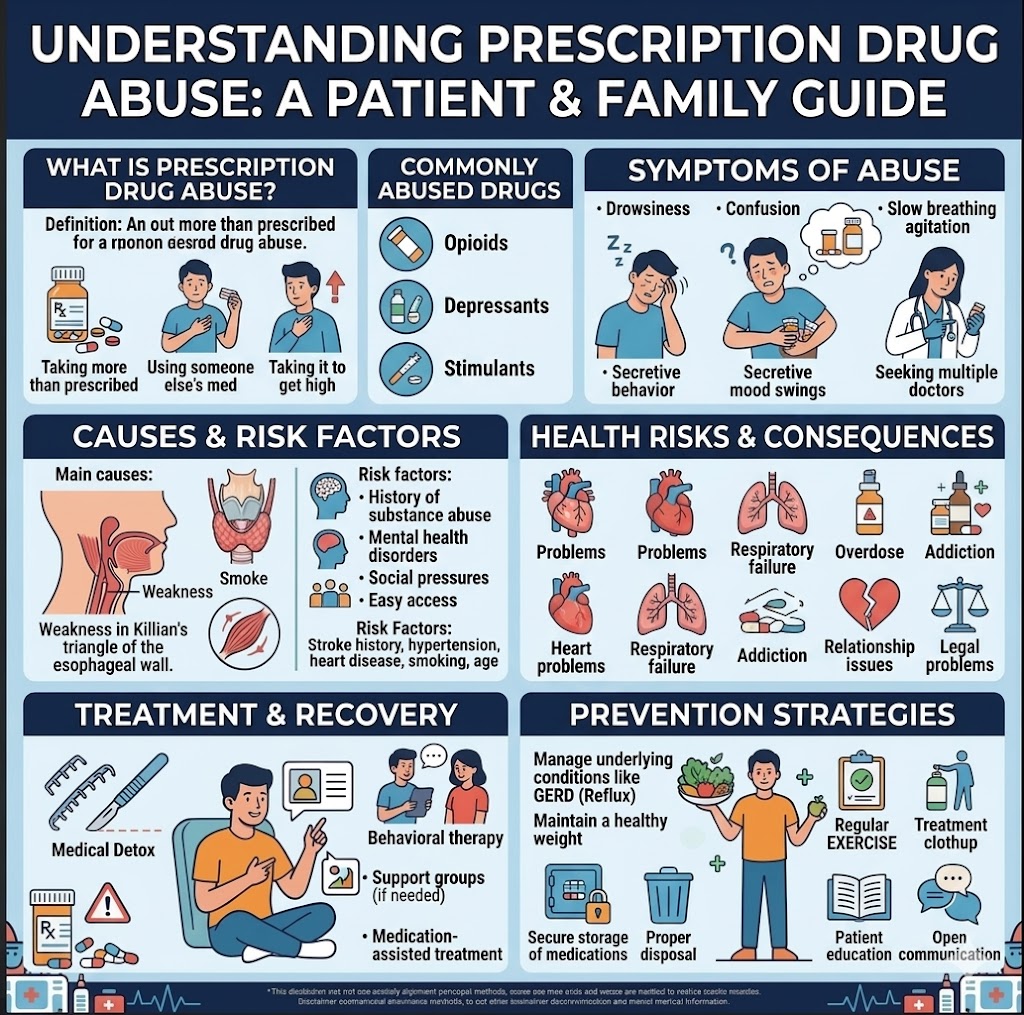
Prescription drug misuse, also called abuse, involves using a prescribed medication differently than intended by a doctor. This includes using someone else's pills for an ache or intentionally taking them to feel 'high.' It's a growing issue affecting all ages. Common misused drugs include strong painkillers (opioids), anti-anxiety medicines, sedatives, and stimulants. Untreated misuse can lead to physical dependence and addiction, a compulsive need for the drug despite harmful consequences. Early recognition and action are vital.
Understanding the Condition
Understanding and Addressing Prescription Drug Misuse
Understanding the Condition
Common Symptoms
Before your visit, make a list of all medications you are currently taking (prescription, over-the-counter, supplements), any symptoms you're experiencing, your medical history, and any concerns you have about your medication use. Be prepared to discuss your reasons for using medication, any changes in your mood or behavior, and your family history of substance use.
Book a doctor visit near me
Medicines to Manage Withdrawal: Doctor-prescribed medications to help lessen the uncomfortable and potentially dangerous physical symptoms experienced when stopping or reducing drug use. (Duration: Short-term, typically a few days to several weeks, as needed to stabilize.)
Never Share Medications: Do not use or share prescription medications with others, even if they have similar symptoms, as doses and suitability vary widely between individuals.
Consultation Guide
Opioids (Painkillers): Used for severe pain. Misuse can cause constipation, a 'high' feeling, slowed breathing, poor coordination, needing higher doses for relief, or increased pain sensitivity.
Anti-Anxiety Medicines, Sedatives, Hypnotics: For anxiety and sleep issues. Misuse signs include memory problems, low blood pressure, and slowed breathing. Abruptly stopping these can cause severe withdrawal, including an overactive nervous system and seizures.
Stimulants: For attention-deficit/hyperactivity disorder (ADHD) and some sleep disorders. Misuse can lead to increased body temperature, heart problems, high blood pressure, tremors or seizures, hallucinations, aggressiveness, or paranoia.
General Signs of Misuse: Poor judgment leading to risky behaviors, compulsive drug seeking, declining performance at work or school, troubled relationships, or trying to obtain drugs illegally.
Consultation Guide
Which Specialist to Meet
Start with your primary care physician. They can provide initial guidance or refer you to specialists like addiction medicine specialists, psychiatrists, or therapists who specialize in substance use disorders.
Preparations Before Your Visit
Manage Mental Health: Address any co-existing mental health conditions like anxiety or depression with appropriate treatment, as these can be significant risk factors for substance misuse.
Diagnostic Procedures
What to Expect
Urine or Blood Drug Screening Tests
These tests detect the presence of specific substances in your body. They are used to confirm drug use, identify the type of substance, and monitor treatment progress.
What to Expect
For a urine test, you will provide a sample in a private restroom. For a blood test, a healthcare professional will draw a small amount of blood from a vein, usually in your arm. Both procedures are quick and minimally uncomfortable. Results can help guide diagnosis and treatment planning.
Psychological Assessment
A mental health professional, such as a psychiatrist or psychologist, may conduct interviews and use standardized questionnaires to assess for underlying mental health conditions (like anxiety, depression, or ADHD) that might contribute to or co-occur with substance misuse.
What to Expect
Treatment Options
Prescription drug misuse, also called abuse, involves using a prescribed medication differently than intended by a doctor. This includes using someone else's pills for an ache or intentionally taking them to feel 'high.' It's a growing issue affecting all ages. Common misused drugs include strong painkillers (opioids), anti-anxiety medicines, sedatives, and stimulants. Untreated misuse can lead to physical dependence and addiction, a compulsive need for the drug despite harmful consequences. Early recognition and action are vital.
A doctor will conduct a thorough physical examination and ask detailed questions about your health, medical history, current medications, drug use patterns, family history of substance use, and mental health. This helps them understand the full scope of your situation and rule out other medical conditions.
You will answer questions about when and how much medication you use, why you use it, any previous attempts to stop, and how it impacts your life. The doctor will check your vital signs and overall physical health. Honesty is key for an accurate assessment.
You will have a confidential conversation with the specialist, answering questions about your thoughts, feelings, behaviors, and life experiences. This helps identify any co-occurring disorders that need to be addressed as part of your treatment plan.
Medication-Assisted Treatment (MAT)
Medicines to Reduce Cravings and Prevent Relapse: Specific medications can help reduce the strong desire for the drug and support long-term recovery by stabilizing brain chemistry. (Duration: Can be long-term, from several months to years, depending on individual needs and response.)
Cognitive Behavioral Therapy (CBT): Helps individuals identify and change problematic thinking patterns and behaviors related to drug misuse, develop coping mechanisms, and manage triggers. (Duration: Often 12-20 sessions, but can vary, with ongoing support as needed.)
Motivational Interviewing: Focuses on strengthening a person's motivation for change by exploring and resolving their ambivalence about drug use. (Duration: Short-term, often 1-4 sessions, can be integrated into longer therapies.)
Contingency Management: Uses incentives (like vouchers or prizes) to reinforce positive behaviors, such as staying drug-free or attending counseling sessions. (Duration: Varies based on the program, often 12-16 weeks.)
Family Therapy: Involves family members in the treatment process to improve communication, address family dynamics that may contribute to drug use, and build a supportive home environment. (Duration: Varies from a few sessions to several months, depending on family needs.)
Prevention and Responsible Medication Use
Follow Doctor's Instructions: Always take your prescription medicines exactly as your doctor prescribed. Do not change your dose or stop a medicine without discussing it with your healthcare provider.
Communicate with Your Doctor: Inform your doctor about all your medications (prescription, over-the-counter), supplements, alcohol use, and any history of substance use. Discuss concerns about addiction potential and alternative treatments.
Secure Storage: Store all prescription medications, especially opioids and sedatives, in a locked cabinet or secure place away from children, teens, and vulnerable adults. Keep them in their original containers to clearly identify them.
Proper Disposal: Dispose of unused or expired medications safely. Consult the medication label, your pharmacist, or local drug take-back programs for proper disposal guidelines to prevent misuse.
Discuss with Teens: Talk to teenagers about the dangers of misusing prescription drugs, emphasizing that prescribed medications are not safe if not taken as directed or if used by someone else. Set clear rules about sharing medications.
Long-Term Monitoring and Support
Regular Check-ups: Maintain regular appointments with your healthcare provider to monitor your condition, adjust treatment as needed, and ensure medications are still appropriate and effective.
Alternative Pain Management: Explore non-opioid options for pain management, such as physical therapy, acupuncture, massage, exercise, or non-addictive pain relievers, especially for chronic pain.
Identify and Avoid Triggers: Learn to recognize situations, places, or emotions that might trigger drug cravings or misuse, and develop strategies to avoid or cope with them.
Build Support Systems: Engage in ongoing support through therapy, support groups, or a strong network of family and friends to maintain sobriety and address life's challenges.
Prevention & Long-Term Wellbeing
Peer Support Programs: Groups like Narcotics Anonymous provide a supportive community where individuals share experiences and strategies for recovery, fostering mutual understanding and accountability. (Duration: Ongoing, lifelong commitment for many.)
Tags & Topics
Notice an error or need an update?
Help us keep medical information accurate. Report incorrect info or suggest an edit.


