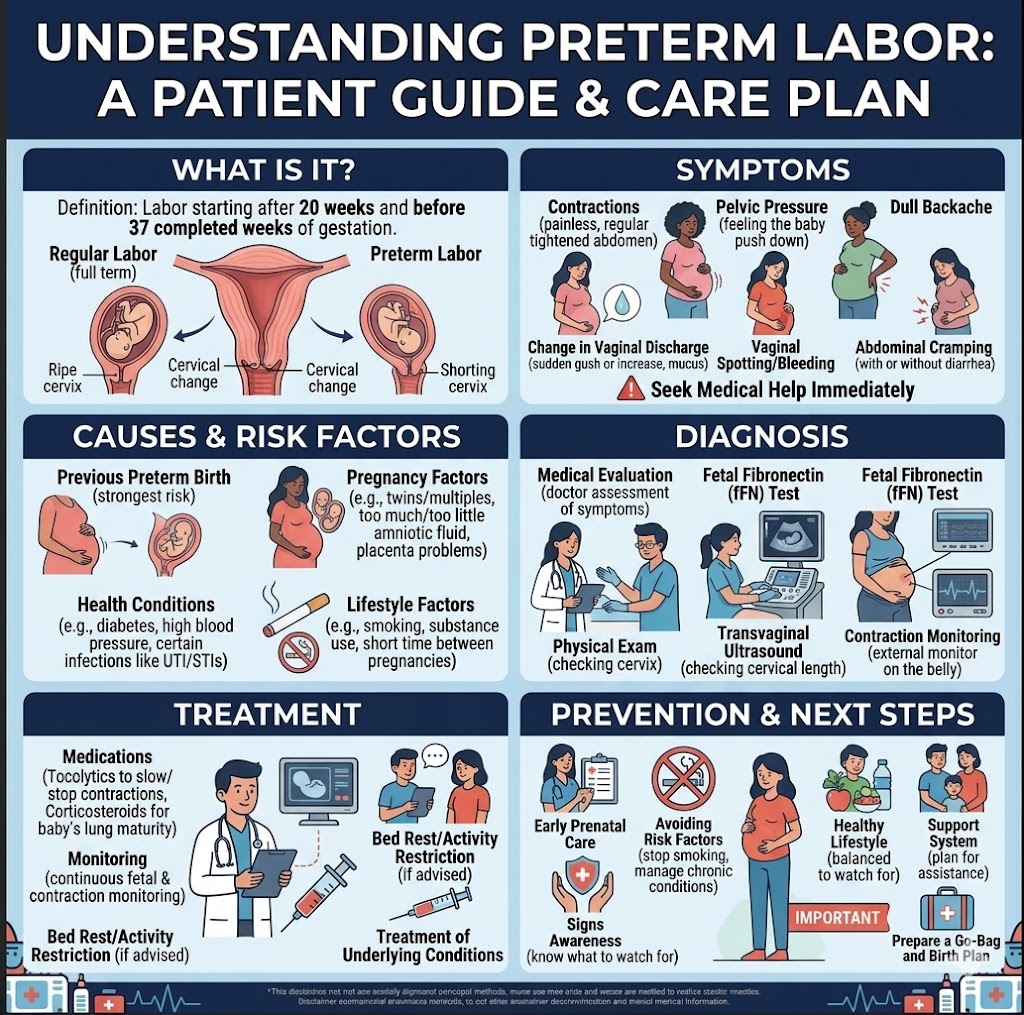
Preterm labor occurs when your body begins preparing for birth too early, before 37 weeks of pregnancy. This means that contractions start regularly and cause changes in your cervix (the lower part of the uterus that opens during labor). When a baby is born too early, they may face significant health challenges, as their organs might not be fully developed. Recognizing the signs and seeking prompt medical attention is crucial for the health of both mother and baby.
Understanding the Condition
Understanding Preterm Labor: When Labor Starts Too Early
Understanding the Condition
Common Symptoms
Frequent Contractions: Feeling your abdomen tighten and relax, happening every 10 minutes or more often. These contractions might feel like strong menstrual cramps.
Pelvic Pressure: A feeling of pressure in your pelvis or lower abdomen, as if the baby is pushing down. This can also be described as a feeling of fullness in your vagina.
Dull, Low Backache: A constant, often dull ache in your lower back that may or may not come and go. This is different from the usual pregnancy back discomfort.
Abdominal Cramping: Mild to moderate cramps in your lower abdomen, similar to menstrual cramps, possibly with or without diarrhea.
Vaginal Discharge Changes: An increase or change in vaginal discharge, which might become watery, bloody, or have mucus. It could be clear, pink, or brownish.
Vaginal Bleeding: Any amount of vaginal bleeding, from light spotting to heavier bleeding.
Fluid Leaking from Vagina: A sudden gush or a slow, continuous trickle of fluid from the vagina, which may indicate that your 'water has broken'.
Consultation Guide
Which Specialist to Meet
You should consult with an Obstetrician/Gynecologist (OB/GYN) or a Maternal-Fetal Medicine (MFM) specialist, especially if your pregnancy is considered high-risk. An OB/GYN manages normal and high-risk pregnancies, while an MFM specialist has additional training in complex pregnancies and conditions affecting the mother and fetus.
Preparations Before Your Visit
Before your appointment, make a list of all your symptoms, including when they started and how often they occur. Write down any questions you have. Be ready to share your complete medical history, including any previous pregnancies, chronic health conditions, and current medications (including over-the-counter drugs and supplements). It's also helpful to note your usual vaginal discharge color and consistency. Bring a support person if you wish.
Book a doctor visit near me
Address Infections Promptly: Report any symptoms of vaginal or urinary tract infections to your doctor immediately, as untreated infections can sometimes trigger preterm labor. Prompt treatment with antibiotics can prevent complications.
Long-Term Monitoring and Support
Recognize Warning Signs: Educate yourself about the symptoms of preterm labor and contact your healthcare provider immediately if you experience any. Early recognition is key to effective intervention.
Consultation Guide
Preterm labor occurs when your body begins preparing for birth too early, before 37 weeks of pregnancy. This means that contractions start regularly and cause changes in your cervix (the lower part of the uterus that opens during labor). When a baby is born too early, they may face significant health challenges, as their organs might not be fully developed. Recognizing the signs and seeking prompt medical attention is crucial for the health of both mother and baby.
For urine tests, you will be asked to provide a clean-catch urine sample. For vaginal cultures and fFN, the doctor will use a cotton swab to gently collect a sample of fluid from your vagina and cervix during a pelvic exam. This is usually quick and might cause slight discomfort similar to a Pap test. Blood tests may also be taken via a simple blood draw from your arm.
Antibiotics: If an infection is identified as a cause or contributing factor to preterm labor, antibiotics are prescribed to treat the infection and prevent it from affecting the baby or worsening the mother's condition. (Duration: Duration depends on the type and severity of infection, typically 7-14 days.)
Cervical Cerclage: In specific cases where a weakened cervix (cervical insufficiency) is the cause, a surgical procedure called cervical cerclage may be performed. This involves placing a stitch around the cervix to keep it closed. (Duration: The stitch is typically placed in the second trimester and removed closer to term, usually around 36-37 weeks of pregnancy.)
Healthy Lifestyle Choices: Maintain a healthy diet rich in fruits, vegetables, and lean proteins, and stay well-hydrated. Avoid smoking, alcohol, and illicit drugs, as these are significant risk factors for preterm birth. Discuss appropriate exercise levels with your doctor.
Manage Chronic Health Conditions: If you have existing conditions like diabetes, high blood pressure, or autoimmune diseases, work closely with your healthcare provider to manage them effectively before and during pregnancy. Uncontrolled conditions can increase the risk of preterm labor.
Stress Reduction: Chronic stress can impact pregnancy outcomes. Practice stress-reduction techniques like mindfulness, meditation, light exercise, or seeking support from loved ones or a mental health professional.
Diagnostic Procedures
A physical examination of your cervix and vagina to check for any changes indicating the start of labor, such as thinning or opening of the cervix. The doctor will also look for signs of infection.
What to Expect
You will lie on an examination table with your feet in stirrups. The doctor will gently insert gloved fingers into your vagina to feel your cervix. This might feel slightly uncomfortable or like pressure, but it should not be painful. The exam is usually quick.
Transvaginal Ultrasound
An imaging test that uses sound waves to measure the length of your cervix. A shorter cervix can be a sign of increased risk for preterm labor. It also allows the doctor to assess the baby's position, size, and amount of amniotic fluid.
What to Expect
You will lie on an examination table with your feet in stirrups. A small, lubricated probe will be gently inserted a few inches into your vagina. You might feel some pressure. The probe emits sound waves that create images on a screen. The procedure is typically painless and takes about 15-30 minutes.
Contraction Monitoring (Tocodynamometry)
This involves placing sensors on your abdomen to detect and record uterine contractions. It helps determine the frequency, duration, and intensity of contractions.
What to Expect
You will lie down comfortably. Two belts will be placed around your abdomen. One belt holds a sensor that detects uterine contractions, and the other holds a sensor that monitors the baby's heart rate. You will feel no pain, just the snugness of the belts. You might be asked to press a button when you feel a contraction. This monitoring can last from 20 minutes to several hours.
Lab Tests (Urine, Vaginal Culture, Fetal Fibronectin)
Various laboratory tests are used to check for infections (such as urinary tract infections or vaginal infections) that can sometimes trigger preterm labor. A specific test called fetal fibronectin (fFN) checks for a protein that acts as a 'glue' between the fetal sac and the uterine lining; its presence in vaginal secretions between 22 and 34 weeks of pregnancy can indicate an increased risk of preterm birth.
What to Expect
Treatment Options
Medications
Tocolytics (Contraction-Suppressing Medications): These medications are given to relax the uterus and temporarily stop or slow down contractions. They can buy crucial time (typically up to 48 hours) to administer other treatments or transfer the mother to a facility with specialized care for premature babies. (Duration: Typically administered for up to 48 hours.)
Corticosteroids: These medications are given to the mother to help speed up the baby's lung development and mature other vital organs. This significantly reduces the risk and severity of breathing problems and other complications if the baby is born prematurely. (Duration: Usually involves two doses given over a 24-48 hour period.)
Magnesium Sulfate: This medication may be given to mothers at risk of very early preterm birth (before 32 weeks) for neuroprotection, meaning it can help reduce the risk of cerebral palsy and other neurological complications in the premature baby. (Duration: Typically administered for a short period, often around 12-24 hours or until delivery.)
Hospital Observation: Close monitoring in a hospital setting may be necessary to observe contraction patterns, cervical changes, and the baby's well-being. This allows for immediate intervention if labor progresses. (Duration: Varies from a few hours to several days, depending on the individual case and response to treatment.)
Post-Preterm Birth Support: If you have experienced preterm labor or birth, your healthcare team will provide guidance on future pregnancies, including potential preventative treatments or increased monitoring. Emotional support through counseling or support groups can also be beneficial.
Prevention & Long-Term Wellbeing
Home Remedies & Lifestyle Adjustments
Rest and Hydration: Your doctor may recommend increasing rest and ensuring you drink plenty of fluids. While strict bed rest is generally not advised, reducing physical activity can be beneficial. (Duration: Throughout the remainder of pregnancy, as advised by your doctor.)
Hospital Procedures & Monitoring
Prevention and Risk Reduction
Early and Regular Prenatal Care: Attending all scheduled prenatal appointments allows your doctor to monitor your health and your baby's development, identify potential risks early, and provide timely interventions. Early care can help address issues like infections or blood pressure problems before they become critical.
Tags & Topics
Notice an error or need an update?
Help us keep medical information accurate. Report incorrect info or suggest an edit.


