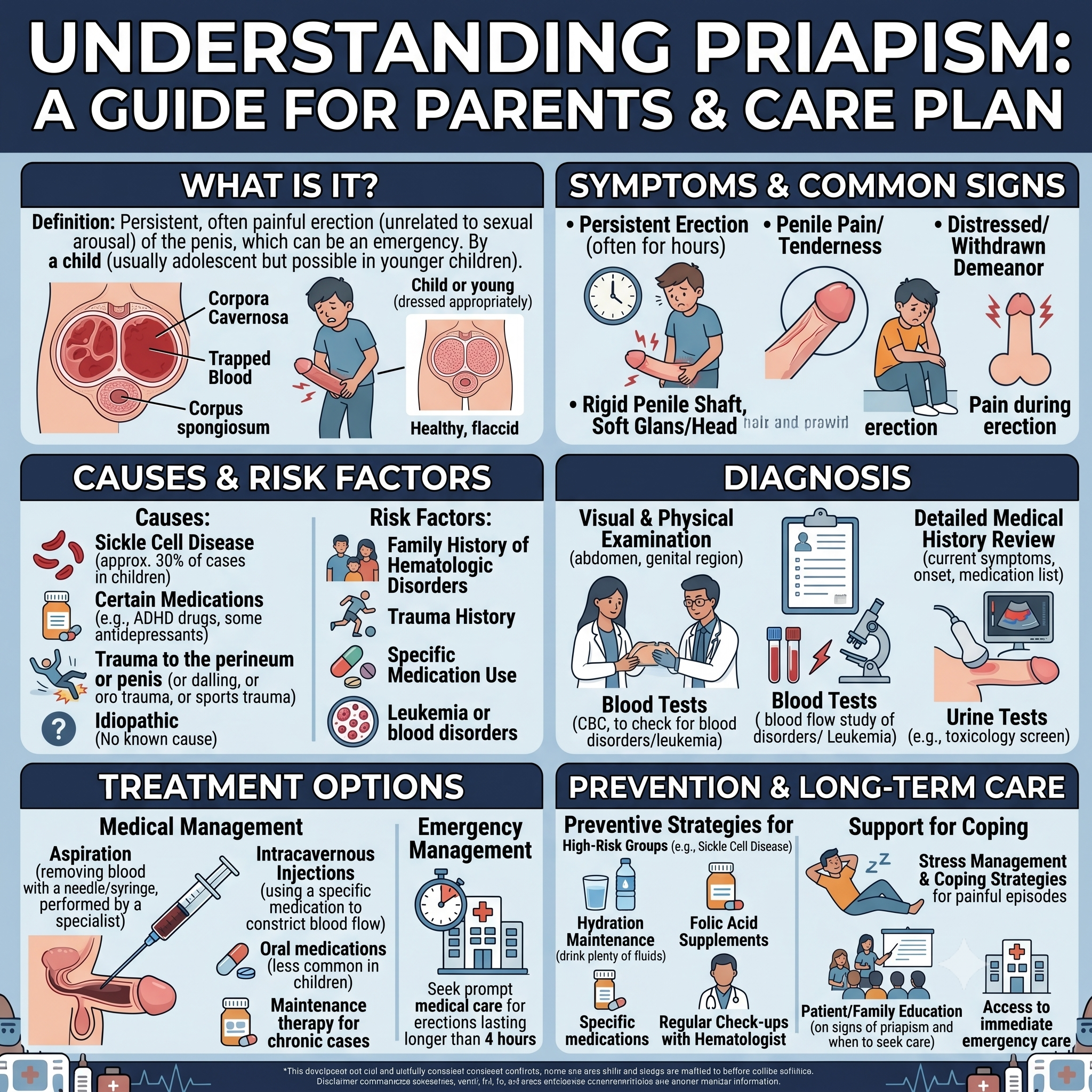
Priapism is a medical condition defined by a prolonged and often painful erection of the penis that either lasts for hours beyond, or isn't caused by, sexual stimulation. It requires prompt medical attention to prevent serious complications, including permanent tissue damage and the inability to achieve or maintain an erection (erectile dysfunction). While uncommon overall, priapism is more frequent in certain groups, such as individuals with sickle cell disease. It primarily affects adult males, but can begin in childhood for those with sickle cell disease. There are two main types: ischemic and nonischemic priapism.
Understanding the Condition
Common Symptoms
Ischemic Priapism (Low-Flow): This is the more common and serious type, considered a medical emergency. Symptoms include a prolonged erection, often painful, where the shaft of the penis is rigid but the tip (glans) may be softer. It occurs when blood becomes trapped in the penis and cannot flow out properly, leading to a lack of oxygen in the penile tissues. If left untreated, it can cause irreversible damage.
Your doctor will ask about your symptoms, medical history, and conduct a physical examination to assess the erection, its rigidity, and any tenderness. This initial assessment helps in determining the likely type of priapism.
Consultation Guide
Priapism is a medical condition defined by a prolonged and often painful erection of the penis that either lasts for hours beyond, or isn't caused by, sexual stimulation. It requires prompt medical attention to prevent serious complications, including permanent tissue damage and the inability to achieve or maintain an erection (erectile dysfunction). While uncommon overall, priapism is more frequent in certain groups, such as individuals with sickle cell disease. It primarily affects adult males, but can begin in childhood for those with sickle cell disease. There are two main types: ischemic and nonischemic priapism.
Nonischemic Priapism (High-Flow): This type is less common and usually less urgent. It typically results from an injury to the penis or groin area that causes blood flow through the arteries of the penis to be unregulated. The erection is usually not fully rigid, less painful, and the penile tissues continue to receive some oxygen. It often resolves on its own but may require treatment if persistent.
Stuttering Priapism (Recurrent or Intermittent): This is a form of ischemic priapism characterized by repeated episodes of unwanted, prolonged, and sometimes painful erections that eventually resolve on their own. These episodes can vary in duration and frequency and may progress over time. It is particularly common in males with sickle cell disease, where abnormally shaped red blood cells can block blood vessels in the penis. It can begin in childhood.
Consultation Guide
Which Specialist to Meet
If you experience an erection lasting more than four hours, you need to go to an emergency room immediately. An emergency room doctor will assess your condition. For recurrent episodes, follow-up care, or management of related conditions, you should consult a urologist, a doctor specializing in the urinary tract and male reproductive system.
Preparations Before Your Visit
For an acute, prolonged erection (over 4 hours), seek emergency care without delay. No specific preparation is needed beyond immediate transport to an emergency room. For recurrent or stuttering priapism, when seeing a urologist, be prepared to discuss the duration, frequency, pain level, and any potential triggers of your episodes. Share your full medical history, especially if you have conditions like sickle cell disease.
Book a doctor visit near me
Penile Implants (Prosthesis): If priapism causes severe or permanent erectile dysfunction due to tissue damage, penile implants may be an option. These devices are surgically placed inside the penis to allow a man to achieve an erection. There are two main types: semirigid (always firm but bendable) and inflatable (pumped up for an erection). (Duration: Permanent implant; surgical recovery typically takes 4-6 weeks. Implants do not increase desire or sensation, nor do they make the penis larger.)
Diagnostic Procedures
Physical Exam and Medical History
What to Expect
You will be asked questions about when the erection started, if it's painful, any recent injuries, and your overall health. The doctor will examine your penis, which might involve a gentle touch to assess its rigidity and tenderness.
Blood Test (Penile Blood Gas Analysis)
What to Expect
A numbing medicine may be applied to the side of your penis before a thin needle is inserted to draw a small amount of blood. This blood is then sent for immediate analysis. You might feel a brief pinch or pressure.
Penile Doppler Ultrasound
This imaging test uses sound waves to create pictures of the blood vessels and blood flow within the penis. It allows doctors to see how blood is moving in and out of the penis, helping to confirm the type of priapism and identify any blood clots or abnormal connections (fistulas).
What to Expect
You will lie on an examination table. A gel will be applied to your penis, and a small handheld device called a transducer will be moved over the area. This device sends out sound waves and records their echoes, which are converted into images on a screen. You might feel some pressure from the transducer, but the procedure is generally painless. You might be asked to stand during part of the exam.
Treatment Options
Understanding Priapism: Prolonged Erections and Treatment
Understanding the Condition
A small sample of blood is drawn directly from the penis. Analyzing the oxygen and carbon dioxide levels in this blood helps to differentiate between ischemic (low oxygen) and nonischemic (normal oxygen) priapism, which is critical for guiding treatment.
Emergency Procedures for Ischemic Priapism
Aspiration and Injection: This involves draining excess blood from the penis using a needle and syringe. After aspiration, medication may be injected into the penis to constrict blood vessels, helping trapped blood to flow out. This is often the first line of treatment in the emergency setting. (Duration: Performed as a single emergency procedure, recovery takes hours to days.)
Selective Arterial Embolization or Surgery: If nonischemic priapism persists or is severe, a procedure to block the abnormal blood flow (embolization) or surgery to repair the damaged vessel may be considered. (Duration: Single procedure with recovery over several weeks.)
Medications for Stuttering Priapism Prevention
Oral Medications: Various oral medications may be prescribed to reduce the frequency and severity of recurrent episodes by affecting blood flow or hormone levels. These are often taken regularly. (Duration: Ongoing, as prescribed by your doctor, to prevent future episodes.)
Self-Injection Therapy: In some cases, you may be taught to self-inject medication into the penis at the onset of an episode to help resolve it quickly and prevent progression. (Duration: Used as needed, during an episode, as instructed by your doctor.)
Surgical Procedures for Erectile Dysfunction (Post-Priapism)
Adherence to Prescribed Medications: Consistently taking any oral medications or using self-injection therapies as directed by your urologist is crucial to reduce the frequency and severity of stuttering priapism episodes.
Prompt Action for Episodes: If an episode of stuttering priapism occurs, follow your doctor's instructions for managing it immediately, which may include specific home interventions or self-injection, to prevent it from becoming a full-blown ischemic episode.
Managing Underlying Conditions: For individuals with conditions like sickle cell disease, close management of the primary disease can help reduce the risk of priapism episodes.
Long-Term Monitoring and Support
Regular Urologist Follow-ups: Ongoing visits with a urologist are important to monitor your condition, adjust treatments, and address any long-term effects such as erectile dysfunction.
Emotional and Psychological Support: Dealing with priapism and its potential long-term effects can be distressing. Seeking counseling or joining support groups can provide valuable emotional and psychological support.
Prevention & Long-Term Wellbeing
Surgical Shunt: If aspiration and injection are unsuccessful, a surgical shunt may be created. This involves making a small incision to create a new pathway for blood to flow out of the penis, relieving the pressure and restoring normal circulation. (Duration: Single surgical procedure; recovery typically involves several weeks.)
Management for Nonischemic Priapism
Observation and Ice Application: Since nonischemic priapism is often less urgent and can resolve on its own, your doctor might recommend watchful waiting, applying ice packs, and treating any underlying injury. (Duration: Varies; can resolve spontaneously over days to weeks. Monitoring continues as needed.)
Prevention of Recurrent Episodes (Stuttering Priapism)
Tags & Topics
Notice an error or need an update?
Help us keep medical information accurate. Report incorrect info or suggest an edit.


