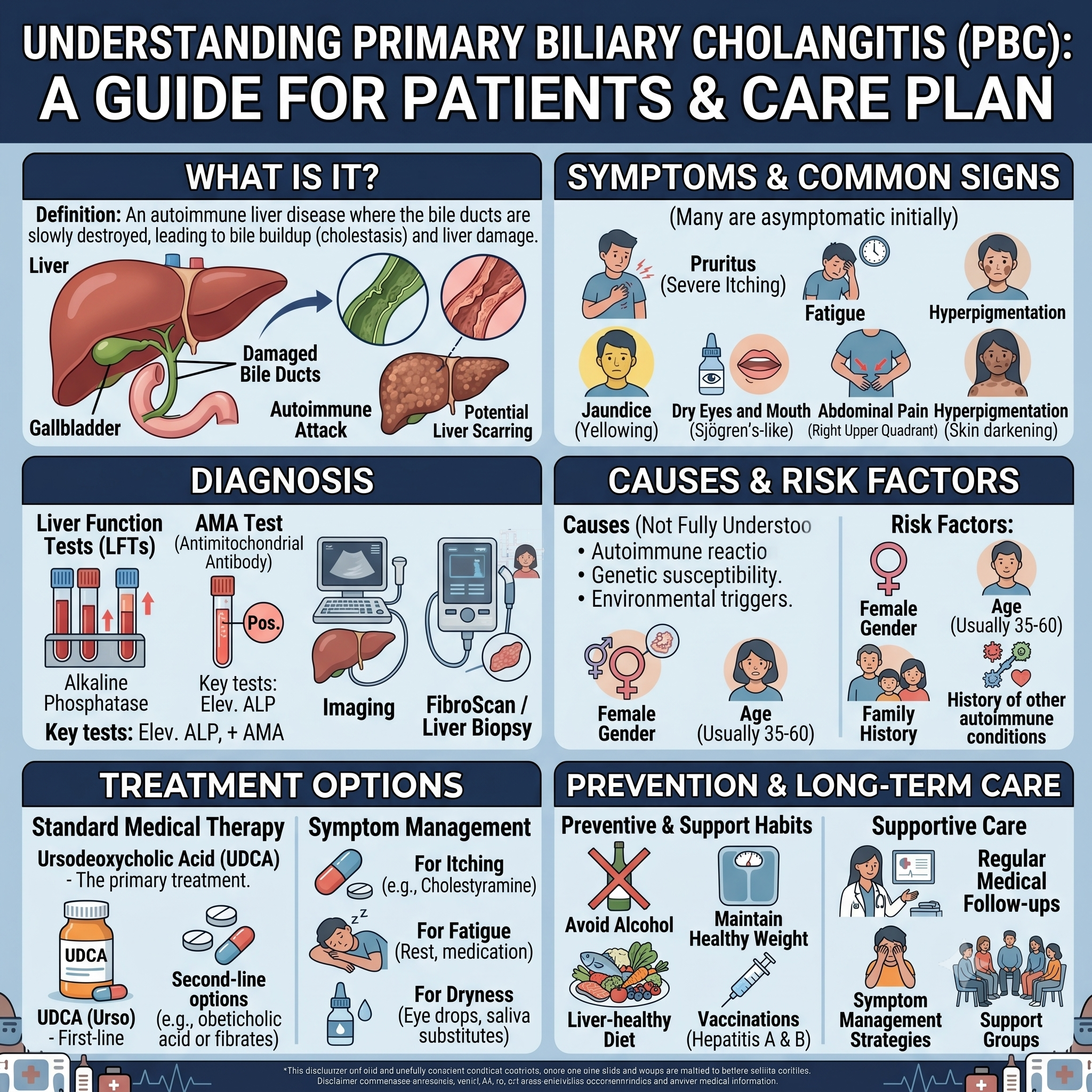
Primary Biliary Cholangitis (PBC) is an autoimmune disease where your body's immune system mistakenly attacks and slowly destroys the small bile ducts within your liver. Bile is a crucial fluid made by the liver that aids digestion, helps absorb important vitamins and fats, and removes waste products like cholesterol and toxins. When these tiny bile ducts become inflamed and damaged, bile backs up into the liver, causing further harm. Over time, this damage can lead to permanent scarring of the liver (cirrhosis), which hinders its ability to function properly and can eventually result in liver failure. While PBC can affect anyone, it primarily impacts women, often between the ages of 30 and 60. Although there is currently no cure, early diagnosis and treatment can significantly slow the progression of liver damage. Researchers believe a combination of genetic factors and environmental triggers contribute to the development of PBC.
Understanding the Condition
Primary Biliary Cholangitis (PBC): Understanding Your Liver Health
Understanding the Condition
Common Symptoms
No Symptoms (Asymptomatic): More than half of individuals with PBC have no noticeable symptoms at diagnosis, often discovered during routine blood tests for other reasons. Symptoms may develop slowly over 5 to 20 years.
Itchy Skin: Often one of the earliest and most common symptoms, ranging from mild to severe.
Fatigue: Persistent and overwhelming tiredness that doesn't improve with rest.
Dry Eyes and Mouth: A feeling of dryness or grittiness in the eyes, and a persistently dry mouth.
Yellowing of Skin and Eyes (Jaundice): A yellowish tint to the skin and whites of the eyes, indicating a buildup of bile pigments in the blood.
Upper Right Abdominal Pain: Discomfort or pain in the area where the liver is located.
Swelling of the Spleen (Splenomegaly): An enlarged spleen, which can be detected by a doctor.
Bone, Muscle, or Joint Pain: Aches or discomfort in various parts of the body.
Swollen Feet and Ankles: Fluid retention leading to noticeable swelling in the lower limbs.
Fluid Buildup in the Abdomen (Ascites): An accumulation of fluid within the abdominal cavity, often a sign of advanced liver disease.
Fatty Skin Deposits (Xanthomas): Small, yellowish, fatty deposits that can appear around the eyes, on eyelids, or in the creases of the palms, soles, elbows, or knees.
Darkening of the Skin (Hyperpigmentation): Skin that becomes darker in patches, unrelated to sun exposure.
Weak and Brittle Bones (Osteoporosis): Bones that become fragile and more prone to fractures due to impaired calcium absorption.
Before your visit, gather information about your medical history, including any previous diagnoses, current medications (prescription and over-the-counter), supplements, and any symptoms you've experienced. Prepare a list of questions you want to ask your doctor. You may be asked to fast for a certain period before your appointment if blood tests are planned.
Book a doctor visit near me
Medications for Dry Eyes and Mouth: Artificial tears and saliva substitutes, or prescription medications that stimulate saliva production, can help manage these symptoms. (Duration: As needed, ongoing)
Vitamin Supplements: PBC can impair the absorption of fat-soluble vitamins (A, D, E, K). Your doctor may recommend supplements to prevent deficiencies and related complications like bone weakening or bleeding problems. (Duration: Ongoing, based on deficiency levels)
Regular Doctor Visits: Consistent follow-up appointments with your gastroenterologist or hepatologist are essential to monitor your liver function, adjust medications, and manage symptoms.
Consultation Guide
A CT scan uses special X-ray equipment and computer processing to create detailed cross-sectional images of your liver and surrounding organs. It can help assess the size and condition of your liver, identify any scarring, and rule out other causes of liver disease or complications.
You will lie on a movable table that slides into a large, tunnel-like scanner. You may be asked to hold your breath for short periods. In some cases, a contrast dye may be injected into a vein to make certain structures more visible, which might cause a warm sensation or a metallic taste. The procedure is generally painless and takes about 10-30 minutes.
Diagnostic Procedures
Primary Biliary Cholangitis (PBC) is an autoimmune disease where your body's immune system mistakenly attacks and slowly destroys the small bile ducts within your liver. Bile is a crucial fluid made by the liver that aids digestion, helps absorb important vitamins and fats, and removes waste products like cholesterol and toxins. When these tiny bile ducts become inflamed and damaged, bile backs up into the liver, causing further harm. Over time, this damage can lead to permanent scarring of the liver (cirrhosis), which hinders its ability to function properly and can eventually result in liver failure. While PBC can affect anyone, it primarily impacts women, often between the ages of 30 and 60. Although there is currently no cure, early diagnosis and treatment can significantly slow the progression of liver damage. Researchers believe a combination of genetic factors and environmental triggers contribute to the development of PBC.
You should consult a Gastroenterologist, who specializes in digestive system disorders, or a Hepatologist, a doctor specifically trained in liver diseases. These specialists can accurately diagnose PBC and manage your care.
Preparations Before Your Visit
Blood tests are crucial for diagnosing PBC. They typically check liver enzyme levels (like alkaline phosphatase and gamma-glutamyl transferase) which can be elevated due to bile duct damage. A specific antibody test, called anti-mitochondrial antibody (AMA) test, is present in most people with PBC and is a key diagnostic marker. Other tests assess overall liver function and rule out other conditions.
What to Expect
A healthcare professional will draw a small sample of blood, usually from a vein in your arm. This is a quick procedure, and you may feel a brief sting or pressure. You might be asked to fast before some blood tests.
CT Scan (Computerized Tomography)
What to Expect
A liver biopsy involves removing a small tissue sample from your liver for examination under a microscope. This procedure helps confirm the diagnosis of PBC, assess the extent of bile duct damage and scarring (fibrosis or cirrhosis), and guide treatment decisions. Different methods exist, including percutaneous (through the skin) or transjugular (through a vein in the neck).
What to Expect
For a percutaneous biopsy, you will lie on your back or side, and the area on your abdomen will be numbed with a local anesthetic. The doctor will insert a thin needle through your skin and into your liver, guided by ultrasound or CT imaging, to obtain the tissue sample. You may feel pressure or a brief, sharp pain as the needle is inserted. After the procedure, you'll need to rest quietly for several hours to prevent bleeding, and you might experience some soreness at the biopsy site.
MELD Score (Model for End-Stage Liver Disease)
The MELD score is a numerical system (ranging from 6 to 40) used to assess the severity of liver disease and predict the risk of death for individuals over 12 years old. It is calculated using results from specific blood tests (bilirubin, creatinine, INR). A higher MELD score indicates more severe liver disease and a greater urgency for a liver transplant, helping prioritize individuals on transplant waiting lists.
What to Expect
There is no specific 'procedure' for the MELD score itself, as it's a calculation based on routine blood test results. You will undergo a blood draw as described under 'Blood Tests'.
Ongoing Blood Tests: Periodic blood tests will track liver enzyme levels, assess disease progression, monitor vitamin levels, and check for complications like high cholesterol or thyroid issues.
Bone Density Screening: Due to the increased risk of osteoporosis, regular bone density scans (DEXA scans) are important to detect bone loss early and manage it effectively.
Liver Cancer Screening: If cirrhosis develops, regular screenings (e.g., ultrasound, blood tests for tumor markers) are crucial to detect liver cancer at an early, more treatable stage.
Manage Associated Conditions: PBC is linked with other autoimmune disorders like thyroid problems or Sjogren's syndrome (causing dry eyes and mouth). It's important to monitor and treat these conditions alongside your PBC.
Treatment Options
Medications
Bile Acid Medications: These are the primary medications used to treat PBC. They help improve the flow of bile from the liver, protect liver cells from damage, and can slow the progression of the disease. Starting treatment early is most effective. (Duration: Lifelong)
Medications for Itching: Various medications can be prescribed to relieve the intense itching associated with PBC, ranging from oral drugs that bind bile acids to antihistamines or other agents. (Duration: As needed, ongoing)
Bone-Strengthening Medications: For individuals developing osteoporosis, medications to increase bone density may be prescribed to reduce the risk of fractures. (Duration: Long-term, as prescribed)
Liver Transplant: If PBC progresses to severe liver failure despite other treatments, a liver transplant may be necessary. This involves replacing the diseased liver with a healthy liver from a deceased or living donor. (Duration: Single procedure, followed by lifelong anti-rejection medication)
Prevention & Long-Term Wellbeing
High Cholesterol: Elevated levels of cholesterol in the blood, despite a healthy diet.
Diarrhea with Greasy Stools (Steatorrhea): Diarrhea characterized by stools that appear greasy, bulky, and difficult to flush, due to poor fat absorption.
Underactive Thyroid (Hypothyroidism): A condition where the thyroid gland does not produce enough thyroid hormones.
Weight Loss: Unexplained loss of body weight.
- Consultation Guide
Which Specialist to Meet
Lifestyle and Home Remedies
Itch Relief Strategies: Cool baths, moisturizing lotions, avoiding hot showers, wearing loose cotton clothing, and keeping nails short can help manage itching. (Duration: Ongoing, as needed)
Healthy Diet: Eating a balanced diet, limiting saturated and trans fats, and focusing on fruits, vegetables, and whole grains supports liver health and overall well-being. Avoiding excessive salt can help manage fluid retention. (Duration: Lifelong)
Avoid Alcohol: Alcohol can further damage the liver and should be avoided or consumed minimally, as advised by your doctor. (Duration: Lifelong)
Regular Exercise: Engaging in regular, moderate physical activity can help combat fatigue, maintain a healthy weight, and improve bone health. (Duration: Lifelong)
Prevention
Avoid Smoking: Cigarette smoking is considered a potential environmental trigger for PBC and can worsen liver health. Quitting smoking is highly recommended.
Limit Exposure to Toxins: Minimize exposure to toxic chemicals, especially in certain work environments, as these may contribute to liver damage.
Manage Infections: While the link is not fully understood, some infections, like urinary tract infections, have been explored as potential triggers. Promptly treating infections is generally good health practice.
Long-Term Monitoring
Tags & Topics
Notice an error or need an update?
Help us keep medical information accurate. Report incorrect info or suggest an edit.


