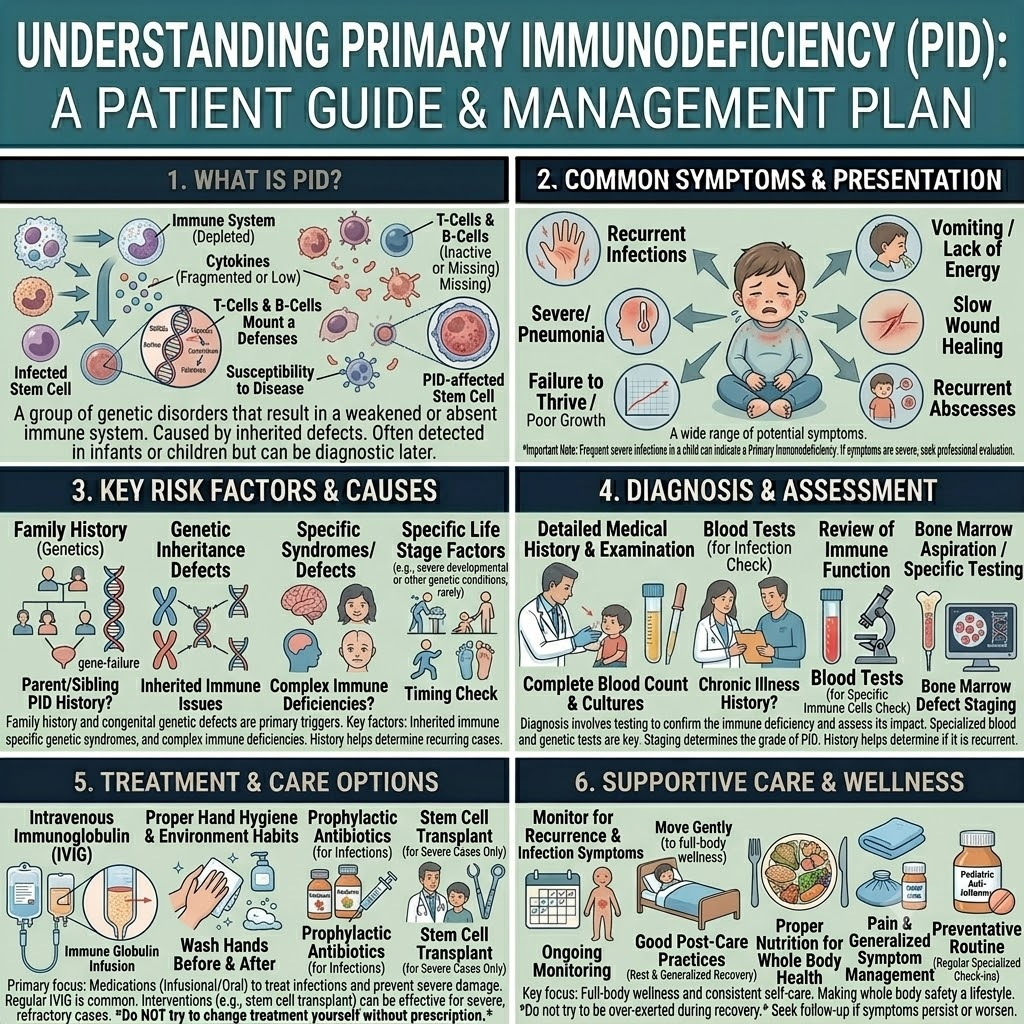
Primary immunodeficiency (PI) disorders are a group of conditions that make it difficult for the body to fight off infections. Sometimes called primary immune disorders, these conditions occur when a person is born with parts of their immune system missing or not working correctly. This makes them more vulnerable to germs that cause infections. Researchers have identified over 400 types of PI, ranging in severity from mild forms that may go unnoticed until adulthood to severe types discovered shortly after birth. While PI can lead to frequent, severe, or long-lasting infections, treatments are available to strengthen the immune system, significantly improving the quality of life for those affected. Ongoing research continues to bring new and better treatment options.
Understanding the Condition
Primary Immunodeficiency: Understanding and Managing a Weakened Immune System
Understanding the Condition
Common Symptoms
Frequent and Recurrent Infections: More frequent, longer-lasting, or harder-to-treat infections compared to someone with a healthy immune system. This includes pneumonia, bronchitis, sinus infections, ear infections, meningitis (brain/spinal cord inflammation), or skin infections. You might also get unusual infections that a healthy person typically wouldn't.
Inflammation and Organ Infection: Swelling or infection in various internal organs.
Blood Disorders: Conditions such as low platelet counts (cells that help blood clot) or anemia (low red blood cell count).
Digestive Problems: Symptoms like abdominal cramping, loss of appetite, nausea, and diarrhea.
Delayed Growth or Development: In children, not growing or developing as expected for their age.
Autoimmune Disorders: Conditions where the immune system mistakenly attacks the body's own healthy tissues, such as lupus or rheumatoid arthritis.
Consultation Guide
Which Specialist to Meet
Before your visit, prepare a detailed history of symptoms and infections, including their frequency, severity, duration, and any treatments attempted. List all current medications and recent vaccinations. Gather any relevant family medical history, especially if there's a history of immune problems or unexplained illnesses. It's also helpful to write down any questions you have for the doctor.
Book a doctor visit near me
Consultation Guide
Primary immunodeficiency (PI) disorders are a group of conditions that make it difficult for the body to fight off infections. Sometimes called primary immune disorders, these conditions occur when a person is born with parts of their immune system missing or not working correctly. This makes them more vulnerable to germs that cause infections. Researchers have identified over 400 types of PI, ranging in severity from mild forms that may go unnoticed until adulthood to severe types discovered shortly after birth. While PI can lead to frequent, severe, or long-lasting infections, treatments are available to strengthen the immune system, significantly improving the quality of life for those affected. Ongoing research continues to bring new and better treatment options.
Many primary immunodeficiency disorders are caused by specific changes (mutations) in genes. Genetic tests look for these changes in your DNA, which can help pinpoint the exact type of PI and guide treatment decisions. This is especially important as many PIs are inherited.
Diagnostic Procedures
These tests measure different components of your immune system, such as the number and types of white blood cells (which fight infection), and the levels of protective proteins called immunoglobulins (antibodies) in your blood. They can also assess your immune system's ability to respond to vaccines, indicating if it can create antibodies to fight specific germs.
What to Expect
A healthcare professional will draw a small sample of blood, usually from a vein in your arm, using a needle. This is a quick procedure, and you might feel a brief sting or pressure. The blood samples are then sent to a laboratory for analysis.
What to Expect
Genetic testing often involves a blood sample, similar to other blood tests. Sometimes, a saliva sample or a cheek swab might be used instead. The sample is then analyzed in a laboratory to identify any genetic mutations linked to immune deficiencies. Results may take several weeks.
In some regions, newborns are screened for specific severe forms of primary immunodeficiency, such as Severe Combined Immunodeficiency (SCID), shortly after birth. This early detection can be life-saving.
What to Expect
This test is typically performed by taking a few drops of blood from a baby's heel (a 'heel stick') shortly after birth, usually within the first 24-48 hours. The blood is collected on a special filter paper and sent to a lab for analysis.
Immune Function Tests
Beyond just counting immune cells or proteins, these tests evaluate how well immune cells actually work. For example, they might assess how effectively white blood cells can engulf and destroy bacteria or how well T-cells can respond to signals.
What to Expect
These often involve specialized blood tests where a blood sample is taken, and then immune cells are isolated and challenged with various substances in a lab setting to observe their function. This might be combined with other blood draws.
Treatment Options
If you or your child experiences frequent, severe, or persistent infections that don't respond well to standard treatments, it's important to consult with a healthcare professional. You will likely be referred to an immunologist, a specialist doctor who focuses on conditions of the immune system. For children, a pediatric immunologist would be the appropriate specialist.
Preparations Before Your Visit
Medications
Immune Globulin Replacement Therapy: This therapy provides the body with the missing or insufficient antibodies (immunoglobulins) needed to fight infections. It involves receiving purified antibodies, typically from donated human plasma. (Duration: Typically lifelong, administered regularly (weekly, bi-weekly, or monthly) either intravenously (into a vein) or subcutaneously (under the skin).)
Anti-Infective Medications: These are medications used to prevent or treat infections. They include different types of antimicrobials that target bacteria, viruses, or fungi, based on the specific infection or risk. (Duration: Varies depending on the infection. Prevention might involve daily or regular doses, while active infections require a course of treatment for several days to weeks.)
Growth Factors: These are natural or synthetic substances that stimulate the body to produce more white blood cells, which are crucial for fighting infections. They can be used when specific white blood cell types are too low. (Duration: As prescribed, often for specific periods or ongoing depending on the need to maintain adequate cell counts.)
Surgical Procedures and Therapies
Gene Therapy: An advanced and emerging treatment where a functioning copy of a faulty gene is introduced into a patient's own cells to correct the underlying genetic defect causing the immunodeficiency. This aims to enable the body to produce its own healthy immune cells. (Duration: Typically a one-time treatment, with long-term monitoring of effectiveness.)
Home Remedies and Supportive Care
Good Hygiene Practices: Meticulous hand washing, especially after coughing, sneezing, using the bathroom, and before eating, significantly reduces exposure to germs. (Duration: As advised)
Regular Medical Check-ups: Ongoing visits with your immunologist are essential to monitor your immune system's health, adjust treatments, and detect any potential complications early.
Vaccination Strategy: Work with your doctor to determine which vaccines are safe and appropriate for your specific type of primary immunodeficiency, as some live vaccines may not be suitable.
Emergency Preparedness: Understand the signs of serious infection and know when to seek urgent medical care. Consider wearing a medical alert bracelet or carrying information about your condition.
Genetic Counseling: For inherited forms of PI, genetic counseling can provide valuable information for family planning and for other family members who may be carriers or at risk.
Prevention & Long-Term Wellbeing
Stem Cell Transplant (Bone Marrow Transplant): For severe forms of primary immunodeficiency, this procedure replaces the patient's faulty immune system cells with healthy stem cells from a donor. These healthy cells then develop into a new, functioning immune system. (Duration: A one-time procedure, but recovery and monitoring of the new immune system can take months to years.)
Balanced Nutrition: Eating a healthy, balanced diet supports overall health and helps the body maintain its strength to combat illness. (Duration: As advised)
Adequate Rest: Ensuring sufficient sleep is vital for immune function and overall well-being. (Duration: As advised)
Prevention and Long-Term Monitoring
Infection Control Measures: Regular hand washing, avoiding close contact with sick individuals, and discussing safe vaccination strategies with your doctor are crucial to minimize infection risk.
Lifestyle and Support
Healthy Lifestyle Choices: Maintain a balanced diet, get regular moderate exercise (as advised by your doctor), manage stress, and ensure adequate sleep to support overall health.
Support Networks: Connecting with patient advocacy groups or support communities can provide emotional support, practical advice, and a sense of shared experience.
Tags & Topics
Notice an error or need an update?
Help us keep medical information accurate. Report incorrect info or suggest an edit.


