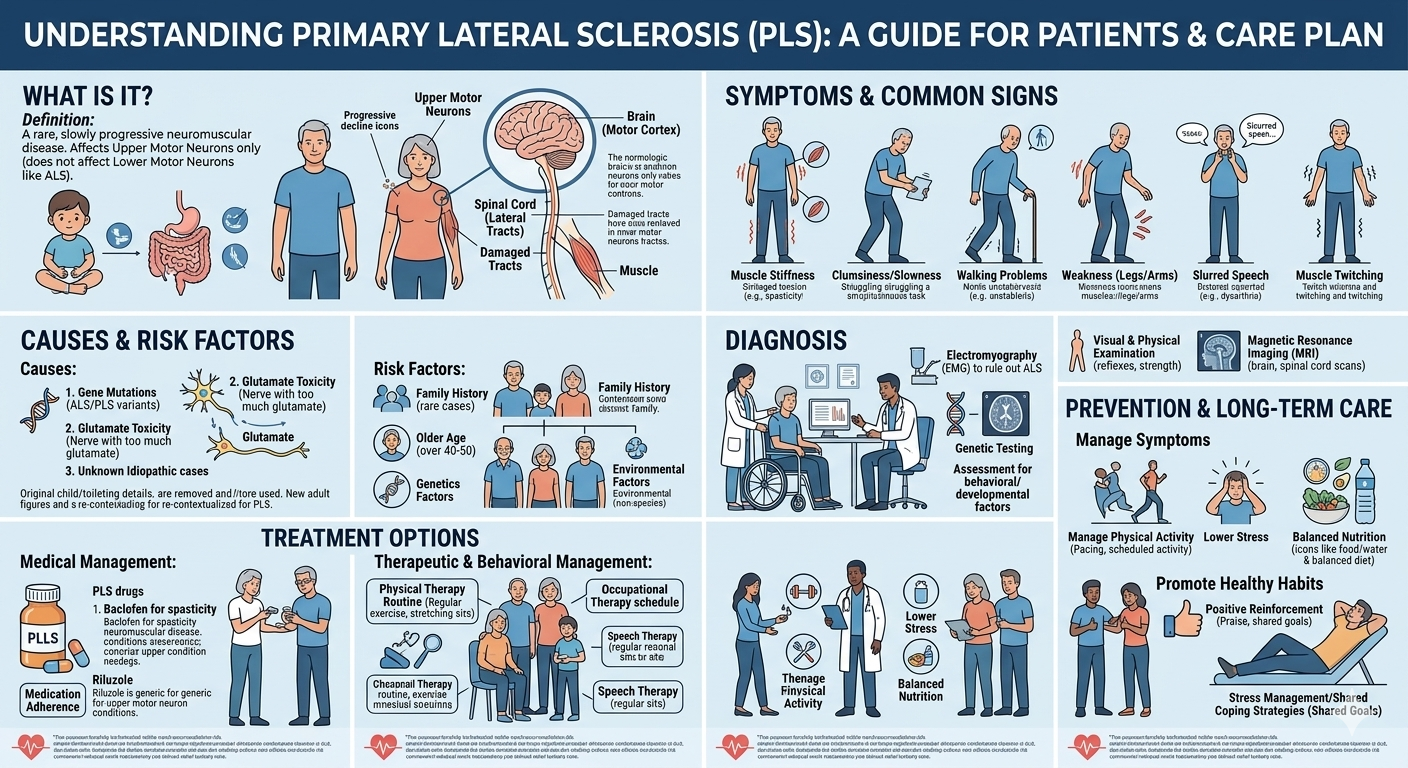
Primary Lateral Sclerosis (PLS) is a rare and progressive neurological condition that affects the nerve cells in the brain responsible for controlling voluntary movement. These specific nerve cells, called upper motor neurons, slowly break down over time. This breakdown leads to increasing weakness and stiffness in the muscles of the legs, arms, and tongue. PLS is a type of motor neuron disease that makes everyday actions like walking, speaking, and swallowing gradually more difficult. While symptoms typically begin between ages 40 and 60, it can rarely start in childhood (juvenile PLS), which is often linked to specific genetic changes. PLS usually progresses more slowly than a related condition called Amyotrophic Lateral Sclerosis (ALS) and, for most people, is not life-threatening.
Understanding the Condition
Primary Lateral Sclerosis (PLS): Understanding a Rare Movement Disorder
Understanding the Condition
Primary Lateral Sclerosis (PLS) is a rare and progressive neurological condition that affects the nerve cells in the brain responsible for controlling voluntary movement. These specific nerve cells, called upper motor neurons, slowly break down over time. This breakdown leads to increasing weakness and stiffness in the muscles of the legs, arms, and tongue. PLS is a type of motor neuron disease that makes everyday actions like walking, speaking, and swallowing gradually more difficult. While symptoms typically begin between ages 40 and 60, it can rarely start in childhood (juvenile PLS), which is often linked to specific genetic changes. PLS usually progresses more slowly than a related condition called Amyotrophic Lateral Sclerosis (ALS) and, for most people, is not life-threatening.
Common Symptoms
Muscle Stiffness and Spasms (Spasticity): Legs may feel stiff, weak, and experience involuntary muscle spasms, often starting in one leg and potentially spreading to arms, hands, tongue, and jaw.
Slow Movement and Balance Issues: Difficulty moving at a normal pace, tripping frequently, and struggling with balance. This can lead to bumping into objects or dropping things.
Speech and Swallowing Difficulties: Speech may become slow or slurred (dysarthria), the voice might sound hoarse, and drooling can occur. Chewing and swallowing food can also become challenging (dysphagia).
Hand and Arm Weakness: As the condition progresses, weakness and stiffness can affect the hands and arms, making fine motor tasks difficult.
Emotional Changes: Some individuals may experience frequent, rapid, and intense shifts in emotions, such as uncontrollable crying or laughing that doesn't match their actual feelings.
Rare Late-Stage Issues: In very advanced stages, a small number of people might experience problems with breathing or bladder control.
Consultation Guide
Which Specialist to Meet
You should consult a neurologist, a doctor specializing in conditions of the brain, spinal cord, and nerves. They can properly diagnose your symptoms and recommend appropriate management.
Preparations Before Your Visit
Before your visit, make a detailed list of your symptoms, including when they started, how often they occur, and if anything makes them better or worse. Also, list all medications you're currently taking (including over-the-counter drugs and supplements), any allergies, and your complete medical history. Prepare a list of questions you have for the doctor. Bringing a family member or friend can be helpful to take notes and support you.
Book a doctor visit near me
The doctor will ask about your medical history and symptoms. They will then perform a series of tests to assess your mental status, coordination, balance, reflexes, muscle strength, sensation, and ability to walk. This may involve tasks like walking in a straight line, touching your finger to your nose, or having your reflexes tested with a small hammer. Depending on the initial findings, additional tests like imaging scans (e.g., MRI) may be ordered.
Electromyography (EMG) and Nerve Conduction Study (NCS)
Muscle Relaxants: Medications to help reduce muscle stiffness (spasticity) and spasms, improving comfort and mobility. (Duration: Ongoing, as prescribed by your doctor, to manage symptoms.)
Managing Symptoms and Maintaining Quality of Life
Regular Exercise and Physical Activity: Engage in physician-approved exercises to maintain muscle strength, flexibility, and cardiovascular health. Physical therapy guidance is crucial to ensure safety and effectiveness.
Regular Medical Follow-ups: Maintain consistent appointments with your neurologist and other specialists to monitor disease progression, adjust treatments, and proactively address any new symptoms or complications.
Diagnostic Procedures
Neurological Examination
A neurological exam is a comprehensive check of your nervous system, including your brain, spinal cord, nerves, and muscles. It helps your healthcare team understand how different parts of your nervous system are functioning.
What to Expect
EMG and NCS are tests used together to assess the health of your muscles and the nerves that control them (motor neurons). They can help identify nerve damage, muscle problems, or issues with how nerves communicate with muscles.
What to Expect
During a Nerve Conduction Study (NCS), small sticker electrodes are placed on your skin over specific nerves. Mild electrical pulses will be delivered through these electrodes, which may feel like a quick, tingling sensation. These pulses measure how fast and strong electrical signals travel along your nerves. For the Electromyography (EMG) part, a very fine needle electrode is gently inserted into several muscles. This needle records the electrical activity of your muscles, both at rest and when you subtly contract them. You might feel some discomfort or a mild ache during the needle insertion, but typically it is well-tolerated.
Treatment Options
Medications
Pain Management: Medications to alleviate muscle pain, cramping, or nerve pain that may arise. (Duration: As needed or on a scheduled basis, depending on pain severity.)
Medications for Emotional Lability: Certain medications can help manage uncontrollable crying or laughing spells (emotional lability) if they become troublesome. (Duration: Ongoing, adjusted based on effectiveness and side effects.)
Therapies
Physical Therapy: Exercises and techniques to maintain muscle strength, flexibility, balance, and range of motion. A physical therapist can also recommend adaptive equipment. (Duration: Regular, ongoing sessions, often lifelong, with home exercise programs.)
Occupational Therapy: Strategies and tools to help individuals adapt to daily activities (e.g., eating, dressing, bathing) as muscle weakness progresses. This includes learning to use assistive devices effectively. (Duration: As needed, with ongoing adjustments as the condition evolves.)
Prevention & Long-Term Wellbeing
Speech Therapy: Exercises and techniques to improve speech clarity and swallowing safety. A speech therapist can provide strategies for communication and recommend modifications to diet textures. (Duration: Regular sessions, especially as speech and swallowing difficulties increase.)
Nutritional Counseling: Guidance on maintaining adequate nutrition and hydration, especially when swallowing becomes challenging. This may involve dietary modifications or specialized feeding techniques. (Duration: Ongoing, with periodic assessments by a dietitian.)
Mobility Aids: Canes, walkers, braces (orthotics), or wheelchairs to help maintain independence and prevent falls as leg weakness progresses. (Duration: As needed, with devices upgraded as mobility changes over time.)
Psychological Support: Counseling or support groups to help individuals and families cope with the emotional and psychological challenges of living with a progressive condition. (Duration: As needed, throughout the course of the disease.)
Fall Prevention Strategies: Modify your home environment to remove hazards, use assistive devices as recommended, and practice balance exercises to reduce the risk of falls and related injuries.
Nutrition and Hydration Management: Work with a dietitian to ensure adequate calorie and fluid intake, especially if swallowing becomes difficult. Dietary modifications, such as softer foods or thickened liquids, may be necessary.
Communication Aids: Explore communication devices or techniques with a speech therapist if speech becomes severely impaired, helping you maintain connections with others.
Cognitive and Behavioral Support: If cognitive changes or behavioral shifts occur, seek professional evaluation and support to manage these aspects, potentially involving neuropsychologists or specialized dementia care.
Psychosocial Support: Connect with support groups, therapists, or counselors to cope with the emotional impact of a progressive condition and to share experiences with others facing similar challenges.
Tags & Topics
Notice an error or need an update?
Help us keep medical information accurate. Report incorrect info or suggest an edit.


