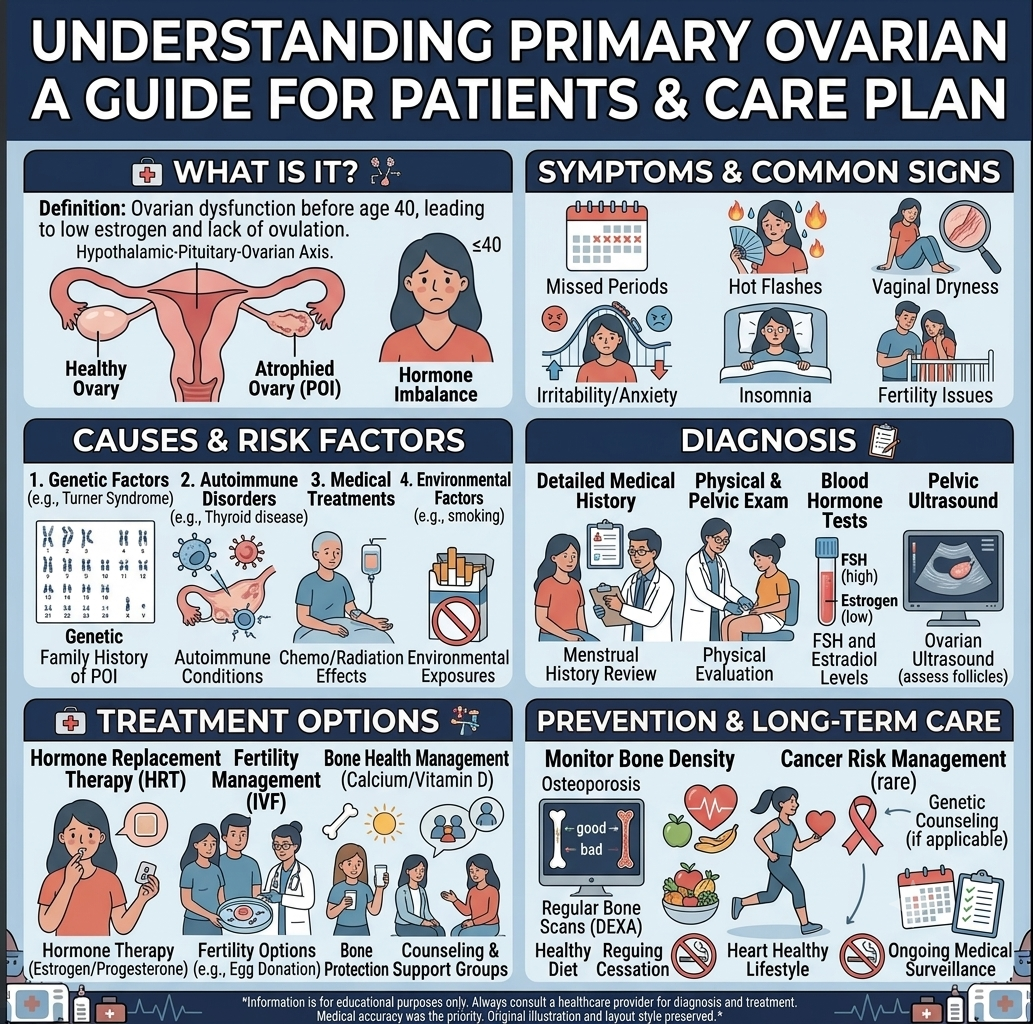
Primary ovarian insufficiency (POI) occurs when a person's ovaries stop functioning normally before the age of 40. This means the ovaries don't produce enough of the hormone estrogen or release eggs regularly, which often leads to difficulty getting pregnant. It is also known as premature ovarian insufficiency. POI is different from premature menopause; individuals with POI can still experience irregular periods and, in rare cases, even become pregnant, whereas those with premature menopause stop menstruating entirely and cannot conceive. Treatment aims to restore estrogen levels, helping to prevent complications such as heart disease and weak bones.
Understanding the Condition
Primary Ovarian Insufficiency: Understanding Early Ovarian Changes
Understanding the Condition
Common Symptoms
Irregular or Missed Periods: Periods may become infrequent, stop entirely for months, or be unpredictable. This can occur over several years, or emerge after pregnancy or discontinuing birth control.
Difficulty Getting Pregnant: Due to irregular or absent egg release from the ovaries.
Hot Flashes and Night Sweats: Sudden feelings of warmth, often accompanied by sweating, especially at night.
Vaginal Dryness: A feeling of dryness or irritation in the vagina due to low estrogen levels, which can make intercourse uncomfortable.
Mood Changes: Experiences of anger, depression, or anxiety can be common.
Trouble with Focus or Memory: Some individuals report difficulty concentrating or changes in memory.
Less Sexual Desire: A decrease in libido or interest in sexual activity.
Consultation Guide
Which Specialist to Meet
Before your appointment, prepare a list of your symptoms, including when they started and how often they occur. Gather your complete medical history, including any previous surgeries, current medications, and family medical history (especially if any relatives have experienced similar conditions). Also, prepare a list of questions you have for your healthcare provider.
Book a doctor visit near me
An imaging test that uses sound waves to create detailed pictures of your uterus and ovaries. This helps the doctor assess the size of your ovaries, count the number of follicles (tiny sacs containing eggs), and rule out other potential causes for your symptoms.
Estrogen Replacement Therapy: This therapy replaces the estrogen that your ovaries are no longer producing. It helps to alleviate symptoms like hot flashes and vaginal dryness and is crucial for preventing long-term complications such as osteoporosis and heart disease. It can be administered through pills, patches, or gels, often combined with a progestin if you still have your uterus. (Duration: Typically, treatment continues until the average age of natural menopause (around 50-52 years old), or as advised by your doctor.)
Assisted Reproductive Technologies: For individuals wishing to conceive, options like in vitro fertilization (IVF) using donor eggs may be considered, as your own eggs are likely not viable or consistently available. (Duration: Each IVF cycle can take several weeks, and multiple cycles may be needed.)
Nutritional Supplements
Calcium and Vitamin D Supplements: These supplements are recommended to support bone health and help prevent osteoporosis, a common complication of low estrogen levels. (Duration: Long-term, ongoing as advised by your healthcare provider.)
Psychological Counseling and Support Groups: Addressing the emotional impact of infertility and the condition itself, such as depression and anxiety, is vital. Counseling or joining support groups can provide coping strategies and a sense of community. (Duration: As needed, ranging from several weeks to ongoing support.)
Consultation Guide
You will lie on an exam table with your feet supported. The doctor will first visually inspect your external genital area. Then, using gloved fingers, they will gently insert them into your vagina to feel your uterus and ovaries. A speculum, a medical instrument, may be used to gently open the vagina to visualize the cervix and perform a Pap test (a screening for cervical cancer) if needed. This part of the exam may cause some pressure or mild discomfort but is usually brief.
A healthcare professional will draw a small sample of blood, typically from a vein in your arm. This is a quick procedure that may cause a brief pinching sensation. The blood sample is then sent to a laboratory for analysis.
These tests analyze your chromosomes and specific genes to identify underlying genetic conditions that can cause primary ovarian insufficiency, such as Fragile X syndrome or mosaic Turner syndrome.
Heart Health Monitoring: Early loss of estrogen can increase the risk of heart disease. Work with your doctor to monitor cardiovascular risk factors such as blood pressure, cholesterol levels, and lifestyle.
Diagnostic Procedures
You should consult your general practitioner first, who may then refer you to a gynecologist, an endocrinologist (a hormone specialist), or a fertility specialist if conception is a concern. These specialists can diagnose the condition and discuss appropriate management.
Preparations Before Your Visit
A physical examination of your reproductive organs to check for any unusual changes or abnormalities. This exam assesses the health of your vulva, vagina, cervix, ovaries, uterus, rectum, and surrounding pelvic area.
What to Expect
Blood tests measure the levels of specific hormones to assess ovarian function. Key hormones checked include follicle-stimulating hormone (FSH) and estrogen (estradiol). High FSH and low estrogen levels often indicate primary ovarian insufficiency. Other hormones like thyroid hormones and prolactin may also be measured to rule out other conditions.
What to Expect
What to Expect
Genetic testing often involves providing a blood sample, similar to other routine blood tests. This sample is then sent to a specialized laboratory for detailed genetic analysis. Results may take several weeks to become available.
What to Expect
You will lie on an exam table. A clear gel is applied to your lower abdomen, and a small handheld device called a transducer is moved gently over the area. Sometimes, a transvaginal ultrasound is performed for clearer images, where a slender, lubricated transducer is carefully inserted into the vagina. The procedure is generally not painful but you might feel some pressure.
Bone Density Screenings: Due to the increased risk of osteoporosis, regular bone density tests (DEXA scans) are important to monitor bone health and guide preventive measures.
Treatment Options
Primary ovarian insufficiency (POI) occurs when a person's ovaries stop functioning normally before the age of 40. This means the ovaries don't produce enough of the hormone estrogen or release eggs regularly, which often leads to difficulty getting pregnant. It is also known as premature ovarian insufficiency. POI is different from premature menopause; individuals with POI can still experience irregular periods and, in rare cases, even become pregnant, whereas those with premature menopause stop menstruating entirely and cannot conceive. Treatment aims to restore estrogen levels, helping to prevent complications such as heart disease and weak bones.
Medications and Hormone Therapy
Prevention & Long-Term Wellbeing
Long-Term Management and Prevention of Complications
Regular Medical Check-ups: Maintain regular appointments with your healthcare provider to monitor your condition, adjust hormone therapy if needed, and screen for potential complications.
Healthy Lifestyle Choices: Adopt a balanced diet rich in calcium and vitamin D, engage in regular weight-bearing exercise, and avoid smoking and excessive alcohol consumption to support overall health and bone strength.
Stress Management: Engage in stress-reducing activities such as meditation, yoga, or hobbies to help manage the emotional challenges that can accompany primary ovarian insufficiency.
Tags & Topics
Notice an error or need an update?
Help us keep medical information accurate. Report incorrect info or suggest an edit.


