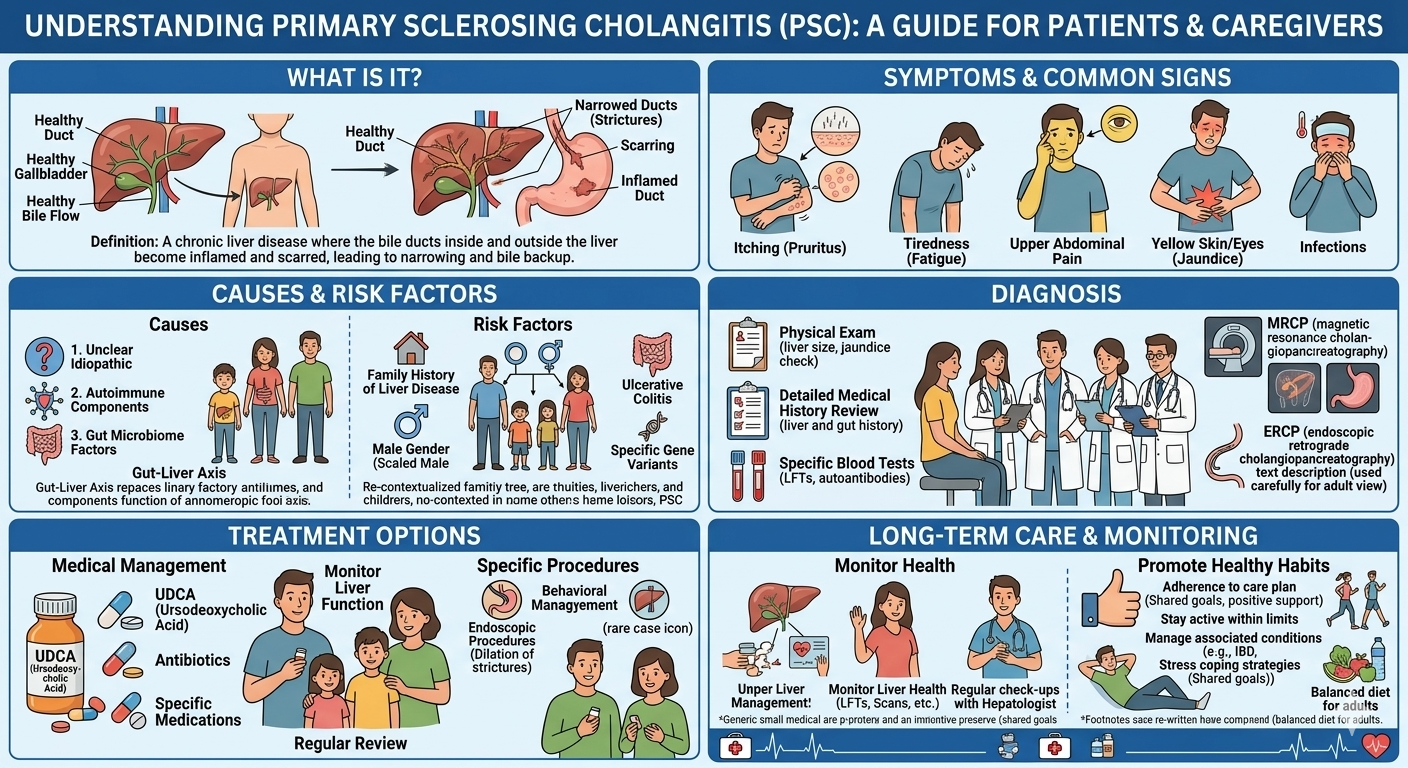
Primary sclerosing cholangitis (PSC) is a rare, chronic liver disease where inflammation, scarring, and narrowing of the bile ducts (tubes carrying digestive fluid) occur. This damages the liver, impairing its ability to filter blood and aid digestion. Affecting about 1 in 10,000 people, PSC is often linked to inflammatory bowel disease (IBD). It increases risks for liver failure and certain cancers. While treatments manage symptoms and temporarily open ducts, liver transplant is the only cure for advanced stages. PSC is an immune-mediated condition where the body's immune system mistakenly attacks its own tissues, likely due to a mix of genetics, immune issues, and environmental factors. It's important to distinguish PSC from other conditions like secondary sclerosing cholangitis, pediatric PSC, ascending cholangitis, and primary biliary cholangitis, which have different causes or characteristics.
Understanding the Condition
Primary Sclerosing Cholangitis (PSC): A Guide for Non-Medical Individuals
Understanding the Condition
Primary sclerosing cholangitis (PSC) is a rare, chronic liver disease where inflammation, scarring, and narrowing of the bile ducts (tubes carrying digestive fluid) occur. This damages the liver, impairing its ability to filter blood and aid digestion. Affecting about 1 in 10,000 people, PSC is often linked to inflammatory bowel disease (IBD). It increases risks for liver failure and certain cancers. While treatments manage symptoms and temporarily open ducts, liver transplant is the only cure for advanced stages. PSC is an immune-mediated condition where the body's immune system mistakenly attacks its own tissues, likely due to a mix of genetics, immune issues, and environmental factors. It's important to distinguish PSC from other conditions like secondary sclerosing cholangitis, pediatric PSC, ascending cholangitis, and primary biliary cholangitis, which have different causes or characteristics.
Common Symptoms
Extreme Tiredness: Persistent and overwhelming fatigue that isn't relieved by rest.
Pain in the Upper Belly: Discomfort or pain felt in the upper right part of the abdomen.
Fever: Often a sign of repeated infections within the bile ducts.
Before your appointment, prepare a detailed list of all your symptoms, including when they started and how often they occur. Include any changes in your health, all medications (prescription and over-the-counter), vitamins, and supplements you take. Be ready to discuss your medical history and any family history of liver disease or inflammatory bowel disease. Also, write down any questions you have for the doctor.
Book a doctor visit near me
Symptom Tracking: Keep a diary of any new or worsening symptoms and report them promptly to your healthcare team.
Emotional Support: Living with a chronic illness can be challenging. Seeking support from family, friends, support groups, or mental health professionals can be beneficial.
Consultation Guide
Jaundice: A yellowing of the skin or the whites of the eyes, caused by a buildup of bile pigments in the blood.
Consultation Guide
Which Specialist to Meet
You should consult with a primary care provider initially, who may then refer you to a gastroenterologist (a specialist in digestive diseases) or a hepatologist (a liver specialist).
Preparations Before Your Visit
Diagnostic Procedures
A procedure to remove a tiny piece of liver tissue, which is then examined under a microscope in a laboratory. This helps doctors diagnose liver diseases, determine how severe the disease is, and guide treatment decisions.
What to Expect
You will lie down, and the skin over your liver will be numbed. A common method involves a thin needle inserted through the skin into the liver to take a sample. Less common methods use a vein in the neck or a small belly incision. The procedure takes about 15-30 minutes, followed by observation. You may feel pressure or a mild ache. Risks are generally low, including pain, bleeding, or rare infection.
These are blood tests that measure the levels of certain enzymes and proteins in your blood. They help doctors assess how well your liver is working, detect any liver damage, and monitor the course of liver disease. Some tests measure the liver's ability to produce important proteins and clear waste products, while others identify enzymes released by liver cells when they are damaged.
What to Expect
A healthcare professional will draw a sample of blood, usually from a vein in your arm. This is a quick process, and you might feel a brief sting or pinch. The blood sample is then sent to a lab for analysis. Abnormal results don't always mean liver disease but provide important clues that your doctor will interpret alongside your overall health.
MELD Score (Model for End-Stage Liver Disease)
A numerical score (6-40) for people over 12 with liver disease. It predicts transplant urgency within three months; higher scores mean greater need and higher risk while waiting. MELD helps rank patients on transplant lists, prioritizing the sickest.
What to Expect
The MELD score is not a procedure itself but a calculation based on the results of specific blood tests (bilirubin, creatinine, and INR, sometimes sodium). You will have blood drawn for these tests, similar to a liver function test. Your doctor or transplant team will then use these results to calculate your score and discuss its implications for your treatment plan and position on a transplant waiting list. Your MELD score can change over time.
Vitamin Supplements: Since PSC can hinder the absorption of fat-soluble vitamins (A, D, E, K), supplements are prescribed to prevent deficiencies. (Duration: Long-term, guided by blood tests.)
Blood and Imaging Tests: Regular blood tests (including liver function tests and MELD score calculations) and imaging studies (like MRI or ultrasound of the bile ducts) are crucial to track the condition and screen for complications.
Screening for Complications: Includes regular screenings for specific cancers (e.g., colon, bile duct, gallbladder), bone density tests for osteoporosis, and monitoring for portal hypertension (high blood pressure in the liver's main blood vessel).
Treatment Options
Itch Relief: Medications can help reduce severe itching. (Duration: As needed, often long-term.)
Bone Health Treatment: For thinning bones (osteoporosis), medications to strengthen bones and supplements like calcium and vitamin D may be recommended. (Duration: Long-term, as directed by a specialist.)
Infection Control: Antibiotics treat bacterial bile duct infections, particularly after procedures or blockages. (Duration: As prescribed, typically short courses during active infection.)
Bile Duct Dilation and Stent Placement: Using an endoscope (a thin, flexible tube with a camera), doctors can temporarily widen narrowed bile ducts with a small balloon or place a tiny tube (stent) to keep them open and improve bile flow. (Duration: Provides temporary relief; may require repeat procedures over time.)
Surgical Procedures
Liver Transplant: This is the only known cure for advanced PSC. A diseased liver that can no longer function is removed and replaced with a healthy liver from a deceased donor or a portion of a healthy liver from a living donor. (Duration: A one-time surgery, followed by lifelong medication to prevent rejection of the new liver.)
Prevention & Long-Term Wellbeing
Prevention
Healthy Lifestyle: While PSC cannot be prevented, maintaining a healthy lifestyle with a balanced diet, regular exercise, and avoiding alcohol supports liver health.
Vaccinations: Stay up-to-date on vaccinations (e.g., hepatitis A/B, flu, pneumonia) to prevent additional complications.
Long-Term Monitoring
Regular Medical Check-ups: Consistent follow-up appointments with your hepatologist or gastroenterologist are essential for monitoring liver health and disease progression.
Tags & Topics
Notice an error or need an update?
Help us keep medical information accurate. Report incorrect info or suggest an edit.


