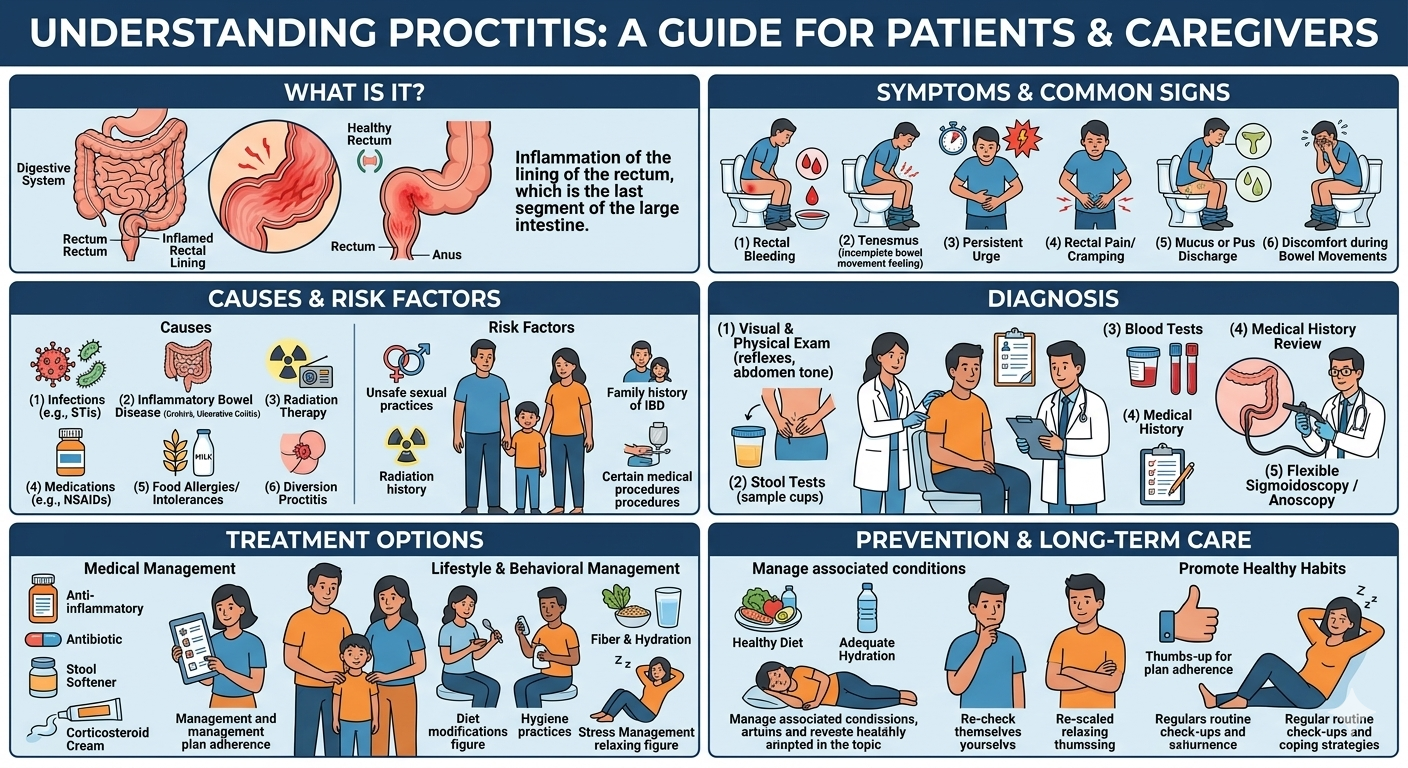
Proctitis is a condition characterized by irritation and swelling of the rectum, the final section of the large intestine before stool leaves the body. It can cause discomfort, rectal pain, bleeding, and a frequent urge to have a bowel movement. Proctitis can be temporary or persistent and is often linked to inflammatory bowel diseases, certain sexually transmitted infections, or as a side effect of radiation treatment.
Understanding the Condition
Understanding Proctitis: Inflammation of the Rectum
Understanding the Condition
Common Symptoms
Rectal Pain: Discomfort or aching in the rectal area.
Feeling of Needing to Pass Stool (Tenesmus): A persistent, strong, and often painful urge to have a bowel movement, even if the rectum is empty.
Rectal Bleeding: Bright red blood observed on stool, toilet paper, or in the toilet bowl.
Rectal Discharge: Passing mucus or pus-like fluid from the rectum.
Diarrhea: Frequent, loose, or watery bowel movements.
Constipation: Difficulty passing stool, or infrequent bowel movements.
Abdominal Cramping: Painful spasms or aches in the abdomen, often more noticeable on the left side.
Consultation Guide
Which Specialist to Meet
Before your appointment, be prepared to discuss your symptoms in detail, including when they started, their frequency, and what seems to make them better or worse. Provide a complete medical history, including any existing conditions, all medications you currently take, recent travel, and your sexual health history.
Book a doctor visit near me
The doctor will ask questions about your health and symptoms. A digital rectal exam involves the doctor gently inserting a gloved, lubricated finger into your rectum to feel for any issues.
Dietary Changes: Avoiding foods that may irritate the digestive system, such as spicy foods, caffeine, or certain dairy products, to help manage symptoms. (Duration: Ongoing as needed for symptom management and to identify individual triggers.)
Hydration: Drinking plenty of fluids to prevent dehydration, especially if experiencing diarrhea. (Duration: Ongoing and essential for overall health.)
Polyp Removal: If benign growths (polyps) are found during a colonoscopy or sigmoidoscopy, they can be removed to prevent them from potentially becoming cancerous or contributing to symptoms. (Duration: A single procedure, but follow-up surveillance through future endoscopic exams may be recommended.)
Regular Medical Follow-ups: Maintain scheduled appointments with your doctor, especially if you have chronic proctitis or an underlying condition like IBD, to monitor symptoms, adjust treatment, and check for complications.
Monitor for Complications: Be aware of potential complications such as severe bleeding, anemia, ulcers, fistulas (abnormal connections between organs), or a severely widened colon (toxic megacolon), and report any concerning symptoms to your doctor immediately.
Consultation Guide
Proctitis is a condition characterized by irritation and swelling of the rectum, the final section of the large intestine before stool leaves the body. It can cause discomfort, rectal pain, bleeding, and a frequent urge to have a bowel movement. Proctitis can be temporary or persistent and is often linked to inflammatory bowel diseases, certain sexually transmitted infections, or as a side effect of radiation treatment.
Begin by consulting your primary care physician. Depending on the cause and severity, you may be referred to a gastroenterologist, a doctor specializing in digestive system disorders. If a sexually transmitted infection is suspected, an infectious disease specialist may also be involved.
Preparations Before Your Visit
A small amount of blood will be drawn from a vein, usually in your arm. This is a quick procedure and generally causes only minor discomfort.
Antiviral Medications: Administered for viral infections such as herpes that cause proctitis. (Duration: Usually 7-10 days, but may be longer for severe or recurring cases.)
Immunosuppressants: Used for proctitis caused by autoimmune conditions like inflammatory bowel disease to calm an overactive immune system. (Duration: Often long-term, requiring ongoing monitoring and adjustment by a specialist.)
Dilation of Rectal Strictures: In cases where severe inflammation has caused narrowing of the rectum (stricture), endoscopic procedures may be performed to gently widen the passage. (Duration: May require multiple sessions or ongoing monitoring depending on the severity and recurrence of strictures.)
Nutritional Support: Work with a dietitian if needed to identify trigger foods and maintain adequate nutrition, particularly if proctitis causes persistent diarrhea or malabsorption.
Mental Health Support: Living with chronic conditions can be challenging. Seek support from counselors, support groups, or mental health professionals if you experience emotional distress.
Diagnostic Procedures
Your doctor will review your medical history and perform a physical examination, which may include a digital rectal exam to check for tenderness or abnormalities.
What to Expect
Blood samples are taken to check for signs of inflammation, infection, or anemia (low red blood cell count) that can result from chronic bleeding.
What to Expect
Stool samples are analyzed in a lab to identify bacterial, viral, or parasitic infections that might be causing proctitis.
What to Expect
You will be provided with a container and instructions to collect a stool sample at home. The sample is then returned to the clinic or lab for analysis.
Sexually Transmitted Infection (STI) Tests
If STIs are suspected, specific tests on blood or rectal swabs will be performed to identify common infections like gonorrhea, chlamydia, herpes, or syphilis.
What to Expect
Depending on the suspected STI, blood samples may be taken, or a swab might be used to collect cells from the rectum. These samples are sent to a lab for testing.
Flexible Sigmoidoscopy
This procedure examines the rectum and the lower part of the large intestine (sigmoid colon) using a thin, flexible tube (sigmoidoscope) with a camera. Small tissue samples (biopsies) can be collected for further examination.
What to Expect
Beforehand, you'll typically use an enema or laxative to clear your lower bowel. During the exam, you will lie on your side as the lubricated sigmoidoscope is gently inserted into your anus and guided through the rectum and sigmoid colon. You may feel pressure, cramping, or a strong urge to have a bowel movement as the scope moves and air is gently inflated. The procedure usually takes 10-20 minutes.
This more extensive procedure examines the entire large intestine (colon) and rectum using a longer, flexible tube (colonoscope) with a camera. It allows for a comprehensive view, and the doctor can remove polyps (small growths) or take biopsies if needed.
What to Expect
You will receive specific instructions for bowel preparation, typically involving a special diet (clear liquids) and strong laxatives the day before to thoroughly cleanse your colon. On the day of the procedure, you will usually receive sedation to help you relax and minimize discomfort. The colonoscope is inserted into your anus and guided through your entire large intestine. The procedure lasts 30-60 minutes, and you may feel drowsy and have little memory of it afterward.
While less common for directly diagnosing proctitis, a needle biopsy may be used if an abnormal mass or area is identified that requires cellular analysis. It involves using a thin needle to remove a small sample of tissue or cells from the suspicious area for laboratory testing.
What to Expect
The area to be biopsied will be numbed with a local anesthetic. The doctor will then guide a long, thin needle through the skin and into the targeted area, often using imaging guidance (like ultrasound) to ensure accuracy. You may feel pressure or a brief, sharp sensation as the sample is taken. The procedure's duration varies depending on the biopsy site.
Practice Safe Sex: Use condoms consistently and correctly, limit the number of sexual partners, and get tested regularly for sexually transmitted infections (STIs). Abstinence, especially from anal sex, offers the surest protection against STI-related proctitis.
Treatment Options
Medications
Anti-inflammatory Medications: Used to reduce swelling and irritation in the rectum. These can be given orally or as suppositories/enemas for direct application to the inflamed area. (Duration: Varies from a few weeks for acute cases to long-term, ongoing management for chronic conditions like inflammatory bowel disease.)
Antibiotics: Prescribed to treat bacterial infections that are causing proctitis. (Duration: Typically 7-14 days, depending on the specific bacterial infection identified.)
Colectomy/Proctocolectomy: In rare, severe cases of proctitis that are part of extensive inflammatory bowel disease and do not respond to other treatments, surgical removal of part or all of the colon and rectum may be considered. (Duration: A definitive, one-time procedure with a significant recovery period, typically leading to a permanent solution for severe, intractable disease.)
Manage Underlying Conditions: For individuals with inflammatory bowel disease (IBD), strictly adhere to your prescribed treatment plan to prevent or control flare-ups that can lead to proctitis.
Radiation Therapy Monitoring: If undergoing radiation therapy to the pelvic area, discuss potential side effects and preventative measures with your medical team to minimize the risk of radiation-induced proctitis.
Long-Term Monitoring & Support
Prevention & Long-Term Wellbeing
Home Remedies & Lifestyle Adjustments
Prevention
Tags & Topics
Notice an error or need an update?
Help us keep medical information accurate. Report incorrect info or suggest an edit.


