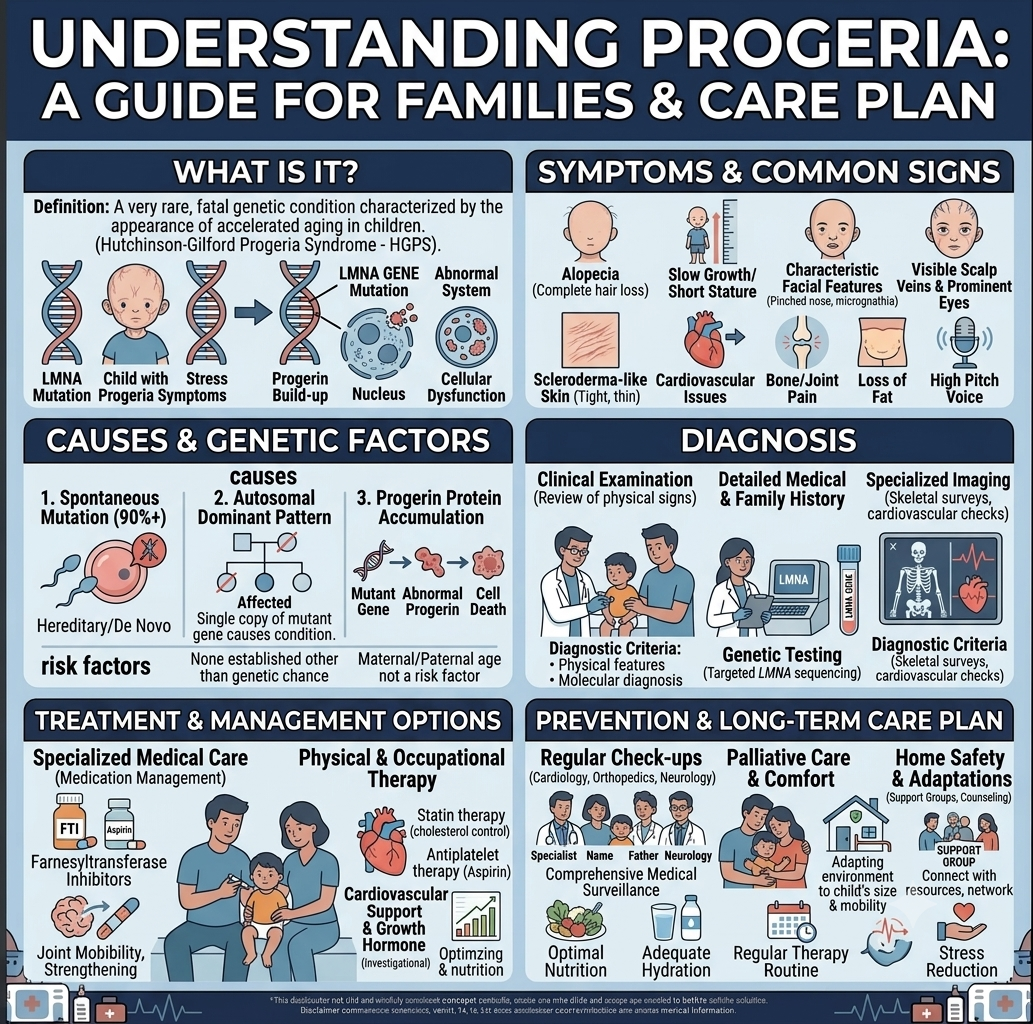
Progeria (pronounced pro-JEER-e-uh), also known as Hutchinson-Gilford progeria syndrome, is an extremely rare genetic condition that causes children to age rapidly. Typically, healthy at birth, affected children begin to show signs of accelerated aging, such as slowed growth, loss of fat, and hair loss, within their first two years of life. The most common cause of death for children with progeria is heart problems or strokes, due to severe hardening of the arteries. The average life expectancy is around 15 years, though some may live up to 20 years. While there is no cure, ongoing research and new treatments offer hope for managing symptoms and complications.
Understanding the Condition
Progeria: Understanding Rapid Aging in Children
Understanding the Condition
Progeria (pronounced pro-JEER-e-uh), also known as Hutchinson-Gilford progeria syndrome, is an extremely rare genetic condition that causes children to age rapidly. Typically, healthy at birth, affected children begin to show signs of accelerated aging, such as slowed growth, loss of fat, and hair loss, within their first two years of life. The most common cause of death for children with progeria is heart problems or strokes, due to severe hardening of the arteries. The average life expectancy is around 15 years, though some may live up to 20 years. While there is no cure, ongoing research and new treatments offer hope for managing symptoms and complications.
Common Symptoms
Slowed Growth: Children grow much slower than average and struggle to gain weight, leading to below-average height and weight.
Lack of Body Fat: Noticeable absence of fat stored directly under the skin.
Distinctive Facial Features: A head that appears large compared to the face, with a small jaw, chin, and mouth, thin lips, and a thin, curved nose that may resemble a bird's beak.
Eye Characteristics: Large eyes with eyelids that may not fully close.
Hair Loss: Extensive hair loss, including eyelashes and eyebrows.
Skin Changes: Thin, spotty, and wrinkled skin, often revealing veins easily underneath.
High-Pitched Voice: A characteristic change in voice.
Normal Brain Development: Importantly, motor skills (movement) and intelligence are not affected by Progeria.
Consultation Guide
Which Specialist to Meet
A team of specialists is often involved in the care of a child with Progeria. This team may include a Pediatrician (children's doctor), Geneticist (expert in genetic conditions), Cardiologist (heart specialist), Neurologist (brain and nerve specialist), Ophthalmologist (eye specialist), Dermatologist (skin specialist), Nutritionist, and a Genetic Counselor.
Preparations Before Your Visit
Before your visit, gather all available medical records for your child. Make a detailed list of all symptoms you've observed, noting when they started. Prepare a list of questions you have for the doctor. If possible, gather information about your family's medical history.
Book a doctor visit near me
Symptom Management and Supportive Care
Comprehensive Medical Monitoring: This involves regular check-ups with a team of specialists to monitor for complications, especially those affecting the heart and blood vessels. Care also focuses on maintaining good nutrition, hydration, and addressing skin health. (Duration: Ongoing throughout the child's life)
Interventional Procedures for Heart Complications
Coronary Artery Bypass Surgery: This surgery creates a new path for blood to flow around a blocked or severely narrowed heart artery. A healthy blood vessel, often taken from the chest or leg, is surgically attached to the heart artery, bypassing the blocked section. This improves blood supply to the heart muscle. (Duration: The surgery typically lasts several hours. Recovery takes several weeks to months, but the bypass grafts can function for many years, improving heart function and reducing symptoms.)
Consultation Guide
Family Planning Consultation: Although progeria usually results from a random gene change, if you have one child with the condition, there's a slightly increased (but still low) chance of having another. A genetic counselor can provide detailed information about these risks and discuss family planning options. The age of the father has been identified as a possible risk factor.
Long-Term Monitoring and Medical Care
Regular Health Check-ups: Ongoing medical follow-up is crucial to monitor for signs of heart disease, stroke risk, and other potential complications. This allows for early intervention and management to improve quality of life.
Diagnostic Procedures
Genetic Testing for Progeria
This test examines a child's DNA to identify specific changes (mutations) in the LMNA gene. This gene is responsible for making a protein vital for holding the center of cells together. A change in this gene leads to a faulty protein called progerin, which makes cells unstable and contributes to the rapid aging seen in progeria. This genetic change is rarely inherited and usually occurs randomly.
What to Expect
A small sample of blood is typically taken from a vein, or a swab may be used to collect cells from inside the cheek. The sample is then sent to a specialized lab for analysis. The physical risk from this procedure is minimal. If initial genetic tests are inconclusive but progeria is strongly suspected, more comprehensive genome sequencing might be performed. Results from genetic testing can confirm the diagnosis.
Treatment Options
Coronary Angioplasty and Stents: This procedure is used to open blocked or narrowed blood vessels (arteries) that supply blood to the heart. A thin tube with a tiny balloon at its tip is guided into the affected artery. The balloon is inflated to widen the artery, and often a small wire mesh tube called a stent is placed to keep it open and reduce the chance of re-narrowing. Many stents are coated with medication to further prevent blockages. (Duration: The procedure itself usually takes an hour or two. The stent is a permanent implant designed to keep the artery open for many years.)
Surgical Procedures for Heart Complications
Prevention & Long-Term Wellbeing
Risk Assessment and Genetic Counseling
Lifestyle Support
Nutritional Support and Hydration: Ensuring adequate nutrition and hydration is important for managing overall health and supporting growth in children with progeria.
Skin Care: Due to thin and fragile skin, careful skin care is important to prevent injury and maintain skin integrity.
Emotional and Social Support
Connecting with Support Networks: Engaging with support groups or organizations dedicated to progeria can provide invaluable emotional support, practical advice, and a sense of community for families navigating this rare condition.
Tags & Topics
Notice an error or need an update?
Help us keep medical information accurate. Report incorrect info or suggest an edit.


