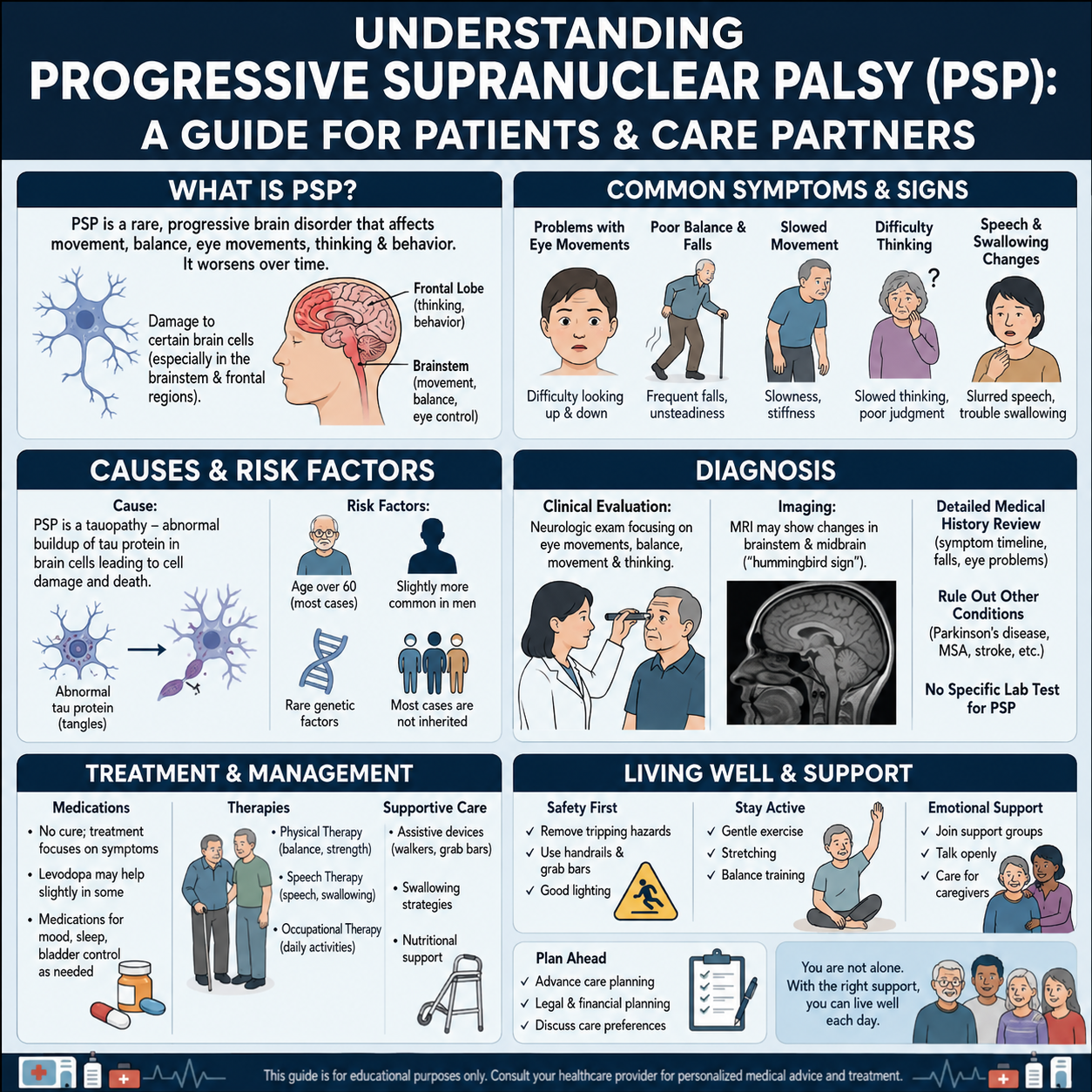
Progressive supranuclear palsy (PSP), also known as Steele-Richardson-Olszewski syndrome, is a rare and progressive neurological disorder. It occurs due to the damage of nerve cells in vital areas of the brain that govern movement, balance, coordination, cognition, and vision. This damage is linked to an abnormal accumulation of a protein called tau, which is also seen in other neurodegenerative conditions. As a progressive disease, PSP worsens over time, and because there is currently no cure, medical interventions are dedicated to managing symptoms, improving safety, and preventing life-threatening complications.
Understanding the Condition
Understanding Progressive Supranuclear Palsy
Understanding the Condition
Progressive supranuclear palsy (PSP), also known as Steele-Richardson-Olszewski syndrome, is a rare and progressive neurological disorder. It occurs due to the damage of nerve cells in vital areas of the brain that govern movement, balance, coordination, cognition, and vision. This damage is linked to an abnormal accumulation of a protein called tau, which is also seen in other neurodegenerative conditions. As a progressive disease, PSP worsens over time, and because there is currently no cure, medical interventions are dedicated to managing symptoms, improving safety, and preventing life-threatening complications.
Common Symptoms
You should consult a neurologist, preferably one who specializes in movement disorders. Depending on your symptoms, your care team may also include physical therapists, speech-language pathologists, and occupational therapists.
Preparations Before Your Visit
Before your appointment, document all of your physical and behavioral symptoms, noting when they began and how quickly they have progressed. Write down your complete medical history, including any family history of neurological conditions, and bring a list of all current medications, vitamins, and supplements. It is highly recommended to have a family member or caregiver accompany you to help take notes and provide additional observations.
Book a doctor visit near me
Muscle-Relaxing Injections: Local injections of neurotoxins to manage muscle spasms, particularly involuntary eyelid squinting (blepharospasm) or abnormal head turning. (Duration: Injections are repeated every 3 to 4 months as needed to maintain symptom relief.)
Antidepressants: Medications prescribed to manage symptoms of depression, anxiety, emotional changes, or pseudobulbar affect (uncontrolled laughing or crying). (Duration: Taken daily, with benefits monitored over several months to years.)
Therapies and Support
Physical Therapy: Specialized exercises designed to improve walking, enhance balance, and teach safety strategies to prevent backward falls. (Duration: Ongoing, long-term therapy adapted to the patient's changing physical capabilities.)
Speech and Swallowing Therapy: Exercises to strengthen throat muscles, improve speech clarity, and learn safe swallowing techniques to prevent choking. (Duration: Regular sessions scheduled intermittently or continuously as the disease progresses.)
Occupational Therapy: An evaluation of daily living skills to recommend adaptive equipment, such as weighted walkers, specialized eating utensils, or double-prism glasses. (Duration: Provided periodically to adjust to the patient's evolving functional needs.)
Percutaneous Endoscopic Gastrostomy (PEG): The surgical placement of a feeding tube directly into the stomach through the abdominal wall for individuals with severe swallowing difficulties to ensure safe, adequate nutrition and prevent aspiration. (Duration: Typically permanent once advanced swallowing difficulties pose a critical health risk.)
Consultation Guide
Balance Impairment and Backward Falls: An early and hallmark indicator of PSP is an instability while walking, which frequently causes individuals to lose balance and fall backward without warning.
Impaired Eye Movements: Difficulty controlling eye movements, particularly looking downward. This can cause blurred or double vision, make reading or eating difficult, and lead to a lack of eye contact that can be mistaken for a lack of interest.
Muscle Stiffness and Rigid Movements: Pronounced muscle rigidity, especially in the neck and spine, resulting in clumsy, awkward body movements and a stiff, upright posture.
Difficulty Swallowing and Speaking: Slow, slurred, or quiet speech, alongside progressive swallowing difficulties (dysphagia) that can cause coughing, choking, or inhaling food into the lungs.
Cognitive and Behavioral Changes: Slowness in thinking, trouble with planning, reasoning, and decision-making, alongside unexpected mood changes such as depression, anxiety, apathy, or uncontrollable laughing or crying.
Facial and Sensory Changes: Rigidity in the facial muscles can produce a fixed, startled, or worried facial expression. High sensitivity to bright light is also common.
Consultation Guide
Which Specialist to Meet
Diagnostic Procedures
Neurological Examination
A comprehensive clinical assessment conducted by a specialist to evaluate your nervous system, testing your reflexes, muscle strength, coordination, balance, eye movements, and cognitive abilities.
What to Expect
During this painless exam, the neurologist will ask you to perform simple physical tasks, such as walking in a straight line, standing on one foot, following a light with your eyes, and answering basic cognitive or memory questions. The evaluation typically takes 30 to 60 minutes.
Brain Magnetic Resonance Imaging (MRI)
An imaging scan that uses a powerful magnet and radio waves to generate highly detailed, cross-sectional pictures of your brain. It helps identify structural changes, such as shrinkage in the midbrain, which distinguishes PSP from other conditions like Parkinson's disease.
What to Expect
You will lie flat on a motorized table that slides into a dome-like scanner. You must remain completely still during the scan. The machine will make loud clicking and thumping noises, so you will be provided with earplugs or headphones. The test is non-invasive, entirely painless, and takes approximately 30 to 45 minutes.
Treatment Options
Medications
Dopaminergic Therapy: Oral medications used to temporarily improve muscle stiffness, rigidity, and movement speed, though they are generally less effective in PSP than in Parkinson's disease. (Duration: Typically prescribed long-term, with periodic dosage adjustments to evaluate effectiveness.)
Prevention & Long-Term Wellbeing
Fall Prevention and Home Safety
Remove Home Hazards: Clear the living environment of clutter, loose rugs, electrical cords, and uneven surfaces. Install bright lighting throughout the home.
Install Safety Grab Bars: Place sturdy grab bars in bathrooms, hallways, and showers to provide secure handholds and minimize the risk of sudden backward falls.
Use Specialized Mobility Devices: Utilize weighted walkers or wheelchairs designed to prevent backward tipping, ensuring the user does not stand or walk unassisted.
Nutritional Safety and Comfort
Modify Food Texture: Prepare soft foods and use commercial thickeners for liquids to make swallowing easier and prevent food from entering the airway.
Maintain Upright Posture: Ensure the individual sits completely upright at a 90-degree angle during meals and remains upright for at least 30 minutes afterward to prevent choking.
Emotional and Cognitive Health
Mental and Social Stimulation: Engage in gentle social activities, listen to music, or participate in low-stress hobbies to support emotional wellbeing and combat isolation.
Caregiver Support Networks: Connect with support groups to share coping strategies, manage stress, and gain education on handling the long-term demands of the condition.
Tags & Topics
Notice an error or need an update?
Help us keep medical information accurate. Report incorrect info or suggest an edit.


