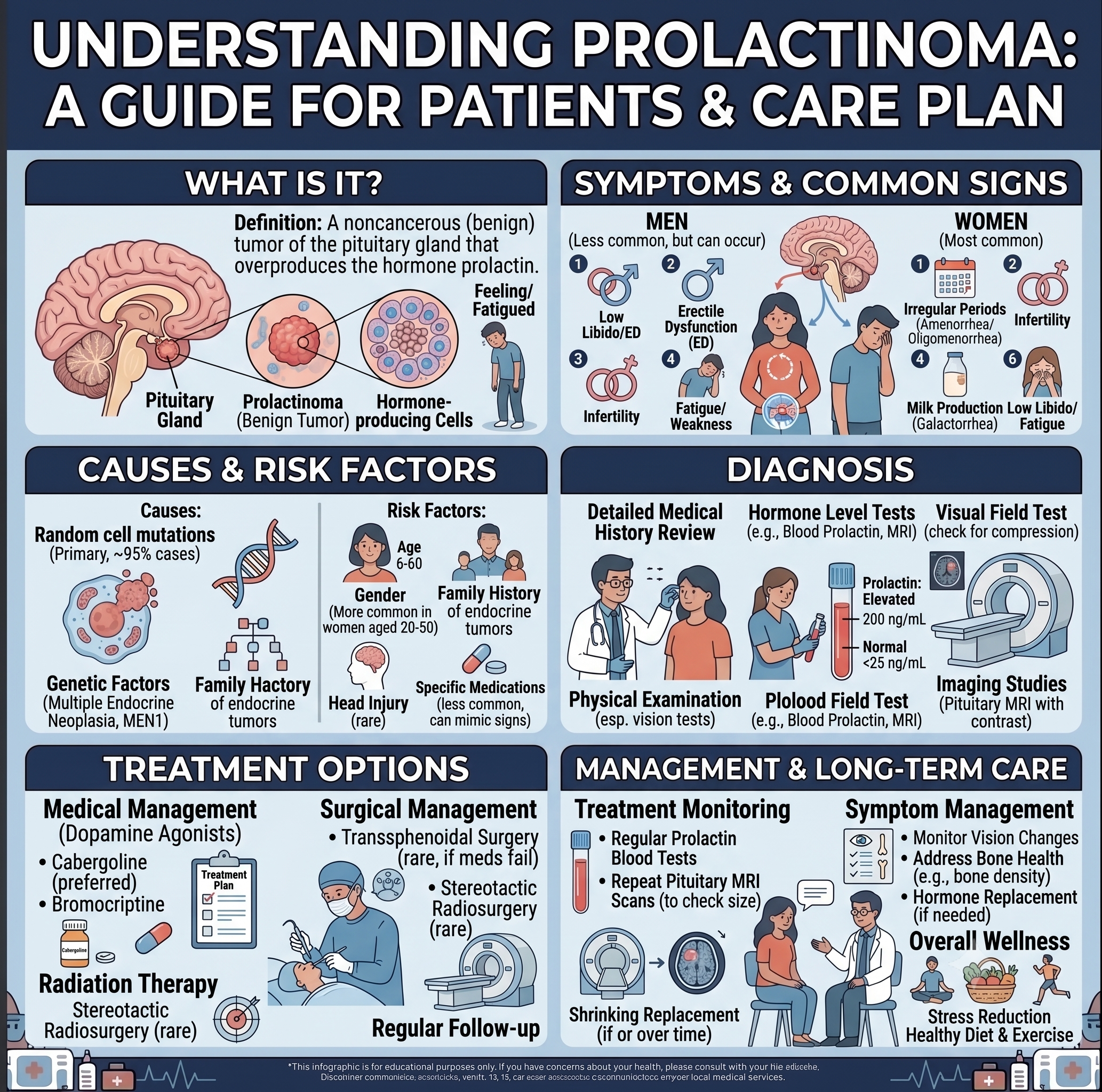
Prolactinoma is a non-cancerous growth that develops in the pituitary gland, a small gland at the base of the brain. This tumor causes the pituitary gland to produce an excessive amount of a hormone called prolactin. While not life-threatening, a prolactinoma can lead to various health concerns, including problems with vision and difficulty achieving pregnancy. This is because high prolactin levels can disrupt the body's natural balance of sex hormones like estrogen and testosterone. Prolactinoma is the most common type of pituitary tumor that produces hormones. Treatment often involves medications designed to shrink the tumor and normalize prolactin levels, though some individuals may require surgery to remove the growth. Some prolactinomas cause no symptoms, but elevated prolactin (a condition called hyperprolactinemia) and pressure from a large tumor can lead to noticeable issues.
Understanding the Condition
Prolactinoma is a non-cancerous growth that develops in the pituitary gland, a small gland at the base of the brain. This tumor causes the pituitary gland to produce an excessive amount of a hormone called prolactin. While not life-threatening, a prolactinoma can lead to various health concerns, including problems with vision and difficulty achieving pregnancy. This is because high prolactin levels can disrupt the body's natural balance of sex hormones like estrogen and testosterone. Prolactinoma is the most common type of pituitary tumor that produces hormones. Treatment often involves medications designed to shrink the tumor and normalize prolactin levels, though some individuals may require surgery to remove the growth. Some prolactinomas cause no symptoms, but elevated prolactin (a condition called hyperprolactinemia) and pressure from a large tumor can lead to noticeable issues.
Common Symptoms
In Females: Irregular or absent periods; milky nipple discharge (unrelated to pregnancy/breastfeeding); vaginal dryness and painful sex; acne and excessive body hair.
In Males: Erectile dysfunction; reduced sex drive; enlarged breasts (gynecomastia); decreased body hair and muscle mass.
In Anyone: Infertility; bone thinning (can weaken bones due to low sex hormones); headaches.
Pressure from a Large Tumor: Vision problems (blurry or double vision, loss of peripheral vision) due to pressure on nearby optic nerves.
Consultation Guide
Which Specialist to Meet
List all symptoms (onset, changes), current medications, vitamins, and supplements. Prepare questions. Consider bringing support.
Book a doctor visit near me
Diagnostic Procedures
Prolactinoma: Understanding, Diagnosis, and Management
Understanding the Condition
Blood samples measure prolactin and other hormone levels (estrogen, testosterone) to detect abnormally high prolactin and its impact on sex hormones.
What to Expect
A healthcare professional draws a small amount of blood, usually from a vein in your arm. It's a quick procedure, causing a brief pinch or mild discomfort.
Magnetic Resonance Imaging (MRI) of the Pituitary Gland
MRI uses magnets and radio waves for detailed images of the pituitary gland. This locates and measures the tumor, checking for pressure on surrounding structures like optic nerves.
What to Expect
You lie still on a movable table inside a large machine. You may hear loud noises; earplugs are provided. A contrast dye may be injected. The procedure typically takes 30-60 minutes.
Assesses peripheral and central vision to detect vision loss from a large prolactinoma pressing on optic nerves.
What to Expect
You sit in front of a dome-shaped instrument, focusing on a central point. You press a button each time you see small, dim lights in your peripheral vision. It’s non-invasive, taking about 15-30 minutes per eye.
Ongoing Medical Supervision: Regular follow-up with your endocrinologist is crucial. This involves periodic blood tests (prolactin, sex hormones) and repeat MRI scans to track tumor size and treatment effectiveness. Regular vision checks may also be recommended.
Managing Specific Health Concerns
Bone Health Management: Due to potential long-term low sex hormone levels, monitoring bone density is important. Strategies include ensuring adequate calcium and Vitamin D, and engaging in weight-bearing exercise to help maintain bone strength.
Treatment Options
Consult your primary care physician, who may refer you to an endocrinologist (hormone specialist), a neurosurgeon (for surgery), an ophthalmologist (for vision), or a reproductive endocrinologist (for fertility).
Preparations Before Your Visit
Medications
Hormone-Lowering Medications: These medications mimic a natural brain chemical to suppress prolactin production and often shrink the tumor. They are usually the first line of treatment. (Duration: Often long-term, possibly lifelong, or until sufficient tumor shrinkage and stable prolactin levels allow for gradual reduction or discontinuation under medical supervision.)
Surgical Procedures
Transsphenoidal Surgery: A minimally invasive procedure to remove the prolactinoma. The surgeon accesses the pituitary gland through the nose and sphenoid sinus using tiny instruments, avoiding a skull incision. (Duration: Hospital stay is typically a few days; recovery involves several weeks.)
External Beam Radiation Therapy: Uses precisely aimed, high-energy beams to damage tumor cells, preventing growth. Used if medication and surgery are ineffective or not an option. Modern techniques protect healthy brain tissue. (Duration: Administered in small daily doses over several weeks, typically five days a week.)
Fertility Planning: If pregnancy is desired, discuss this with your doctor early. Prolactinoma can impact fertility, and treatment may need adjustment during pregnancy.
Prevention & Long-Term Wellbeing
Long-Term Monitoring
Lifestyle and Mental Health Support: A healthy lifestyle with balanced nutrition and regular physical activity supports overall well-being. Living with a chronic condition and hormonal fluctuations can affect mood; seeking support from mental health professionals can be beneficial.
Tags & Topics
Notice an error or need an update?
Help us keep medical information accurate. Report incorrect info or suggest an edit.


