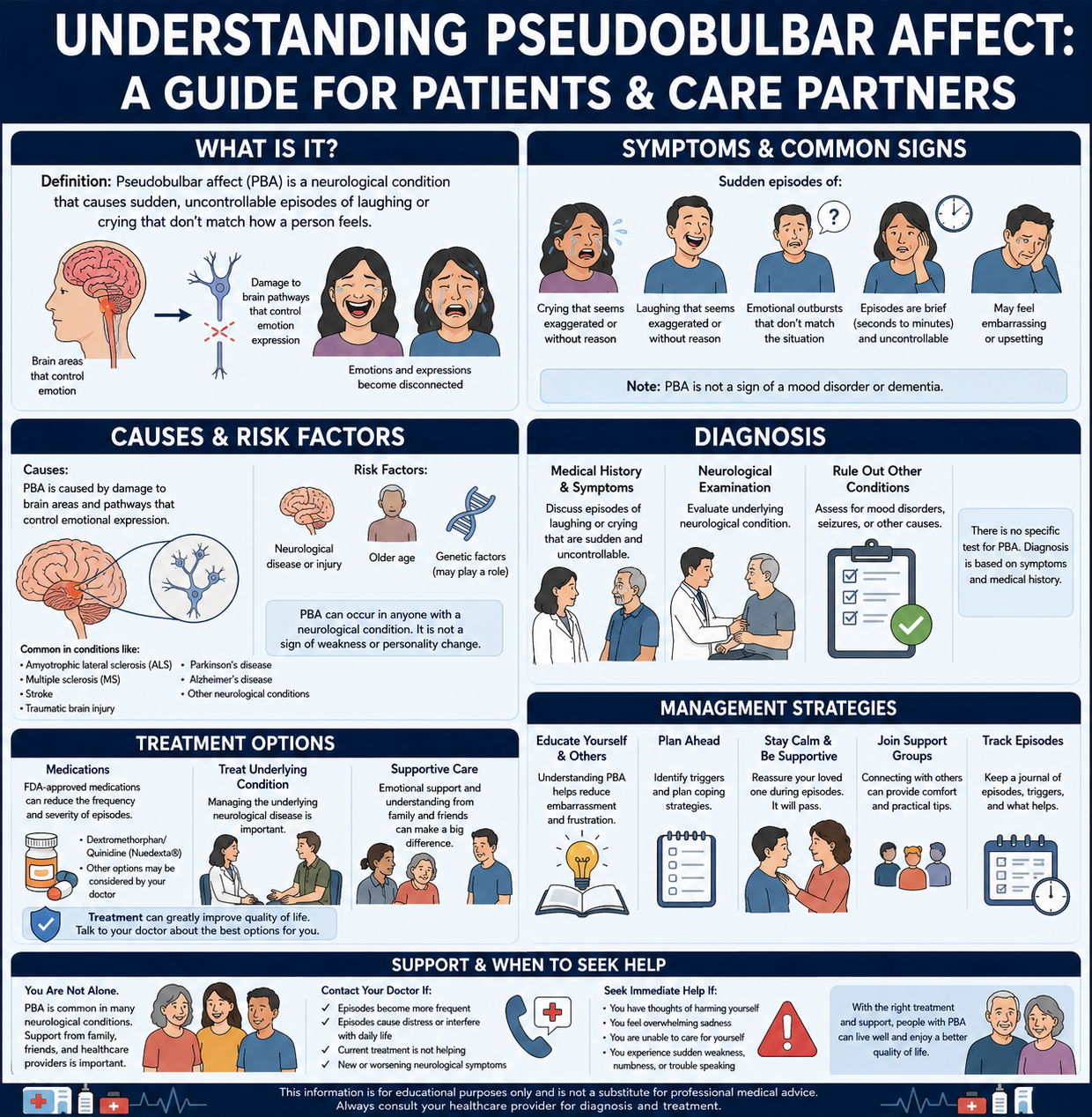
Pseudobulbar Affect (PBA) is a neurological condition where a person experiences sudden, frequent, and uncontrollable outbursts of crying or laughter that are disproportionate to, or even contradictory to, their actual feelings or the situation. While individuals with PBA feel emotions normally, their outward expression is involuntary and often inappropriate. For instance, a mildly amusing comment might trigger intense laughter, or a slightly sad scene could lead to uncontrollable sobbing. These episodes typically last for several minutes. PBA results from damage or dysfunction in the brain pathways that control emotional expression, often linked to underlying neurological diseases or brain injuries. The condition can be distressing, leading to embarrassment and social withdrawal, and is sometimes mistaken for mood disorders like depression or bipolar disorder, making accurate diagnosis crucial for effective management.
Understanding the Condition
Pseudobulbar Affect (PBA): Understanding Uncontrolled Emotions
Understanding the Condition
Common Symptoms
Involuntary Emotional Outbursts: Sudden, uncontrollable episodes of crying or laughter that do not match how you truly feel or the context of the situation. You may not feel sad or amused at all, yet find yourself laughing or crying intensely.
Disproportionate Reactions: Emotional responses that are much more intense than warranted by the situation. For example, a minor disappointment might trigger profound sobbing, or a mildly funny comment could lead to prolonged, loud laughter.
Brief Duration: Episodes typically start abruptly and last for a short period, often several minutes. Laughter may sometimes turn into tears during an episode.
Crying More Common: While both laughter and crying can occur, involuntary crying spells are generally reported more frequently than laughter.
No Underlying Mood Change: Unlike depression, PBA crying spells are brief and not accompanied by persistent feelings of sadness, changes in sleep patterns, appetite, or energy levels. You maintain your usual emotional state between episodes.
Consultation Guide
Which Specialist to Meet
Initially, you should consult your primary care doctor. They can provide an initial assessment and refer you to a specialist. A neurologist is the most appropriate specialist, especially if you have a pre-existing neurological condition. In some cases, a psychiatrist may be involved to help distinguish PBA from mood disorders.
Preparations Before Your Visit
Before your appointment, prepare a detailed list of your symptoms, including when they started, how often they occur, and how long they last. Note any factors that seem to trigger or worsen them. Bring a list of all current medications, including over-the-counter drugs and supplements. Be ready to discuss your full medical history, including any neurological conditions or brain injuries. Consider bringing a family member or close friend who has observed your episodes, as they can provide valuable additional information.
Book a doctor visit near me
Diagnosis of PBA is primarily based on a thorough review of your medical history, a detailed discussion of your symptoms, and a physical examination. Your doctor will ask about the nature, frequency, and duration of your emotional outbursts and inquire about any underlying neurological conditions or brain injuries.
To rule out mood disorders like depression or bipolar disorder, your doctor might use specific questionnaires or scales designed to assess mood symptoms. This helps confirm that your emotional outbursts are involuntary and distinct from persistent mood changes.
You may be asked to complete one or more questionnaires, either on paper or verbally with your doctor. These typically involve rating the severity and frequency of various mood-related symptoms, such as sadness, loss of interest, energy levels, sleep patterns, and appetite. Be honest and thorough in your responses, as this information is crucial for an accurate diagnosis.
Neurological Imaging (e.g., MRI or CT Scan)
While imaging tests do not directly diagnose PBA, they are often used to identify or investigate the underlying neurological conditions or brain injuries that commonly cause PBA, such as multiple sclerosis, stroke, or traumatic brain injury. This helps the medical team understand the root cause of your symptoms.
Medications that Balance Brain Chemicals: Specific medications can help stabilize the brain pathways involved in emotional control. These work by influencing the balance of certain chemical messengers in the brain. They can significantly reduce the frequency and intensity of PBA episodes. (Duration: Ongoing, usually for the long term, with regular monitoring and dosage adjustments by your doctor to achieve optimal symptom control.)
Therapies and Support
Psychological Counseling (Psychotherapy): Talking with a mental health professional can provide strategies for coping with the emotional and social impact of PBA. Therapy can help you process feelings of embarrassment, frustration, or isolation, and develop communication techniques. (Duration: As needed, typically ranging from several weeks to ongoing sessions, depending on individual needs and progress.)
Support Groups: Connecting with others who have PBA can offer emotional support, shared experiences, and practical advice for living with the condition. These groups provide a safe space to discuss challenges and successes. (Duration: Ongoing, as desired, offering continuous peer support.)
Managing Underlying Neurological Conditions: For individuals with conditions like multiple sclerosis, Parkinson's disease, or ALS, adhering to prescribed treatment plans and maintaining overall brain health can help manage symptoms and potentially reduce the risk or severity of PBA development.
Living with PBA and Long-Term Wellbeing
Early Detection and Treatment: If you or someone you know experiences sudden, inappropriate laughing or crying, seek medical advice promptly. Early diagnosis and treatment can significantly improve symptom management and quality of life.
Educate Yourself and Others: Learning about PBA empowers you to understand your condition and explain it to those around you, fostering empathy and reducing social discomfort. Share information with family and friends so they can offer informed support.
Develop Coping Mechanisms: Work with a healthcare professional to identify personal triggers and develop strategies to manage episodes, such as focusing on a calming thought, changing your body posture, or briefly excusing yourself from a situation.
Maintain Social Connections: Despite potential embarrassment, try to stay connected with supportive friends and family. Social isolation can worsen feelings of anxiety or depression. Open communication about your condition can help maintain these important relationships.
Consultation Guide
Protecting Brain Health: Taking measures to prevent brain injuries, such as wearing seat belts in vehicles and helmets during sports or cycling, can reduce the risk of traumatic brain injury, a potential cause of PBA.
Diagnostic Procedures
Pseudobulbar Affect (PBA) is a neurological condition where a person experiences sudden, frequent, and uncontrollable outbursts of crying or laughter that are disproportionate to, or even contradictory to, their actual feelings or the situation. While individuals with PBA feel emotions normally, their outward expression is involuntary and often inappropriate. For instance, a mildly amusing comment might trigger intense laughter, or a slightly sad scene could lead to uncontrollable sobbing. These episodes typically last for several minutes. PBA results from damage or dysfunction in the brain pathways that control emotional expression, often linked to underlying neurological diseases or brain injuries. The condition can be distressing, leading to embarrassment and social withdrawal, and is sometimes mistaken for mood disorders like depression or bipolar disorder, making accurate diagnosis crucial for effective management.
Clinical Evaluation and Medical History
What to Expect
Differential Diagnosis Questionnaires
What to Expect
What to Expect
If your doctor suspects an underlying brain condition, you may undergo an MRI (Magnetic Resonance Imaging) or CT (Computed Tomography) scan. For an MRI, you will lie on a table that slides into a large tunnel-like machine. It uses powerful magnets and radio waves to create detailed images. You'll hear loud knocking noises and will need to remain very still. A CT scan involves lying on a table that slides into a donut-shaped machine, using X-rays to create cross-sectional images. Both procedures are usually painless, but some people find them uncomfortable due to the confined space or noise. You may receive an injection of contrast dye to enhance the images.
Treatment Options
Medications
Prevention & Long-Term Wellbeing
During the visit, your doctor will ask you a series of questions about your health, lifestyle, and emotional experiences. You will be encouraged to describe your episodes of uncontrolled laughing or crying in detail. The doctor may also perform a general physical and neurological exam to assess your reflexes, balance, and cognitive function. This discussion helps to understand your overall health picture and to differentiate PBA from other conditions.
Lifestyle and Home Strategies
Stress Management: Identifying and avoiding triggers, as well as practicing relaxation techniques like deep breathing or mindfulness, can help reduce the frequency or intensity of emotional outbursts. (Duration: Ongoing, as a daily practice for managing the condition.)
Communication Strategies: Learning to explain your condition to family, friends, and colleagues can help them understand and react appropriately during an episode, reducing embarrassment and fostering support. (Duration: Ongoing, as part of living with PBA and educating your social circle.)
Prevention and Risk Reduction
Tags & Topics
Notice an error or need an update?
Help us keep medical information accurate. Report incorrect info or suggest an edit.


