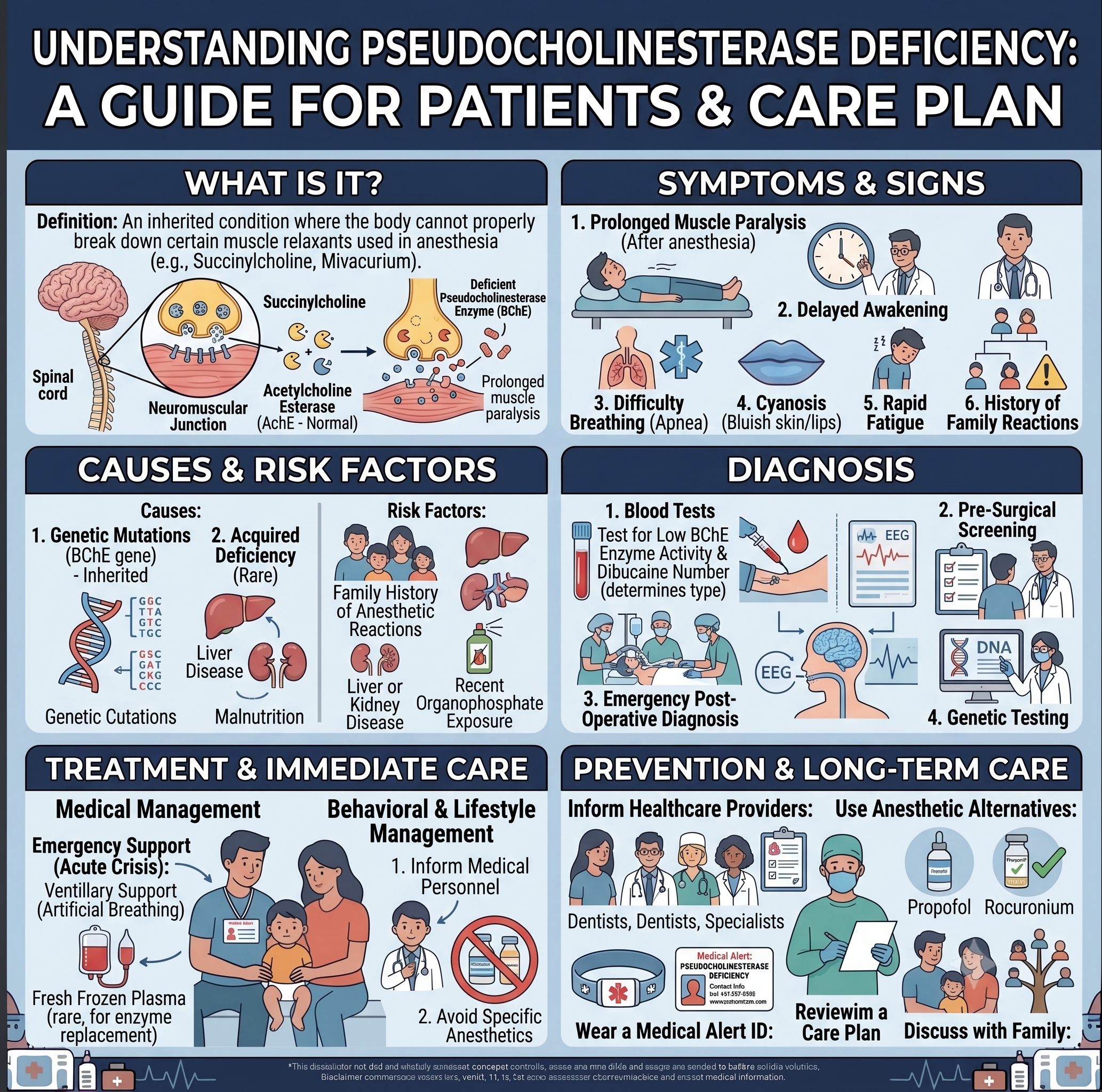
Pseudocholinesterase deficiency is a rare, usually inherited condition where your body has low levels or doesn't produce enough of a specific natural chemical called pseudocholinesterase. This chemical is vital for breaking down certain muscle-relaxing medications often used during general anesthesia for medical procedures like surgery. If you have this deficiency and receive one of these specific muscle relaxants, your muscles will stay relaxed and paralyzed much longer than intended. This temporary inability to move or breathe on your own can last for several hours, potentially requiring breathing assistance from a machine until your body recovers. While there's no cure for the deficiency itself, it is manageable by informing your medical team so they can use alternative, safe muscle relaxants.
Understanding the Condition
Understanding Pseudocholinesterase Deficiency
Understanding the Condition
Common Symptoms
Prolonged Muscle Paralysis: For most people, symptoms only appear after receiving a specific muscle relaxant (like succinylcholine) during general anesthesia. Instead of relaxing briefly, your muscles remain paralyzed for several hours longer than expected.
Inability to Move: During the prolonged paralysis, you will temporarily lose the ability to move any of your muscles on your own. This can be unsettling but is temporary.
Consultation Guide
A healthcare professional will draw a small sample of blood, usually from a vein in your arm, using a needle. The process is quick and generally causes only minor discomfort or a brief sting. The blood sample is then sent to a lab for analysis, and results typically become available within a few days to a week.
If the deficiency is suspected to be inherited, genetic testing analyzes your DNA to identify specific gene changes (mutations) linked to the condition. This can confirm a hereditary cause.
Diagnostic Procedures
Pseudocholinesterase Activity Blood Test
This common blood test measures the level and activity of the pseudocholinesterase enzyme in your bloodstream. Low levels or reduced activity can indicate a deficiency.
What to Expect
What to Expect
This test usually involves either a blood draw (similar to the enzyme activity test) or a saliva sample. For a saliva test, you will be asked to spit into a collection tube. There is no discomfort with a saliva test. Genetic test results can take several weeks, as the samples are processed in specialized laboratories.
Family History Review
While not a physical procedure, a detailed discussion with your doctor about your family's health history, particularly any issues with anesthesia or known cases of this deficiency, is a crucial diagnostic step.
What to Expect
Use of Alternative Muscle Relaxants: The primary treatment is careful anesthetic planning. If you are diagnosed with pseudocholinesterase deficiency, your anesthesiologist will select different muscle relaxant medications that are not affected by the deficiency. These alternative drugs are broken down by your body through different pathways, ensuring that muscle paralysis does not last longer than intended. (Duration: During any medical procedure requiring general anesthesia where muscle relaxation is needed.)
Ventilatory Support: In the rare event of accidental exposure to the problematic muscle relaxant, or if the diagnosis is only made after an adverse reaction, a mechanical breathing machine (ventilator) will be used to assist your breathing. This machine ensures you receive enough oxygen until the muscle relaxant is fully processed by your body and your muscles regain their function. (Duration: Several hours, until independent breathing is restored and muscle strength returns.)
Fresh Frozen Plasma Transfusion: In very severe and prolonged cases of paralysis following exposure, an emergency transfusion of fresh frozen plasma (FFP) may be considered. FFP contains the pseudocholinesterase enzyme, which can help your body break down the problematic muscle relaxant more quickly. This is an advanced measure used in critical situations. (Duration: A single, immediate transfusion during a prolonged crisis, with ongoing monitoring.)
Inform All Healthcare Providers: Always disclose your pseudocholinesterase deficiency diagnosis to any doctor, dentist, or other healthcare professional before any medical or dental procedure, especially if anesthesia or sedation will be involved. This ensures they can plan safe care.
Wear Medical Alert Identification: Consider wearing a medical alert bracelet or carrying an alert card that clearly states your condition. This is crucial in emergencies where you might be unable to communicate, alerting first responders to your specific medical needs.
Discuss Family Screening: Since this condition can be inherited, encourage close family members (parents, siblings, children) to discuss screening with their doctor, especially if they are planning any surgical procedures requiring anesthesia. Early detection prevents complications.
Maintain a Medical Record: Keep a personal file of your diagnosis, any specific recommendations from your anesthesiologist, and a list of medications to avoid. This information will be invaluable for future medical encounters.
Consider Genetic Counseling: If your deficiency is inherited, genetic counseling can provide a deeper understanding of the condition, its inheritance patterns, and the risks for other family members or future children.
Treatment Options
Pseudocholinesterase deficiency is a rare, usually inherited condition where your body has low levels or doesn't produce enough of a specific natural chemical called pseudocholinesterase. This chemical is vital for breaking down certain muscle-relaxing medications often used during general anesthesia for medical procedures like surgery. If you have this deficiency and receive one of these specific muscle relaxants, your muscles will stay relaxed and paralyzed much longer than intended. This temporary inability to move or breathe on your own can last for several hours, potentially requiring breathing assistance from a machine until your body recovers. While there's no cure for the deficiency itself, it is manageable by informing your medical team so they can use alternative, safe muscle relaxants.
Difficulty Breathing Independently: The muscles responsible for breathing are also affected, meaning you cannot breathe on your own during this extended period. Medical support, such as a breathing machine (ventilator), is necessary until your body can naturally process the medication and resume normal function.
Consultation Guide
Which Specialist to Meet
You should consult with a general practitioner, an anesthesiologist (a doctor specializing in anesthesia), and potentially a genetic counselor if the condition is inherited. A clinical pharmacologist might also offer insights into how medications affect your body.
Preparations Before Your Visit
Before your visit, gather information on your family's medical history, especially any instances of anesthesia complications or known pseudocholinesterase deficiency. Prepare a list of all current medications, supplements, and any past reactions you've had to drugs. Write down any questions you have about the condition or upcoming medical procedures.
Book a doctor visit near me
Your doctor will ask you questions about your parents, siblings, children, and grandparents, focusing on their medical conditions and any experiences with surgery or anesthesia. Be prepared to share as much detail as possible, as this information helps identify potential inherited patterns.
Tags & Topics
Notice an error or need an update?
Help us keep medical information accurate. Report incorrect info or suggest an edit.


