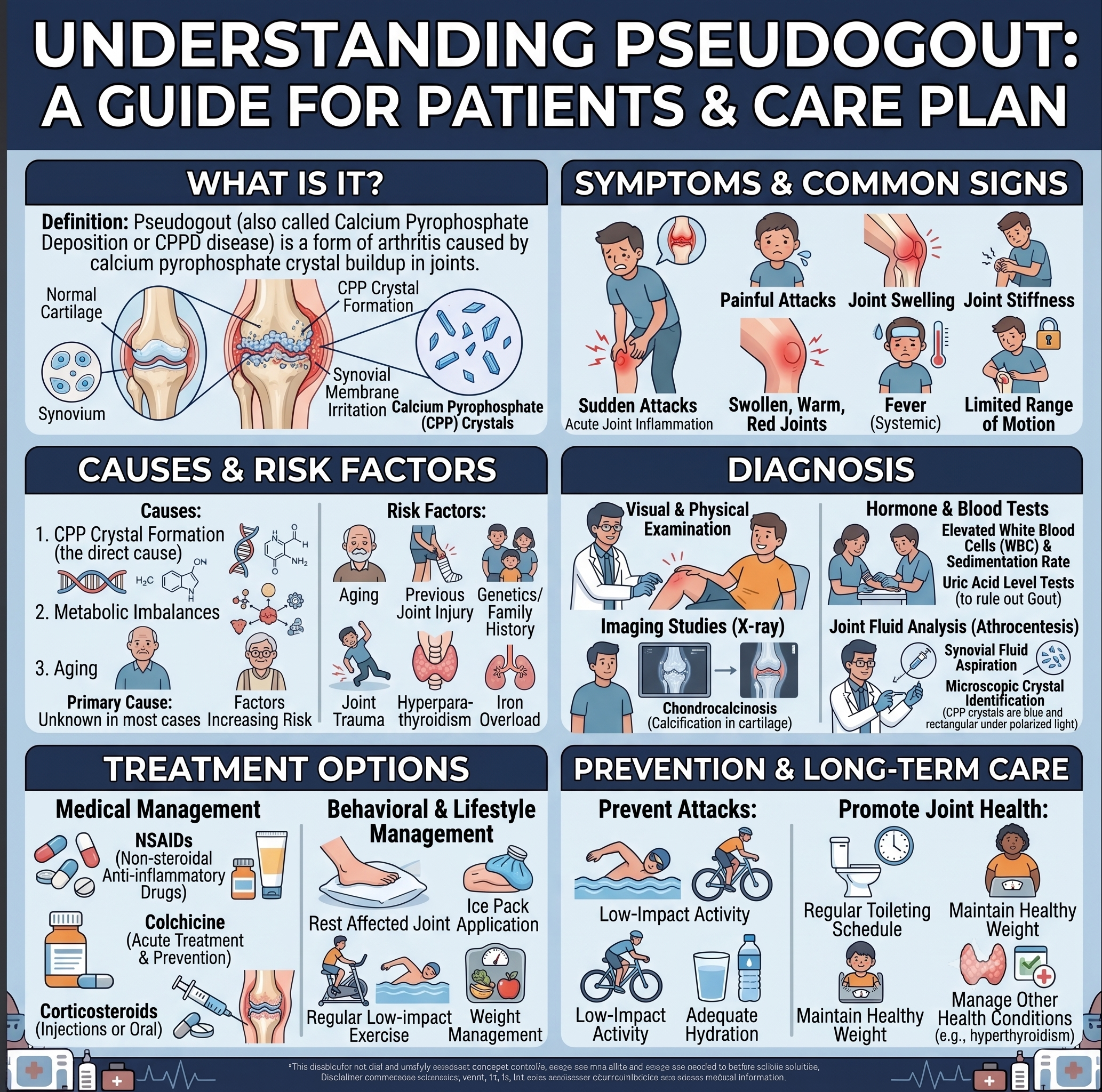
Pseudogout, also known as Calcium Pyrophosphate Deposition (CPPD) disease, is a form of arthritis causing sudden, intense pain and swelling in joints, typically lasting days or weeks. It's called pseudogout due to its similarity to gout, both involving crystal deposits, though the crystal types differ. While the exact cause for crystal formation is unclear, risk increases with age. Treatments focus on relieving pain and reducing inflammation during attacks.
Understanding the Condition
Pseudogout: Understanding Crystal Arthritis
Understanding the Condition
Common Symptoms
Severe Joint Pain: Affected joints become intensely painful during an attack.
Joint Swelling: The joint appears noticeably swollen due to inflammation and fluid buildup.
Warmth and Redness: Skin around the affected joint may feel warm to the touch and appear reddish.
Tenderness: The joint becomes very sensitive to touch, even light pressure.
Commonly Affected Joints: Most often affects the knees; can also occur in wrists, ankles, shoulders, elbows, or hips.
Consultation Guide
Which Specialist to Meet
If you experience sudden, intense joint pain and swelling, consult your primary care doctor. They can evaluate your symptoms and may refer you to a rheumatologist, a specialist in arthritis and joint conditions.
Preparations Before Your Visit
Before your visit, list your symptoms (when they started, severity, and anything that helps or worsens them), current medications, and relevant medical or family history.
Book a doctor visit near me
Consultation Guide
Pseudogout, also known as Calcium Pyrophosphate Deposition (CPPD) disease, is a form of arthritis causing sudden, intense pain and swelling in joints, typically lasting days or weeks. It's called pseudogout due to its similarity to gout, both involving crystal deposits, though the crystal types differ. While the exact cause for crystal formation is unclear, risk increases with age. Treatments focus on relieving pain and reducing inflammation during attacks.
After numbing the skin, a thin needle is inserted to extract fluid. You may feel pressure or a brief sting. The quick procedure causes minor discomfort, and the sample is sent for lab analysis.
An X-ray uses radiation to create bone and joint images. It can show signs of crystal deposits within cartilage or joint space, and reveal any existing joint damage over time.
These tests don't directly diagnose pseudogout but help rule out other inflammatory conditions. They can also check for underlying risk factors like mineral imbalances (calcium, iron, magnesium) or issues with thyroid/parathyroid glands.
Joint Repair or Replacement: In very rare cases, if pseudogout has caused severe, irreversible joint damage over many years, surgical intervention such as joint repair or replacement may be considered, similar to treatment for advanced osteoarthritis. (Duration: A one-time procedure with a recovery period of several months, followed by long-term rehabilitation.)
Diagnostic Procedures
Joint Fluid Analysis (Arthrocentesis)
This key diagnostic test involves drawing fluid from the affected joint. The fluid is examined under a microscope to identify calcium pyrophosphate dihydrate crystals, characteristic of pseudogout, and to rule out other conditions.
What to Expect
What to Expect
You'll be positioned for the X-ray, needing to stay still and possibly hold your breath briefly. The procedure is quick, painless, and usually requires no special preparation.
What to Expect
A small blood sample is drawn, typically from a vein in your arm. You might feel a brief prick. The sample is then sent for lab analysis, a common and quick procedure.
Treatment Options
Medications
Anti-inflammatory Medications: Doctors may prescribe medications to reduce pain and inflammation during an acute pseudogout attack. These can be taken by mouth or, in some cases, injected directly into the affected joint for rapid relief. (Duration: Typically prescribed for the duration of an acute attack, usually days to a few weeks, or as a preventative measure for a longer period in some cases.)
Pain Relievers: Over-the-counter or prescription pain relievers can help manage discomfort during an attack, often used in conjunction with anti-inflammatory drugs. (Duration: Used as needed during an acute attack, typically days to weeks.)
Joint Drainage (Arthrocentesis): Removing excess fluid and crystals from the joint significantly relieves pain, pressure, and swelling. Anti-inflammatory medication may then be injected into the joint. (Duration: A single procedure that often provides immediate relief; effects can last for days to weeks.)
Home Remedies & Self-Care
Rest: Resting the affected joint during an acute attack helps reduce inflammation and pain. (Duration: During an acute attack, typically days to weeks.)
Cold or Heat Packs: Applying cold packs can help numb the pain and reduce swelling, while heat can relax muscles and improve circulation. Experiment to see which provides more relief. (Duration: As needed during an acute attack, typically 15-20 minutes several times a day.)
Elevation: Elevating the affected joint, especially during rest, can help reduce swelling. (Duration: During an acute attack, typically days to weeks.)
Therapies
Protect Your Joints: Avoid severe joint trauma. If undergoing joint surgery, discuss measures to minimize post-procedure flare-up risks.
Regular Follow-Ups: Consistent communication with your healthcare provider allows for ongoing monitoring, treatment adjustments, and early intervention for new concerns.
Stay Hydrated: Adequate water intake is beneficial for general health, though its direct effect on crystal formation is not fully established.
Gentle Exercise: Outside of acute attacks, low-impact exercises (e.g., swimming, cycling) help maintain joint flexibility and strength without excessive stress.
Prevention & Long-Term Wellbeing
Physical Therapy: After an acute attack has subsided, physical therapy can help restore joint function, strength, and range of motion, particularly if the joint has been immobilized or weakened. (Duration: Weeks to months, depending on the extent of joint involvement and recovery.)
Manage Underlying Conditions: Work with your doctor to manage conditions linked to pseudogout, such as thyroid/parathyroid issues or mineral imbalances (calcium, iron, magnesium), to potentially reduce attack frequency or severity.
Maintain a Healthy Lifestyle: Maintaining a healthy weight, eating a balanced diet, and staying hydrated support overall joint health and may ease joint burden.
Tags & Topics
Notice an error or need an update?
Help us keep medical information accurate. Report incorrect info or suggest an edit.


