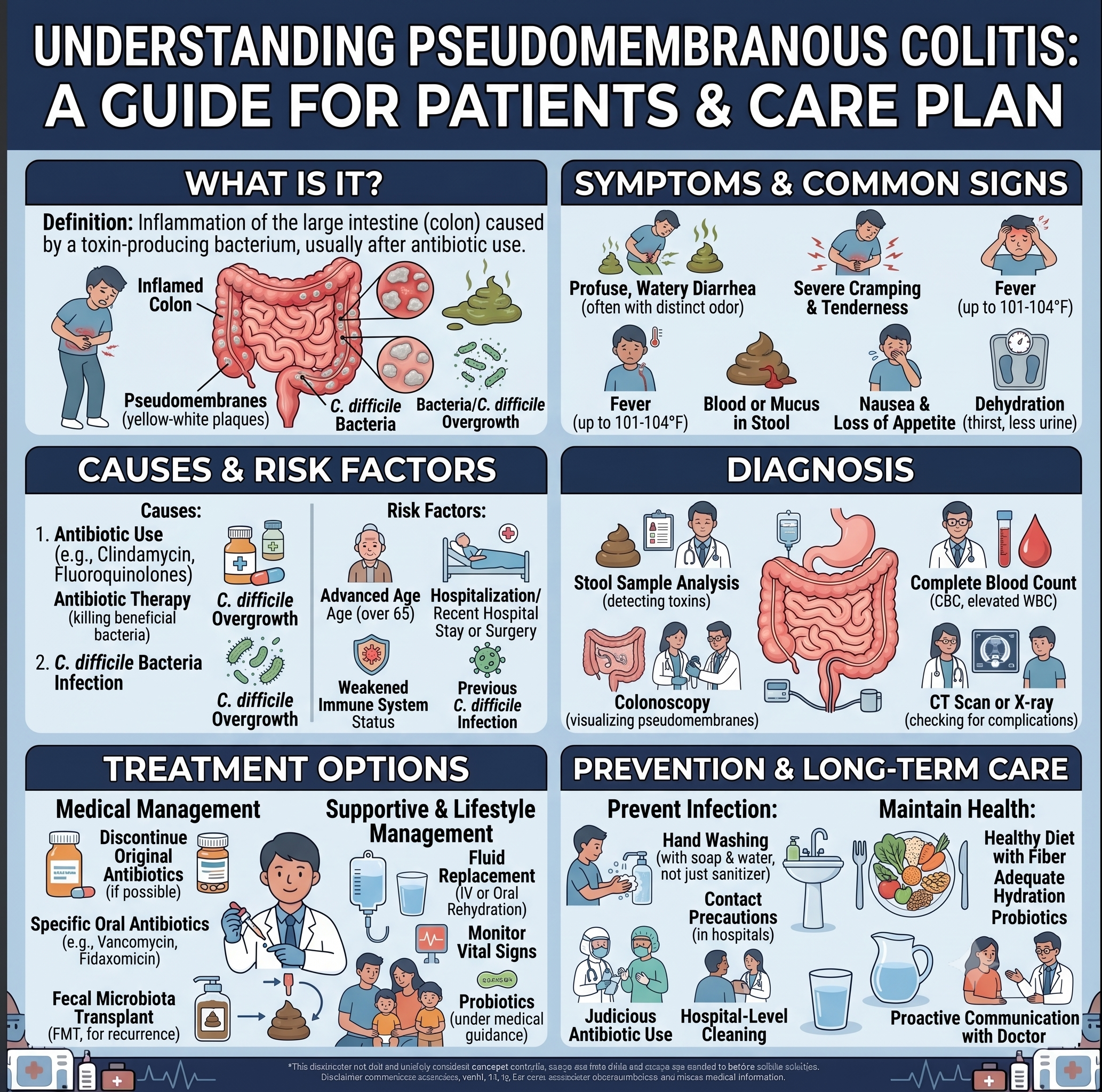
Pseudomembranous colitis (pronounced SOO-doe-mem-bruh-nus koe-LY-tis) is a severe inflammation of the large intestine, also known as the colon. This condition can lead to very serious, potentially life-threatening diarrhea. It is most frequently triggered by a specific type of bacteria, Clostridioides difficile (often called C. diff), which releases harmful toxins that damage the colon's lining. This damage can cause the formation of 'pseudomembranes' – irregular patches of tissue made of mucus, dead cells, blood, and immune cells that line the colon. Pseudomembranous colitis often affects individuals who are in the hospital or have recently taken antibiotics, as these can disrupt the natural balance of gut bacteria. Treatment typically involves specific antibiotics to target C. diff, along with efforts to restore body fluids and support healthy gut bacteria.
Understanding the Condition
Pseudomembranous Colitis: Understanding and Managing a Serious Gut Condition
Understanding the Condition
Common Symptoms
Severe Diarrhea: Frequent, watery stools, often 10-15 times per day. Can be very debilitating and lead to rapid dehydration.
Abdominal Pain and Cramping: Pain or tenderness in the belly area, ranging from mild to severe.
Fever: An elevated body temperature, indicating an infection or inflammatory response.
Nausea: Feeling sick to your stomach, sometimes accompanied by vomiting.
Dehydration: Signs include excessive thirst, dry mouth, reduced urination, and dizziness due to significant fluid loss.
Loss of Appetite and Weight Loss: Reduced desire to eat, which can lead to unintentional weight loss over time.
Pus or Mucus in Stool: Visible pus or slimy mucus in bowel movements, indicating inflammation in the colon.
Rapid Heart Rate: An abnormally fast heartbeat, which can be a sign of severe infection or dehydration.
Consultation Guide
Which Specialist to Meet
Initially, you should consult your primary care physician. Depending on the severity and complexity of your condition, they may refer you to a gastroenterologist (a doctor specializing in digestive system disorders) or an infectious disease specialist, particularly if the C. diff infection is severe or recurrent.
Preparations Before Your Visit
Before your visit, be prepared to discuss your complete medical history, especially any recent hospital stays or antibiotic use. Make a list of all current medications, including over-the-counter drugs and supplements. Detail your symptoms: when they started, how severe they are, what makes them better or worse, and how often they occur. Be ready for a physical examination and possibly a stool sample collection. Your doctor may also ask about your diet and recent travel.
Book a doctor visit near me
Regular Medical Follow-Up: Keep scheduled appointments with your doctor to monitor your recovery and discuss any new or returning symptoms promptly. Recurrence of C. diff infection is possible, so vigilance is important.
Consultation Guide
Pseudomembranous colitis (pronounced SOO-doe-mem-bruh-nus koe-LY-tis) is a severe inflammation of the large intestine, also known as the colon. This condition can lead to very serious, potentially life-threatening diarrhea. It is most frequently triggered by a specific type of bacteria, Clostridioides difficile (often called C. diff), which releases harmful toxins that damage the colon's lining. This damage can cause the formation of 'pseudomembranes' – irregular patches of tissue made of mucus, dead cells, blood, and immune cells that line the colon. Pseudomembranous colitis often affects individuals who are in the hospital or have recently taken antibiotics, as these can disrupt the natural balance of gut bacteria. Treatment typically involves specific antibiotics to target C. diff, along with efforts to restore body fluids and support healthy gut bacteria.
Diagnostic Procedures
This is the most common and crucial test for pseudomembranous colitis. A sample of your stool is sent to a lab to check for the presence of C. difficile bacteria or the toxins it produces. Finding these toxins confirms a C. diff infection.
What to Expect
You will be provided with a sterile container to collect a small sample of your stool at home. It's important to follow the instructions carefully to avoid contamination. Once collected, you will return the sample to your doctor's office or a lab for analysis. This is a non-invasive test and results typically take a few days.
Flexible Sigmoidoscopy
This procedure allows your doctor to visually inspect the rectum and the lower part of your large intestine (sigmoid and descending colon). A thin, flexible tube with a light and camera (sigmoidoscope) is inserted to look for signs of inflammation, pseudomembranes, or other abnormalities.
What to Expect
Similar to a flexible sigmoidoscopy but examines the entire large intestine (colon) and rectum. A longer, flexible tube with a camera (colonoscope) is used to identify inflammation, pseudomembranes, polyps, or other changes throughout the colon.
What to Expect
These imaging tests can provide pictures of your abdomen to check for severe inflammation, swelling of the colon, or complications such as a perforation (a hole in the colon wall) or a condition called toxic megacolon, where the colon becomes severely dilated.
What to Expect
For an X-ray, you will lie on a table while the machine takes images. It's quick and painless. For a CT scan, you will lie on a movable table that slides into a large, donut-shaped machine. You might receive a contrast dye (by drinking it or through an IV) to improve image clarity. You'll need to stay still during the scan, which typically takes 10-30 minutes. You may hear some buzzing or clicking noises from the machine.
Treatment Options
Medications
Targeted Antibiotics: Specific antibiotics are prescribed to directly kill the C. difficile bacteria causing the infection. These are different from the broad-spectrum antibiotics that might have initially triggered the condition. (Duration: Typically 10-14 days.)
Fluid and Electrolyte Replacement: For individuals with severe diarrhea and dehydration, it is crucial to replace lost fluids and essential salts (electrolytes). This can be done orally with rehydration solutions or, in more severe cases, intravenously (through a vein). (Duration: Ongoing as needed until diarrhea resolves and hydration is restored.)
Fecal Microbiota Transplant (FMT): This involves introducing healthy bacteria from a carefully screened donor's stool into the patient's colon. The goal is to restore the natural balance of beneficial gut bacteria, which can effectively fight off recurrent C. diff infections. (Duration: Typically a single procedure, with follow-up to monitor effectiveness.)
Surgical Procedures
Colectomy (Partial or Total): In very severe, life-threatening cases where medical treatments fail or if serious complications like a perforated colon or toxic megacolon occur, part or all of the colon may need to be surgically removed. This procedure often involves creating an ostomy (a surgical opening to divert waste from the body into a bag). (Duration: A one-time surgical procedure, followed by a recovery period of several weeks to months.)
Prevention & Long-Term Wellbeing
You will typically undergo a less extensive bowel preparation than for a colonoscopy, which may involve an enema or specific diet changes. During the procedure, you may lie on your side. The doctor will gently insert the sigmoidoscope into your anus and guide it through your rectum and into the lower colon. Air may be gently inflated to improve visibility. You might feel some pressure or cramping. The procedure usually takes 10-20 minutes, and small tissue samples (biopsies) can be taken if needed.
This procedure requires thorough bowel preparation beforehand, usually involving a clear liquid diet for a day or two and strong laxatives to ensure the colon is clean. You will typically receive sedation to ensure comfort. The colonoscope is gently inserted into the rectum and advanced through the entire colon. Your doctor views the lining on a monitor. The procedure typically takes 30-60 minutes, and biopsies or polyp removal can be performed. After the procedure, you will recover from the sedation for a few hours and will need someone to drive you home.
X-ray or CT Scan of the Abdomen
Prevention
Rigorous Hand Hygiene: Thoroughly wash hands with soap and water for at least 20 seconds, especially after using the bathroom and before eating. Alcohol-based hand sanitizers are not as effective against C. diff spores.
Judicious Antibiotic Use: Only take antibiotics when absolutely necessary and exactly as prescribed by your doctor. Avoid pressuring your doctor for antibiotics if they are not needed, as overuse can disrupt healthy gut bacteria and increase C. diff risk.
Isolation in Healthcare Settings: If you are hospitalized with C. diff, healthcare providers will implement special precautions (like wearing gloves and gowns) and use dedicated equipment to prevent the spread of the bacteria to other patients.
Long-Term Monitoring and Support
Dietary Management and Probiotics: After recovery, gradually reintroduce a balanced diet rich in fiber. Your doctor may also recommend probiotic supplements or probiotic-rich foods (like yogurt) to help restore beneficial gut bacteria, but always discuss this with your healthcare provider first.
Maintain Hydration: Continue to drink plenty of fluids to stay well-hydrated, especially if you experience any lingering or recurrent digestive issues.
Tags & Topics
Notice an error or need an update?
Help us keep medical information accurate. Report incorrect info or suggest an edit.


