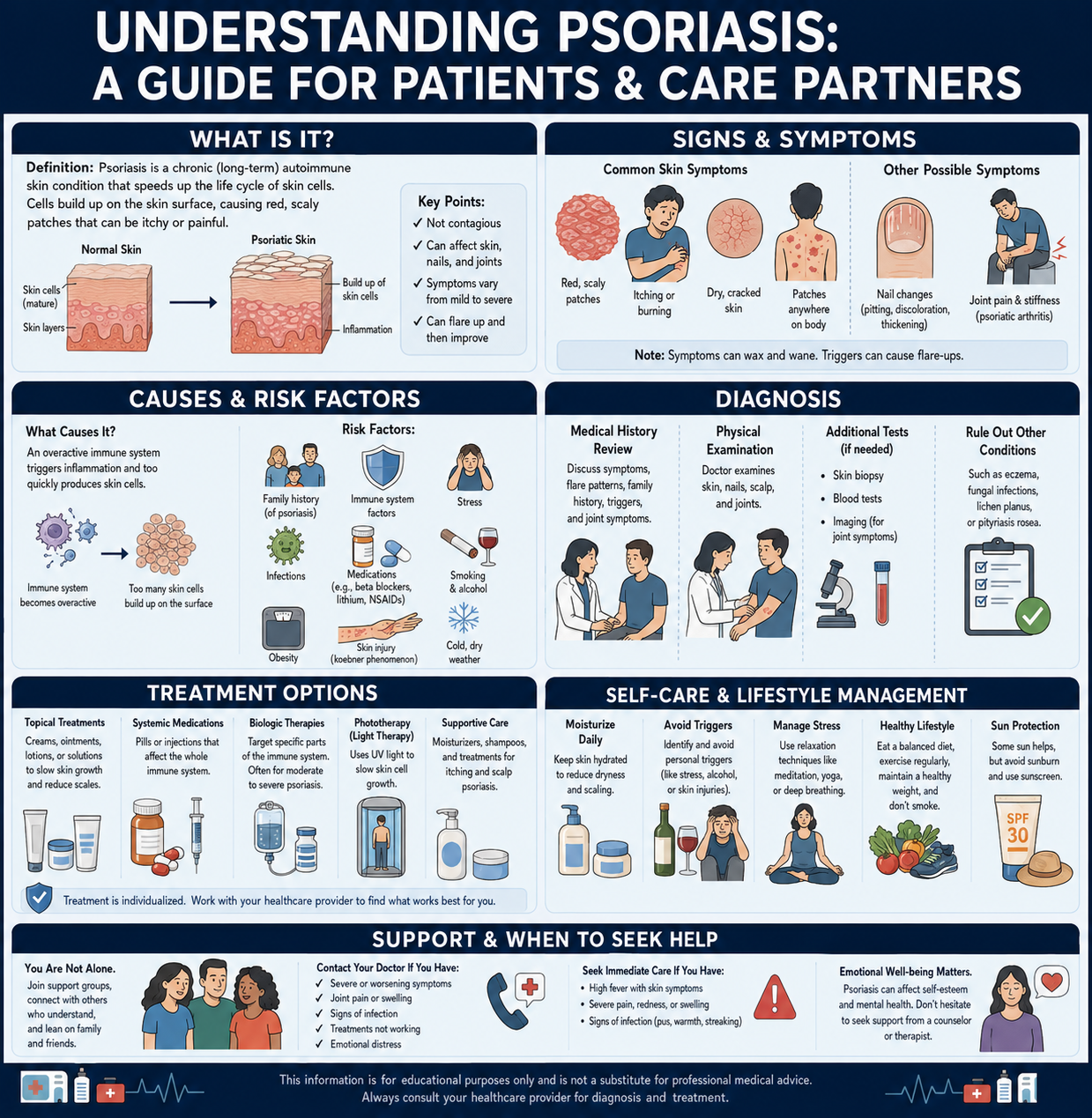
Psoriasis is a common, long-lasting skin condition that causes patches of skin to become thick, red, itchy, and scaly. These patches most often appear on the knees, elbows, scalp, and torso. It's a chronic condition with no cure, but various treatments can effectively manage symptoms. Psoriasis occurs in cycles, with symptoms flaring up for weeks or months before subsiding. While not contagious, it can be painful, disrupt sleep, and make concentration difficult. It is an immune system problem where skin cells grow too quickly, often triggered by infections, skin injuries, or certain medications in people genetically predisposed to the condition.
Understanding the Condition
Psoriasis: Understanding and Managing a Common Skin Condition
Understanding the Condition
Psoriasis is a common, long-lasting skin condition that causes patches of skin to become thick, red, itchy, and scaly. These patches most often appear on the knees, elbows, scalp, and torso. It's a chronic condition with no cure, but various treatments can effectively manage symptoms. Psoriasis occurs in cycles, with symptoms flaring up for weeks or months before subsiding. While not contagious, it can be painful, disrupt sleep, and make concentration difficult. It is an immune system problem where skin cells grow too quickly, often triggered by infections, skin injuries, or certain medications in people genetically predisposed to the condition.
Common Symptoms
Skin Rash and Patches: A patchy rash that can look very different from person to person. It may range from small, dandruff-like scales to large outbreaks covering significant parts of the body. On brown or Black skin, rashes may appear as shades of purple with gray scales, while on white skin, they tend to be pink or red with silvery scales. Small, scaling spots are frequently seen in children.
Skin Discomfort: Affected skin can be dry, cracked, and may sometimes bleed. Common sensations include itching, burning, or soreness.
Cyclic Nature: Rashes typically follow a pattern, flaring up for several weeks or months, then improving or subsiding for a period before returning.
Plaque Psoriasis: The most common type, causing dry, itchy, raised skin patches (plaques) covered with scales. These usually appear on the elbows, knees, lower back, and scalp. After healing, the affected skin may have temporary changes in color, particularly noticeable on darker skin tones.
Nail Psoriasis: Psoriasis can impact fingernails and toenails, leading to pitting, unusual nail growth, and discoloration. Nails may lift from the nail bed or, in severe cases, crumble.
Before your appointment, make a list of your symptoms, including when they started, how they look, and anything that seems to make them better or worse. Document all medications, over-the-counter products, supplements, and vitamins you are currently taking. Note any recent illnesses, skin injuries, significant stress, or changes in your daily routine. Prepare a list of questions you have for the doctor.
Book a doctor visit near me
Your doctor will visually examine your skin, scalp, and nails to look for characteristic signs of psoriasis. They will also ask about your symptoms, medical history, family history of skin conditions, and any potential triggers.
During a physical examination, the doctor will carefully inspect the affected areas of your skin, including hidden areas like your scalp or skin folds. They will also check your nails. You'll answer questions about when your symptoms started, what makes them worse or better, your lifestyle, and any other health conditions you have. This is usually a quick, painless process and often enough for a diagnosis.
Natural Sunlight: Controlled, brief exposure to natural sunlight can improve symptoms, but sunburn must be avoided. (Duration: Short periods (5-10 minutes) a few times a week)
UVB Phototherapy: Exposure to artificial ultraviolet B (UVB) light, either broad-band or narrow-band, to slow skin cell growth. (Duration: Multiple sessions per week for several weeks to months)
Adhere to Treatment Plan: Consistently follow your prescribed treatment regimen, even when symptoms improve, to help prevent future flares.
Managing Symptoms & Quality of Life
Soothe Itchy Skin: Use lukewarm water for baths, apply cold compresses, keep moisturizers chilled, and wear loose, breathable clothing made of soft fabrics to minimize irritation.
Improve Sleep Quality: Psoriasis can interfere with sleep. Establish a regular sleep schedule, create a comfortable sleep environment, and avoid screens before bed. If sleep difficulties persist, consult your doctor.
Seek Support: Connecting with others who have psoriasis through support groups can provide emotional comfort, shared experiences, and practical advice.
Consultation Guide
Guttate Psoriasis: Often seen in young adults and children, typically following a bacterial infection like strep throat. It causes small, drop-shaped, scaling spots on the body, arms, or legs.
Inverse Psoriasis: Affects skin folds like the groin, buttocks, and under the breasts. It causes smooth, red, inflamed skin patches that worsen with friction and sweating. Fungal infections can sometimes trigger this type.
Pustular Psoriasis: A rare form characterized by clearly defined pus-filled blisters. These can appear across large areas or in small spots on the palms or soles.
Erythrodermic Psoriasis: The least common but most severe type, covering almost the entire body with a peeling rash that can cause intense itching or burning. It can be short-lived or chronic.
Consultation Guide
Which Specialist to Meet
You should consult with a dermatologist, a doctor specializing in skin conditions. If you experience joint pain or stiffness, a rheumatologist (a specialist in joint diseases) may also be involved. Your primary care provider can offer an initial assessment and provide referrals.
Preparations Before Your Visit
Identify and Avoid Triggers: Pay attention to what causes your psoriasis to flare (e.g., stress, specific foods, infections, skin injuries, certain medications, cold/dry weather, alcohol, smoking) and try to minimize exposure to them.
Maintain Skin Hydration: Regularly moisturize your skin, especially after bathing, to prevent dryness and reduce the likelihood of scales and itching.
Protect Skin from Injury: Avoid cuts, scrapes, bug bites, and severe sunburn, as these can trigger new psoriasis patches (Koebner phenomenon).
Manage Stress: High stress levels can worsen psoriasis. Practice relaxation techniques such as meditation, deep breathing, yoga, or hobbies to reduce stress.
Diagnostic Procedures
Physical Examination and Medical History
What to Expect
A procedure where a small sample of skin is removed for laboratory testing. This helps confirm a psoriasis diagnosis, identify the specific type, or rule out other skin conditions.
What to Expect
The procedure usually begins with a local anesthetic injection to numb the area, so you'll only feel a slight pinch or sting. Depending on the size and depth of the sample needed, one of three methods may be used:- **Shave Biopsy:** A scalpel or razor blade is used to gently scrape off the outermost layer of skin. Stitches are usually not required, and the wound heals like a scrape.- **Punch Biopsy:** A circular tool removes a small, deeper core of skin tissue. Depending on its size, the site might require one or two stitches to close.- **Excisional Biopsy:** A scalpel is used to cut out an entire abnormal area of skin along with a small margin of healthy skin around it. This method typically requires stitches to close the wound.After the sample is taken, it's sent to a lab where a pathologist examines it under a microscope to make a precise diagnosis. You might feel some mild soreness or tenderness at the site for a few days, which can be managed with over-the-counter pain relievers.
Treatment Options
Corticosteroid Creams/Ointments: Applied directly to the skin to reduce inflammation, redness, and itching. Available in various strengths. (Duration: Used for weeks to months, often in cycles)
Vitamin D Analogs: Synthetic forms of vitamin D that slow down skin cell growth and reduce scaling. (Duration: Daily application for several weeks to months)
Retinoid Creams: Topical treatments derived from vitamin A that can help reduce inflammation and plaque formation. (Duration: Daily application for several weeks to months)
Coal Tar Products: Available in shampoos, creams, and bath solutions, they reduce scaling, itching, and inflammation. (Duration: Daily application or as directed)
Calcineurin Inhibitors: These creams reduce immune activity in the skin and are often used for sensitive areas like the face or skin folds. (Duration: Daily application for weeks to months)
Light Therapy (Phototherapy)
Psoralen plus UVA (PUVA): Involves taking a light-sensitizing medication (psoralen) before exposure to ultraviolet A (UVA) light. (Duration: Multiple sessions per week for several weeks to months)
Excimer Laser: A targeted form of light therapy that delivers high-intensity UVB light to specific, localized psoriasis patches. (Duration: Weekly sessions for several weeks)
Systemic Medications (Oral or Injected)
Oral Retinoids: Medications derived from vitamin A that help control skin cell production and inflammation. Used for severe psoriasis. (Duration: Daily, often with long-term monitoring)
Immunosuppressants: Medications that reduce the activity of the immune system to slow down rapid skin cell growth. (Duration: Daily or weekly, with close medical supervision)
Biologic Therapies: Injected medications that target specific parts of the immune system involved in psoriasis development. (Duration: Injections typically every few weeks or months, long-term)
Small-Molecule Inhibitors: Oral medications that target specific pathways within immune cells to reduce inflammation and skin cell overgrowth. (Duration: Daily, long-term)
Regular Doctor Visits: Schedule regular follow-ups with your dermatologist to monitor disease progression, assess treatment effectiveness, and adjust therapies as needed.
Screening for Associated Conditions: Be aware that psoriasis increases the risk of other health issues, including psoriatic arthritis, type 2 diabetes, heart disease, high blood pressure, and certain eye conditions. Regular screenings and discussions with your doctor are important.
Vaccination Discussions: Discuss your vaccination needs with your healthcare provider, especially if you are on immunosuppressive medications, as certain vaccines may be contraindicated or require special consideration. The benefits of vaccination generally outweigh risks.
Prevention & Long-Term Wellbeing
Home Remedies & Lifestyle Adjustments
Moisturizing: Regular application of thick creams, ointments, or lotions helps reduce dryness, scaling, and itching. Apply immediately after bathing. (Duration: Daily, ongoing)
Therapeutic Baths: Daily lukewarm baths with additives like oatmeal, Epsom salts, or bath oil can help soothe irritated skin and remove scales. Avoid hot water, which can worsen dryness. (Duration: 10-15 minutes, daily as needed)
Trigger Avoidance: Identify and avoid personal triggers such as stress, certain infections, skin injuries, smoking, and heavy alcohol consumption. (Duration: Ongoing)
Dietary Considerations: Adopting a balanced diet, such as a Mediterranean-style diet rich in fruits, vegetables, and lean proteins, may help reduce inflammation. (Duration: Ongoing)
Prevention of Flares
Healthy Lifestyle: Maintain a balanced diet, exercise regularly (protecting skin from friction and injury during workouts), and limit alcohol consumption to support overall health and potentially reduce inflammation.
Address Mental Health: Psoriasis can impact self-esteem and lead to depression or anxiety. Seek professional help if you experience persistent feelings of sadness, worry, or social isolation.
Long-Term Monitoring
Tags & Topics
Notice an error or need an update?
Help us keep medical information accurate. Report incorrect info or suggest an edit.


