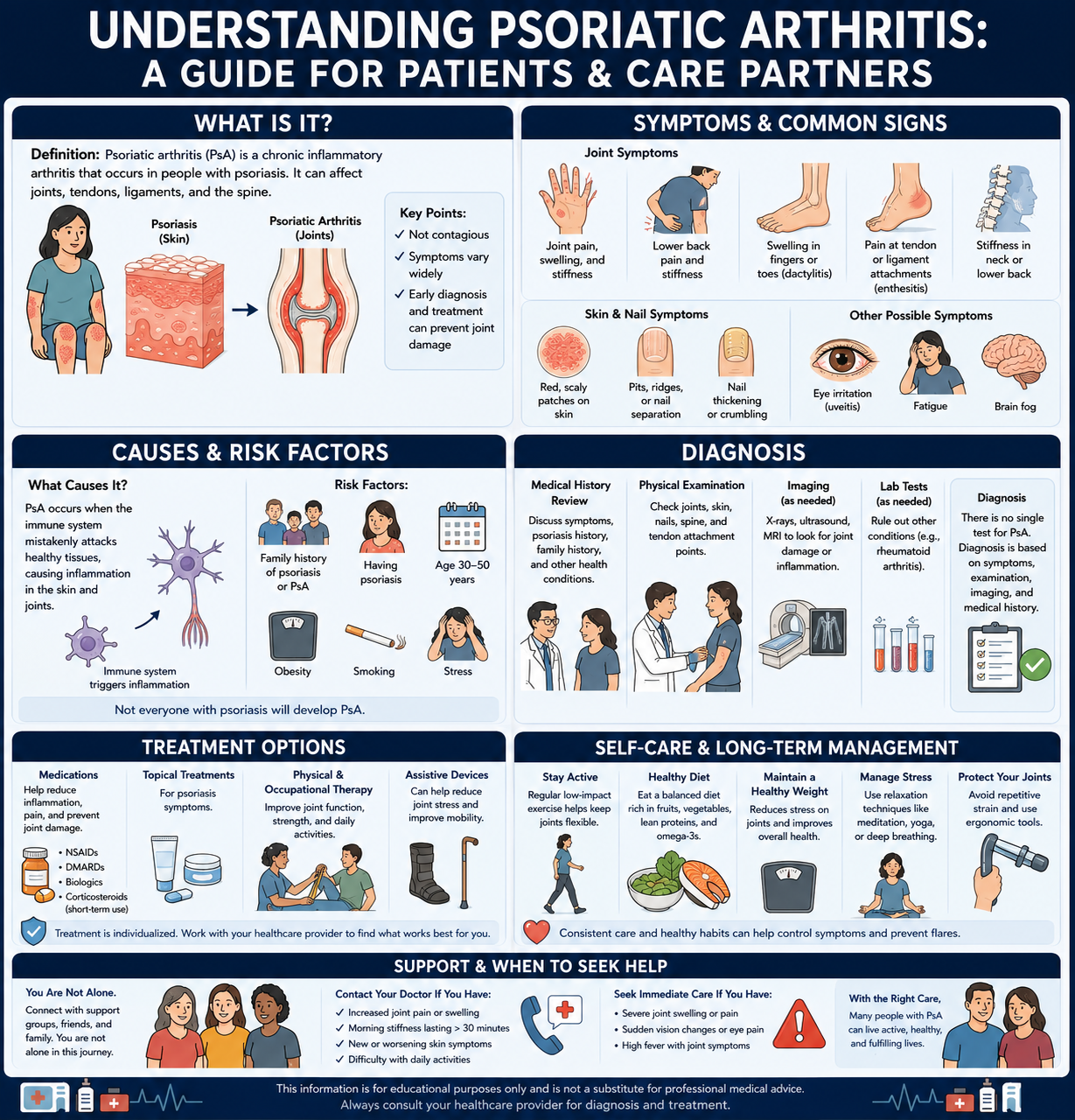
Psoriatic arthritis is a type of arthritis that can affect individuals who have psoriasis, a chronic skin condition causing itchy, scaly patches. In most cases, psoriasis appears first, sometimes years before joint symptoms begin. This condition develops when the body's immune system mistakenly attacks healthy joints and skin. This attack leads to inflammation, causing joint pain, stiffness, and swelling, and also speeds up skin cell production. Psoriatic arthritis is a long-term condition with symptoms that can vary from mild to severe, often coming and going in cycles, with periods of flare-ups and relief. While there is no cure, effective treatments can help manage symptoms, protect joints from damage, and improve quality of life.
Understanding the Condition
Understanding Psoriatic Arthritis: A Comprehensive Guide
Understanding the Condition
Psoriatic arthritis is a type of arthritis that can affect individuals who have psoriasis, a chronic skin condition causing itchy, scaly patches. In most cases, psoriasis appears first, sometimes years before joint symptoms begin. This condition develops when the body's immune system mistakenly attacks healthy joints and skin. This attack leads to inflammation, causing joint pain, stiffness, and swelling, and also speeds up skin cell production. Psoriatic arthritis is a long-term condition with symptoms that can vary from mild to severe, often coming and going in cycles, with periods of flare-ups and relief. While there is no cure, effective treatments can help manage symptoms, protect joints from damage, and improve quality of life.
Common Symptoms
Joint Pain, Stiffness, and Swelling: These symptoms can affect any joint in the body, ranging from mild to severe. Affected joints may also feel warm to the touch.
Swollen Fingers and Toes (Dactylitis): Fingers and toes can become severely swollen and painful, sometimes referred to as 'sausage digits'.
Foot Pain: Commonly experienced in areas like the back of the heel (Achilles tendonitis) or the sole of the foot.
Skin Rash (Psoriasis): Characterized by itchy, scaly patches on the skin. These patches can be red, purple, or brown depending on skin color, and often appear before joint symptoms.
Fatigue: A common and often debilitating symptom, impacting overall energy levels.
Consultation Guide
Which Specialist to Meet
Before your visit, prepare a detailed list of your symptoms, including when they started, what makes them better or worse, and which joints are affected. Gather information about your medical history, any family history of psoriasis or arthritis, and a list of all current medications, supplements, and allergies. Also, prepare any questions you have for the doctor.
Book a doctor visit near me
Stress Management: Stress can trigger symptom flare-ups and worsen inflammation. Techniques like meditation, yoga, or deep breathing can help. (Duration: Ongoing)
Regular Exercise: Low-impact exercises can help maintain joint flexibility, strength, and reduce pain. Consult a doctor for suitable activities. (Duration: Ongoing)
Anti-inflammatory Medicines: These medications help reduce pain and swelling in the joints. (Duration: As needed for symptom relief, or as prescribed for ongoing management.)
Disease-Modifying Antirheumatic Drugs (DMARDs): These medicines work by suppressing the immune system to slow the progression of the disease and prevent joint damage. (Duration: Long-term, typically several months before full effects are seen, ongoing as prescribed.)
Biologic Therapies: A newer class of DMARDs, these target specific parts of the immune system responsible for inflammation with high precision. (Duration: Long-term, typically several weeks or months for initial effects, ongoing as prescribed.)
Physical and Occupational Therapy: Physical therapists can help improve joint flexibility, strength, and range of motion. Occupational therapists can teach ways to perform daily tasks that protect your joints. (Duration: Varies based on individual needs, often several weeks to months, with ongoing home exercises.)
Early Diagnosis and Treatment: Seeking prompt medical attention for joint symptoms, especially with a psoriasis diagnosis, can prevent permanent joint damage.
Monitoring for Related Health Issues: Psoriatic arthritis increases the risk of other conditions like heart disease, diabetes, high blood pressure, obesity, and certain eye problems. Regular check-ups are essential to monitor and manage these risks.
Addressing Depression and Anxiety: Mental health conditions are common with psoriatic arthritis. Seek diagnosis and treatment (e.g., lifestyle changes, medication, talk therapy) to improve overall health, as these can worsen physical symptoms.
Coping with Uncertainty: Learn strategies to manage the emotional challenges of living with a chronic, unpredictable condition, including setting realistic expectations and finding support.
Workplace Adjustments: Simple changes at work, such as ergonomic tools, frequent breaks, and discussing needs with your employer, can help manage symptoms and improve comfort.
Activity Pacing: Balance activity with rest to avoid overexertion and manage fatigue and joint pain. Listen to your body and adjust activities accordingly.
Identify and Avoid Triggers: While not always clear, some people find certain factors (stress, infections, injuries) can trigger flare-ups. Keeping a symptom diary may help identify personal triggers.
Build a Support System: Connect with family, friends, or support groups to share experiences, gain insights, and receive emotional support.
Consultation Guide
Lower Back Pain: Caused by inflammation of the joints between the vertebrae in the spine (spondylitis).
Nail Changes: Psoriasis can cause nails to pit, crumble, or separate from the nail bed, resembling a fungal infection.
Eye Inflammation (Uveitis): Inflammation of the eye can cause redness, pain, and blurry vision.
An X-ray is a quick, painless imaging test that uses a small amount of radiation to create pictures of the inside of your body, particularly bones. It helps doctors visualize the condition of your joints and detect any changes or damage caused by psoriatic arthritis over time.
Diagnostic Procedures
If you have psoriasis and begin experiencing joint pain, stiffness, or swelling, it's important to consult with your primary healthcare provider. They may refer you to a rheumatologist, a doctor specializing in arthritis and other diseases affecting joints, muscles, and bones. A dermatologist, who specializes in skin conditions, may also be involved in managing your psoriasis. Early diagnosis and treatment are crucial to help prevent lasting joint damage.
Preparations Before Your Visit
Blood Tests for Inflammation and Differentiation
These tests measure various markers in your blood. For psoriatic arthritis, inflammatory markers such as Erythrocyte Sedimentation Rate (ESR) and C-reactive protein (CRP) are often checked. High levels of these can indicate widespread inflammation in the body. Another test, the Rheumatoid Factor (RF) test, measures proteins that can attack healthy tissues. While high RF levels are typically linked to rheumatoid arthritis, it's often negative in psoriatic arthritis, helping doctors differentiate between different types of arthritis. Anti-cyclic citrullinated peptide (anti-CCP) antibodies may also be tested to further distinguish from rheumatoid arthritis.
What to Expect
A healthcare professional will take a small sample of blood, usually from a vein in your arm. This is a quick process, often taking just a few minutes. You might feel a brief sting or pinch. After the test, you may have slight tenderness or bruising at the site, but you can typically resume your normal activities immediately.
What to Expect
You will be asked to position yourself in a specific way, often lying or standing, so that the X-ray machine can capture images of the affected joints. You'll need to hold still for a few seconds while the image is taken. The procedure is generally very brief, painless, and does not require any special preparation like fasting. You may be asked to remove jewelry or certain clothing items.
Treatment Options
Weight Management: Maintaining a healthy weight reduces strain on joints and can improve how well treatments work. Excess body fat can increase inflammation. (Duration: Ongoing)
Medications
Regular Medical Follow-ups: Work closely with your healthcare team to regularly assess your condition, monitor medication effectiveness and side effects, and adjust treatment plans as needed.
Mental and Emotional Health
Prevention & Long-Term Wellbeing
Lifestyle and Home Remedies
Anti-inflammatory Diet: Adopting a diet rich in fruits, vegetables, whole grains, and lean proteins (like the Mediterranean diet) can help reduce overall inflammation. Identifying and avoiding food triggers (like gluten for some individuals) may also be beneficial. (Duration: Ongoing)
Good Sleep Hygiene: Prioritizing consistent, quality sleep can improve overall well-being and help manage pain and fatigue. (Duration: Ongoing)
Skin Care: Protecting skin from harsh weather, using moisturizers, and following dermatologist recommendations for psoriasis care. (Duration: Ongoing)
Health Risk Management
Daily Living and Lifestyle Adjustments
Tags & Topics
Notice an error or need an update?
Help us keep medical information accurate. Report incorrect info or suggest an edit.


