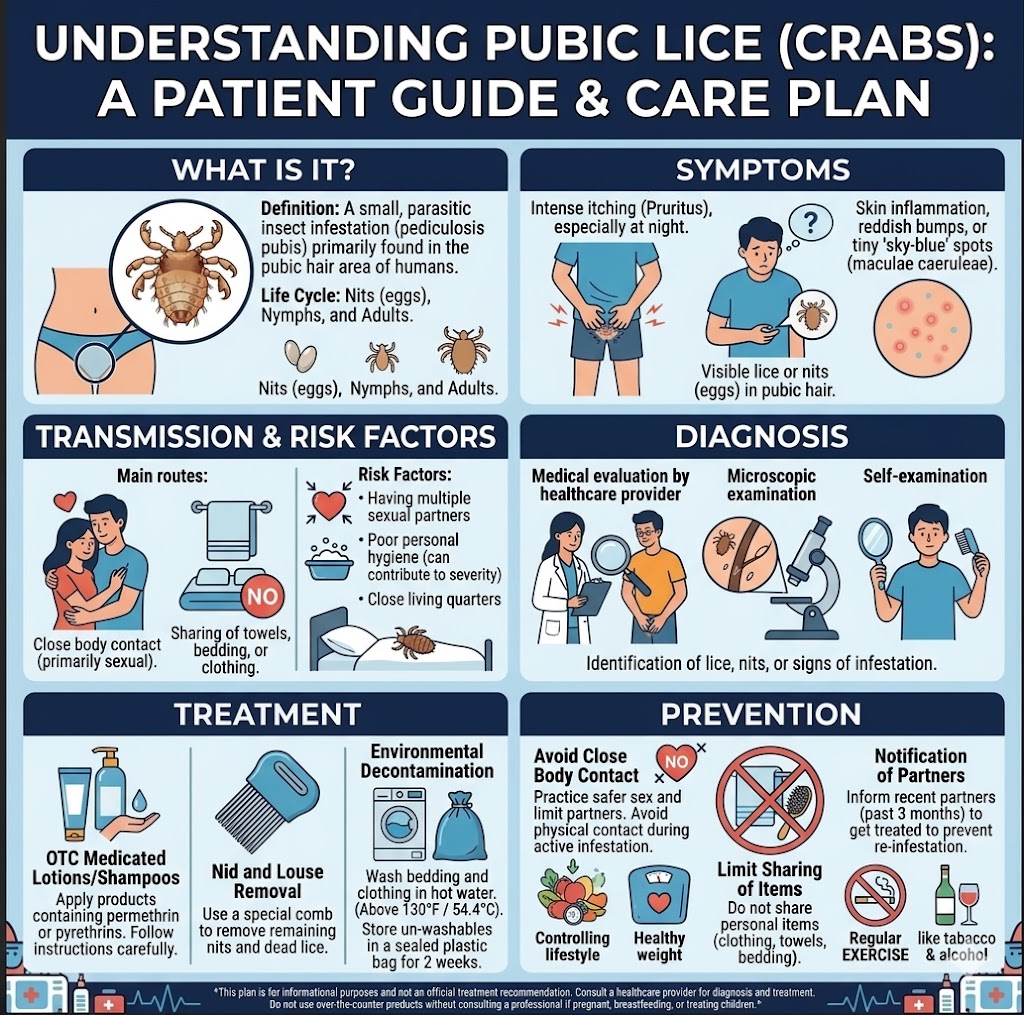
Pubic lice, commonly known as crabs, are tiny insects that live in coarse body hair, most often in the genital area. They are different from head or body lice and get their nickname because their bodies resemble miniature crabs. Measuring about 1/16 inch (1.6 millimeters) or less, these parasites feed on human blood, and their bites can cause intense itching. The most common way to get pubic lice is through sexual activity. In children, finding pubic lice in eyebrows or eyelashes can be a serious sign of possible sexual abuse. However, they can also spread through close non-sexual contact or by sharing clothing, bedsheets, or towels with an infected person. Effective treatments, including over-the-counter and prescription options, are available to kill the lice and their eggs.
Understanding the Condition
Common Symptoms
Intense Itching: The most common and noticeable symptom, particularly in the genital region, which can worsen at night.
Visible Lice or Eggs (Nits): You might see the tiny, crab-like insects themselves or their small, pearl-like eggs (nits) attached to the hair shafts in the affected areas.
Before your appointment, gather information about your symptoms, including when they started and how severe they are. Be prepared to discuss any recent sexual activity, potential exposure to others with pubic lice, and any products you've already tried. Make a list of all medications you are currently taking and any allergies you have. It's often helpful to write down questions you have for your doctor. Avoid applying any self-treatments or lotions right before your visit, as this can make diagnosis more difficult.
Book a doctor visit near me
Consultation Guide
Pubic lice, commonly known as crabs, are tiny insects that live in coarse body hair, most often in the genital area. They are different from head or body lice and get their nickname because their bodies resemble miniature crabs. Measuring about 1/16 inch (1.6 millimeters) or less, these parasites feed on human blood, and their bites can cause intense itching. The most common way to get pubic lice is through sexual activity. In children, finding pubic lice in eyebrows or eyelashes can be a serious sign of possible sexual abuse. However, they can also spread through close non-sexual contact or by sharing clothing, bedsheets, or towels with an infected person. Effective treatments, including over-the-counter and prescription options, are available to kill the lice and their eggs.
Small Blue Spots on Skin: Tiny, bluish or grayish spots may appear on the skin where the lice have bitten, caused by their saliva mixing with your blood.
Irritation and Redness: Constant scratching can lead to redness, irritation, or small bumps on the skin.
Secondary Skin Infections: Persistent scratching can break the skin, leading to bacterial infections, which might cause sores or pus-filled bumps.
Spread to Other Body Hair: While primarily in the pubic area, lice can spread to other areas with coarse hair, including the thighs, abdomen, chest, armpits, beard, mustache, and, less commonly, eyelashes.
Consultation Guide
Which Specialist to Meet
Diagnostic Procedures
Pubic Lice (Crabs): Understanding, Diagnosis, and Treatment
Understanding the Condition
You should typically see your primary care physician or a family doctor for diagnosis and treatment. In some cases, a dermatologist (skin specialist) or an infectious disease specialist may be consulted, especially if the infestation is resistant to treatment or complicated by other conditions. For children, a pediatrician should be consulted.
Preparations Before Your Visit
A healthcare professional will carefully examine the affected areas, typically the genital region, and potentially other areas with coarse body hair, using a magnifying lens to identify live lice, their eggs (nits), or signs of their activity like tiny bites or skin irritation.
What to Expect
You will be asked to undress from the waist down (or specific areas depending on where the lice are suspected). The doctor will use a bright light and a magnifying glass to closely inspect your skin and hair. This is usually a quick and painless procedure. They may use tweezers to remove a louse or nit for closer examination under a microscope if there's any doubt. You might feel a gentle touch or parting of hair.
Treat All Sexual Partners Simultaneously: If you are diagnosed with pubic lice, it is crucial that all your recent sexual partners are informed and treated at the same time to prevent re-infestation and further spread.
Consider Screening for Other Sexually Transmitted Infections (STIs): Having pubic lice can sometimes indicate a higher risk for other sexually transmitted infections. It's advisable to discuss screening for other STIs with your doctor to ensure comprehensive sexual health.
Long-Term Monitoring & Management
Treatment Options
Medications
Over-the-Counter Medicated Lotions or Shampoos: These products contain active ingredients designed to kill lice and often their eggs. They are applied to the affected areas, left on for a specific period as directed, and then rinsed off. Following the instructions carefully is crucial for effectiveness. (Duration: Typically a single application, often repeated after 7-10 days to target newly hatched lice.)
Prescription Topical Medications: If over-the-counter treatments are ineffective, or for individuals with specific health considerations (e.g., pregnant or breastfeeding individuals, children), a doctor may prescribe stronger topical solutions. These work similarly to over-the-counter options but contain different or more potent active ingredients. (Duration: Varies, typically 1-3 applications over a period of days or weeks, as prescribed.)
Oral Medications: In very rare, severe, or resistant cases, or if other methods fail, a doctor might consider prescribing an oral medication that works systemically throughout the body to kill the lice. (Duration: Varies depending on the specific medication and severity of the infestation, typically a single dose or short course of treatment.)
Home Care and Hygiene
Cleaning Clothing and Bedding: Washing all clothing, bedding, and towels used by an infested person in hot water (at least 130°F or 54°C) and drying them on high heat for at least 20 minutes. Items that cannot be washed can be dry-cleaned or sealed in airtight plastic bags for two weeks to starve any remaining lice. (Duration: Immediately upon starting treatment and regularly until the infestation is confirmed clear.)
Personal Hygiene and Hair Trimming: Regular showering and keeping the affected areas clean is important. While not strictly necessary, trimming coarse hair can sometimes make topical treatments easier to apply and more effective. (Duration: Ongoing during treatment and as part of general hygiene.)
Addressing Eyelash Infestation (for children)
Petroleum Jelly Application: For lice found in eyelashes, a thick layer of petroleum jelly applied to the eyelashes can smother the lice by blocking their breathing pores. This is a common and safe approach for sensitive areas. (Duration: Applied twice daily for several days, typically 7-10 days.)
Manual Removal: Carefully removing lice and nits from eyelashes with fine-toothed tweezers or a specialized nit comb after softening them with petroleum jelly is often effective. This should be done gently to avoid eye irritation. (Duration: Daily until all visible lice and nits are removed.)
Follow-up After Treatment: After completing treatment, it's important to regularly check the affected areas for any signs of returning lice or newly hatched nits for at least a couple of weeks. A follow-up visit with your doctor may be recommended to confirm the infestation is completely gone.
Address Potential Complications Promptly: If complications such as persistent skin irritation, bacterial infections from scratching, or eye irritation/infection occur, seek medical attention promptly. Early intervention can prevent these issues from worsening.
Maintain Open Communication: Practicing open and honest communication with your sexual partners about any sexually transmitted conditions is vital for ensuring timely treatment for everyone involved and preventing future spread.
Prevention & Long-Term Wellbeing
Prevention
Avoid Sexual Contact with Infested Individuals: Since pubic lice are most commonly spread through intimate physical contact, avoiding sexual activity with anyone known to have an infestation is the most effective way to prevent transmission.
Do Not Share Personal Items: Refrain from sharing clothing, towels, bedding, or other personal items with anyone who might be infested, as lice can sometimes transfer through these means.
Tags & Topics
Notice an error or need an update?
Help us keep medical information accurate. Report incorrect info or suggest an edit.


