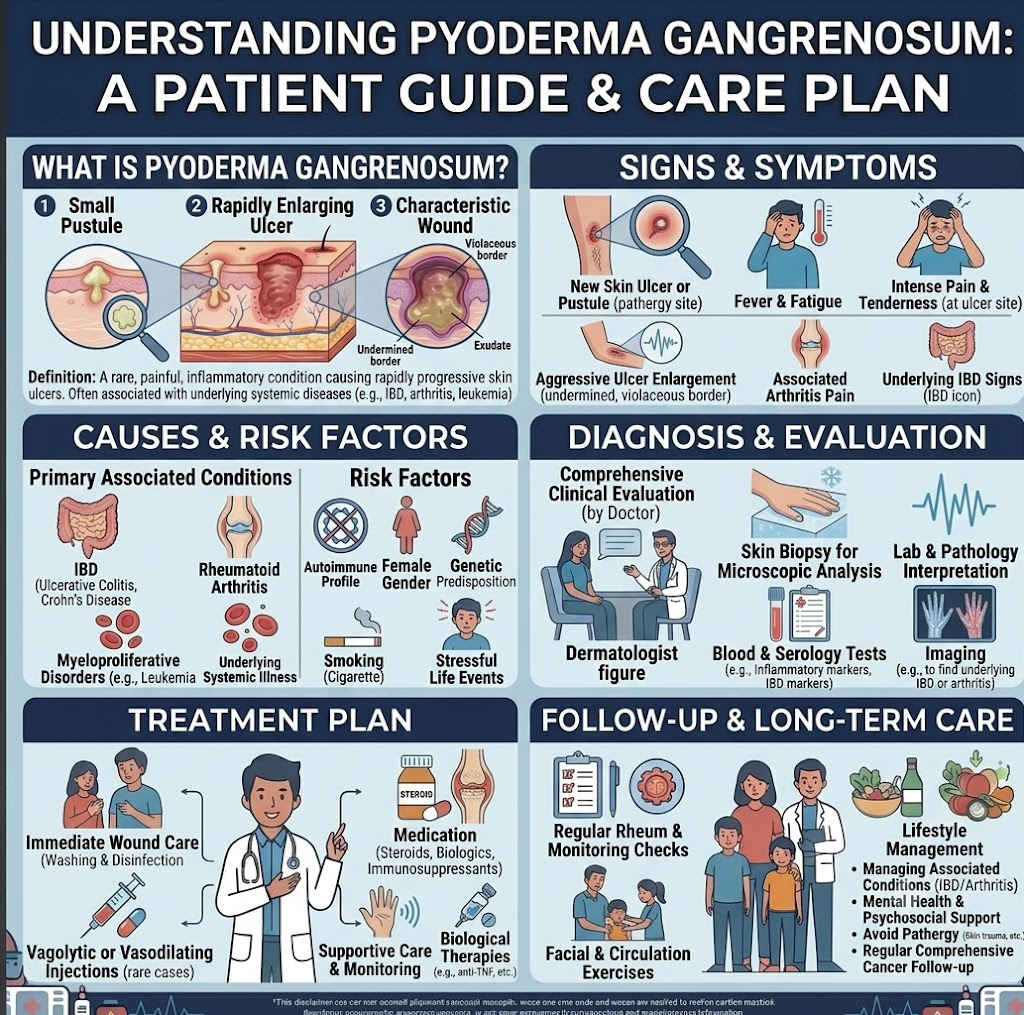
Pyoderma gangrenosum (pronounced pie-o-DUR-muh gang-ruh-NO-sum) is a rare condition where large, painful open sores, or ulcers, rapidly develop on the skin. While they most often appear on the legs, these sores can form anywhere on the body. The exact cause is not fully understood, but it is believed to be an issue with the body's immune system mistakenly attacking healthy tissues. People with certain other health conditions are more likely to develop pyoderma gangrenosum. With proper treatment, the sores usually heal, but they often leave scars and new sores can emerge in different locations.
Understanding the Condition
Pyoderma Gangrenosum: Understanding Painful Skin Sores
Understanding the Condition
Common Symptoms
Small Bumps or Redness: Often starts as a small, red bump or a pus-filled blister, sometimes mistaken for an insect bite or pimple.
Rapidly Growing Sores: Within days, this initial bump quickly transforms into a large, deep, and very painful open wound (ulcer).
Common Locations: Most frequently found on the legs, but can appear on any part of the body, including around recent surgical sites.
Merging Sores: If multiple sores develop nearby, they may expand and join together, forming a larger, irregular wound.
Consultation Guide
Which Specialist to Meet
You should first consult with a dermatologist, a doctor specializing in skin conditions. They may also work with other specialists, such as a rheumatologist (for immune system conditions) or a gastroenterologist (if you have inflammatory bowel disease), to manage any related underlying health issues.
Preparations Before Your Visit
Before your visit, be ready to describe your symptoms in detail: when they started, how quickly they progressed, and the level of pain. Inform your doctor about any other medical conditions you have and all medications, supplements, or over-the-counter remedies you are currently taking. This information helps your doctor understand your overall health and plan the best course of action.
Book a doctor visit near me
Anti-inflammatory Drugs: Oral medications, often corticosteroids, work by calming the overactive immune system throughout the body. (Duration: Typically weeks to months, with gradual reduction as symptoms improve.)
Consultation Guide
Pyoderma gangrenosum (pronounced pie-o-DUR-muh gang-ruh-NO-sum) is a rare condition where large, painful open sores, or ulcers, rapidly develop on the skin. While they most often appear on the legs, these sores can form anywhere on the body. The exact cause is not fully understood, but it is believed to be an issue with the body's immune system mistakenly attacking healthy tissues. People with certain other health conditions are more likely to develop pyoderma gangrenosum. With proper treatment, the sores usually heal, but they often leave scars and new sores can emerge in different locations.
Diagnostic Procedures
What to Expect
The area will be numbed with a local anesthetic. You might feel a brief sting from the injection, but then the area will be numb during the procedure. There are several types of skin biopsies:- Shave Biopsy: A sharp blade scrapes off the skin's top layers. You'll feel pressure, but no pain after numbing. The wound typically heals like a scrape and usually doesn't need stitches. A bandage will be applied.- Punch Biopsy: A circular tool removes a small, deep plug of skin. You'll feel pressure. The small hole may require one or two stitches to close, which will need to be removed later. A bandage will be applied.- Excisional Biopsy: A scalpel removes the entire sore and a small amount of surrounding healthy skin. You may feel pulling or pressure. This deeper wound requires several stitches to close. A sterile dressing will be applied, and instructions for wound care and stitch removal will be provided.
Treatment Options
Medications
Topical Medications: Creams, ointments, or solutions applied directly to the sores to reduce local inflammation and promote healing. (Duration: Daily application for weeks to months, as directed by a doctor.)
Immune-Suppressing Medications: For more severe or persistent cases, medications that modify the immune system's activity may be prescribed to prevent the immune system from attacking healthy skin. (Duration: Long-term, potentially for many months or years, with close monitoring by a specialist.)
Specialized Dressings: Advanced wound dressings are used to keep the sore clean, moist, and protected, which is essential for healing and pain reduction. These dressings help remove dead tissue and absorb fluid. (Duration: Ongoing until the wound heals, with frequent changes as needed.)
Pain Management: Medications to control pain are crucial, as the sores can be very uncomfortable. (Duration: As needed, adjusted based on pain levels.)
Therapies
Hyperbaric Oxygen Therapy: In some cases, breathing pure oxygen in a pressurized chamber may be used to deliver more oxygen to the tissues, potentially aiding wound healing. (Duration: Multiple sessions over several weeks.)
Surgical Procedures
Careful Debridement: This involves gently removing dead or infected tissue from the wound to promote healing. Unlike typical wounds, aggressive debridement must be avoided in pyoderma gangrenosum as it can worsen the condition. (Duration: Performed as needed, often in a specialized wound care setting.)
Skin Grafting: For very large or non-healing sores, a skin graft (taking healthy skin from another part of the body to cover the wound) might be considered, but only once the underlying inflammation is well controlled, as surgery itself can trigger new sores. (Duration: A one-time procedure, followed by recovery and ongoing wound care.)
Careful Surgical Planning: If surgery is necessary, discuss your condition with your surgeon. Special precautions may be needed to prevent new sores from developing at surgical sites.
Managing Underlying Conditions
Treat Related Diseases: Effectively managing any associated autoimmune diseases or inflammatory conditions (such as inflammatory bowel disease or arthritis) can significantly help in controlling pyoderma gangrenosum and preventing flare-ups.
Regular Medical Follow-ups: Maintain regular appointments with your healthcare team to monitor your condition, adjust treatments, and address any new concerns.
Long-Term Monitoring and Support
Scar Management: Be prepared for potential scarring after the sores heal. Discuss options for scar reduction or management with your doctor.
Skin Color Changes: Be aware that the healed skin may show lasting changes in color, becoming either darker (hyperpigmentation) or lighter (hypopigmentation) than the surrounding skin. Individuals with brown or Black skin may have a higher risk of these long-term color changes.
Emotional Support: Living with a chronic condition like pyoderma gangrenosum can be challenging. Seek support from family, friends, support groups, or mental health professionals if needed.
Prevention & Long-Term Wellbeing
Prevention of New Sores
Protect Your Skin from Injury: Avoid any injuries, cuts, scrapes, or trauma to the skin, as new sores can often form at sites of injury (a phenomenon known as pathergy). Be gentle with your skin.
Tags & Topics
Notice an error or need an update?
Help us keep medical information accurate. Report incorrect info or suggest an edit.


