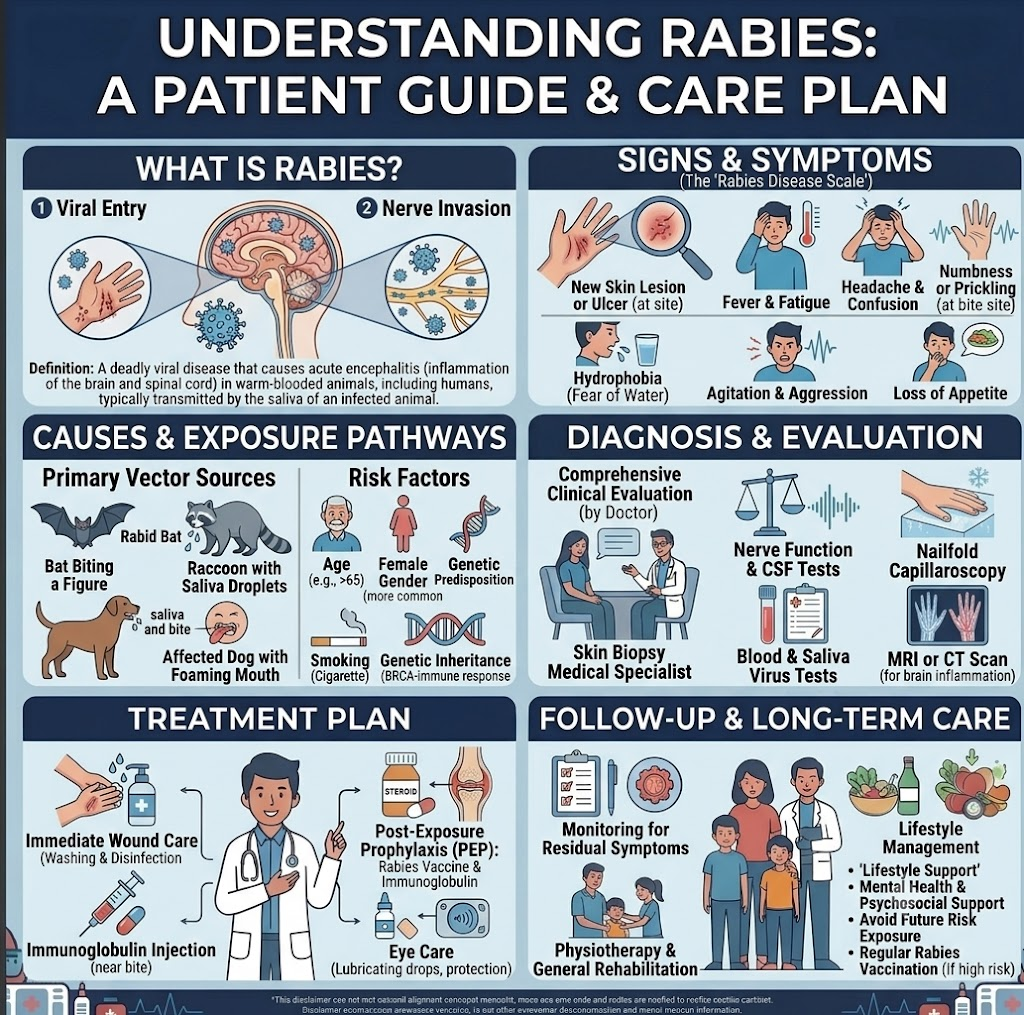
Rabies is an extremely dangerous viral infection that attacks the brain and nervous system. It is spread to humans primarily through the saliva of infected animals, usually via a bite. Once a person starts showing signs of rabies, the disease is nearly always fatal. Because there is no cure once symptoms appear, immediate medical attention and vaccination after any potential exposure are crucial for survival.
Understanding the Condition
Rabies: Understanding the Deadly Virus
Understanding the Condition
Rabies is an extremely dangerous viral infection that attacks the brain and nervous system. It is spread to humans primarily through the saliva of infected animals, usually via a bite. Once a person starts showing signs of rabies, the disease is nearly always fatal. Because there is no cure once symptoms appear, immediate medical attention and vaccination after any potential exposure are crucial for survival.
Common Symptoms
Late-Stage Symptoms of Rabies: Rabies symptoms typically appear weeks to months after exposure, making early detection extremely difficult. Once symptoms begin, the disease is almost always fatal. These symptoms reflect severe damage to the brain and nervous system, highlighting the urgency of preventing them through immediate post-exposure treatment.
Early Symptoms: These often resemble the flu, including fever, headache, general weakness, and discomfort. There may also be a tingling, pricking, or burning sensation at the site of the bite or exposure.
Advanced Symptoms: As the virus progresses, severe neurological signs develop. These can include agitation, anxiety, confusion, hyperactivity, difficulty swallowing (leading to a fear of water, known as hydrophobia), hallucinations, insomnia, and sometimes partial paralysis.
Consultation Guide
Which Specialist to Meet
When a potential rabies exposure occurs, the immediate focus is on preventing the disease rather than diagnosing it in humans before symptoms appear, as by then it is usually too late. However, the first step is a careful evaluation of the incident to determine the risk.
Human Rabies Testing (Once Symptoms Appear)
Once a person develops symptoms of rabies, diagnostic tests are used to confirm the presence of the virus. These tests are typically performed on samples such as saliva, skin biopsies (often from the neck), cerebrospinal fluid (fluid surrounding the brain and spinal cord), and serum (blood plasma). However, by the time these tests confirm rabies, the disease is almost always advanced and fatal.
If symptoms have appeared, you can expect: * **Saliva Test:** A sample of your saliva will be collected over several days to detect the virus. This involves spitting into a sterile container. * **Skin Biopsy:** A small piece of skin, usually from the back of your neck, will be removed for examination. A local anesthetic will be used to numb the area before a small skin sample is taken. * **Cerebrospinal Fluid (CSF) Analysis:** A lumbar puncture (spinal tap) may be performed to collect CSF. This involves inserting a thin needle into your lower back to draw fluid. You will typically lie on your side or sit hunched forward during this procedure, and the area will be numbed. * **Serum Test:** A blood sample will be drawn from your arm to check for antibodies to the rabies virus.
Rabies Post-Exposure Prophylaxis (PEP): PEP involves two main components given as quickly as possible after exposure: Rabies Immune Globulin (RIG) and a series of Rabies Vaccine shots. This treatment aims to neutralize the virus before it can reach the brain and cause symptoms. It is vital to start PEP without delay. (Duration: Starts immediately after exposure. See below for component durations.)
Rabies Immune Globulin (RIG): This provides immediate, temporary antibodies to fight the virus while your body develops its own immune response. It is usually injected directly into and around the bite wound, if one exists, and a portion into a muscle. (Duration: Typically a single dose administered at the first medical visit)
Rabies Vaccine Series: A series of shots given over a few weeks to stimulate your immune system to produce its own long-lasting antibodies against the rabies virus. This provides long-term protection. (Duration: Usually involves 4 doses given over a 14-day period (on days 0, 3, 7, and 14 following the initial dose). For individuals who have been previously vaccinated against rabies, a shorter series of 2 doses is typically sufficient.)
Prognosis after Symptoms
No Effective Treatment for Symptomatic Rabies: It is crucial to understand that once rabies symptoms develop, modern medicine offers no cure. Treatment at this stage focuses solely on supportive care to make the patient as comfortable as possible, but recovery is extremely rare. This underscores the absolute necessity of prompt post-exposure prophylaxis. (Duration: Irreversible once symptoms manifest; leads to death usually within days to weeks)
Seek Prompt Medical Care After Exposure: If you or someone you know has been bitten or scratched by an animal, or if saliva from a potentially rabid animal gets into an open wound or mucous membrane, wash the area thoroughly with soap and water and seek medical attention without delay. Do not wait for symptoms to appear.
Consultation Guide
If the animal that caused the exposure (especially a wild or stray animal) can be safely captured, it may be humanely euthanized and its brain tissue tested for the rabies virus. This is the most reliable way to confirm rabies in an animal, and the results help guide the decision for human post-exposure treatment.
Diagnostic Procedures
What to Expect
Your doctor will ask detailed questions about the circumstances of your potential exposure, including the type of animal involved, how the exposure occurred (e.g., bite, scratch, saliva contact), the animal's behavior, and whether the animal can be located or tested. The doctor will also examine any wounds or areas of contact. No physical tests are performed on you at this stage beyond a general medical examination, as the decision to treat is based on risk assessment.
Animal Testing (When Possible)
What to Expect
If the animal is available for testing, the process involves trained professionals collecting the animal and sending a brain tissue sample to a specialized laboratory. You would not be directly involved in this procedure, but the results would be communicated to your doctor to inform your treatment plan.
What to Expect
Treatment Options
If you suspect rabies exposure, you should immediately seek care from an emergency physician or an infectious disease specialist. These medical professionals are equipped to assess your risk and initiate critical, time-sensitive post-exposure treatment.
Preparations Before Your Visit
Before your visit, gather as much information as possible about the potential exposure. This includes the type of animal involved, its behavior (e.g., wild, stray, domestic; aggressive, unprovoked), the exact location and time of the incident, how the exposure occurred (e.g., bite, scratch, saliva contact), and details about any wounds. Also, be prepared to share your complete medical history and any previous vaccination records. Do not delay seeking care to gather all details; prompt treatment is essential.
Book a doctor visit near me
Home Remedies / Immediate First Aid
Immediate Wound Washing: As soon as possible after an animal bite or scratch, thoroughly wash the wound with soap and water for 10 to 15 minutes. This simple action can significantly reduce the risk of infection by physically removing viral particles from the wound. This is a critical first step before seeking medical attention. (Duration: 10-15 minutes, immediately after exposure)
Medications / Procedures
Consider Pre-exposure Vaccination: If you are at high risk for rabies exposure (e.g., veterinarians, animal handlers, certain laboratory workers, international travelers to regions with high rabies risk), discuss pre-exposure rabies vaccination with your doctor. This series of shots provides a baseline level of protection and simplifies post-exposure treatment if an incident occurs.
Long-Term Monitoring / Continued Vigilance
Complete Post-Exposure Treatment: If you receive post-exposure prophylaxis (PEP), it is critical to complete the entire series of vaccine doses as prescribed by your doctor to ensure long-lasting protection. Missing doses can compromise immunity.
Maintain Awareness: Remain vigilant about potential rabies risks, especially when outdoors or interacting with animals. Report any suspicious animal behavior to local animal control or public health authorities.
Prevention & Long-Term Wellbeing
Prevention
Vaccinate Pets: Ensure all your cats, dogs, and ferrets are vaccinated against rabies according to local regulations. This protects your pets and creates a buffer against human exposure.
Avoid Wild and Stray Animals: Do not approach, handle, or feed wild animals (especially bats, raccoons, skunks, foxes, and coyotes) or stray animals. Teach children never to interact with unfamiliar animals, even if they appear friendly or injured.
Rabies-Proof Your Home: Prevent bats and other wild animals from entering your home by sealing any openings in attics, chimneys, and walls. If you find a bat in your home, especially in a room where someone was sleeping, a child was unattended, or an individual with impaired awareness was present, assume exposure and seek medical advice immediately, even if you don't see a bite.
Tags & Topics
Notice an error or need an update?
Help us keep medical information accurate. Report incorrect info or suggest an edit.


