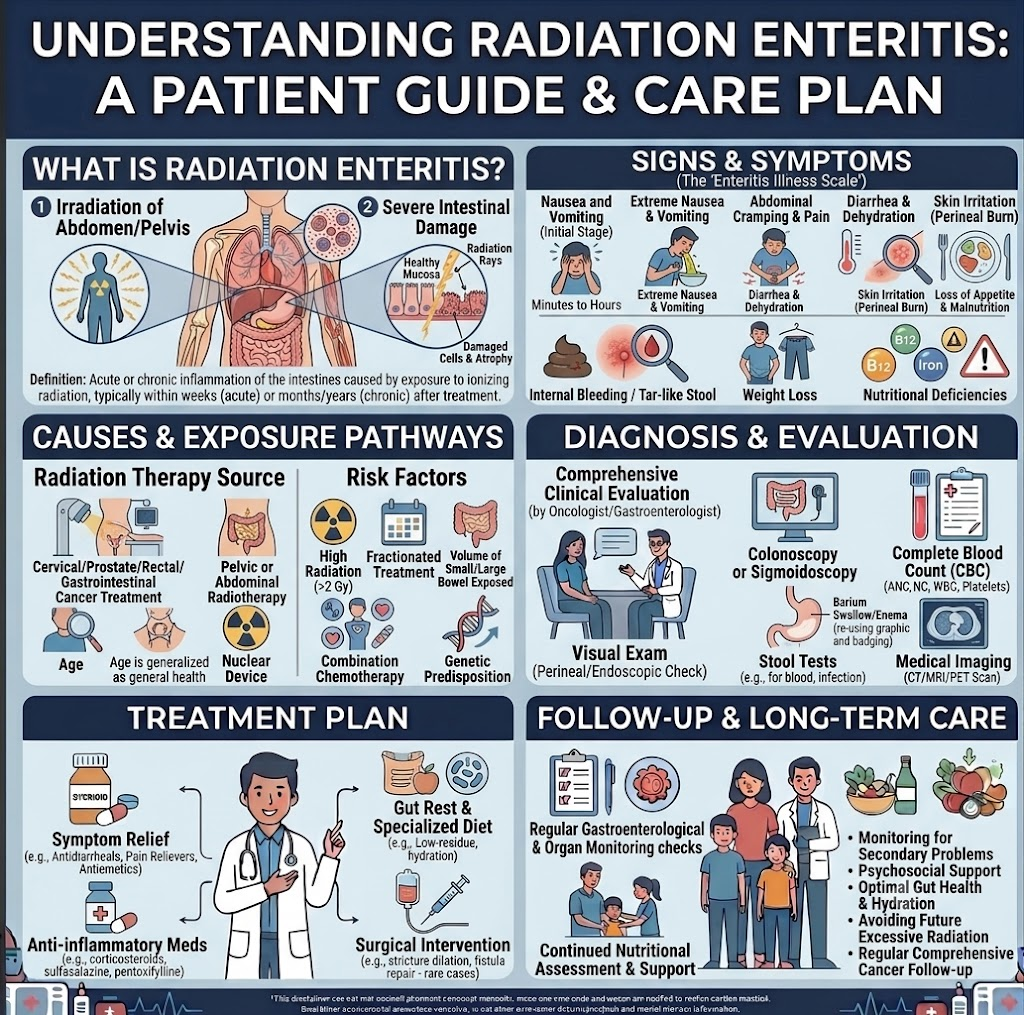
Radiation enteritis is a condition where the intestines (bowels) become irritated and swollen after a person receives radiation therapy for cancer. This usually happens when radiation is aimed at the belly, pelvis, or rectum. Symptoms often include diarrhea, feeling sick to your stomach, throwing up, and stomach cramps. For most individuals, these symptoms are temporary and ease within weeks after radiation treatment stops. However, for some, the irritation can last much longer or even appear months to years later, leading to more serious problems like low red blood cell count (anemia) or blockages in the bowel.
Understanding the Condition
Radiation enteritis is a condition where the intestines (bowels) become irritated and swollen after a person receives radiation therapy for cancer. This usually happens when radiation is aimed at the belly, pelvis, or rectum. Symptoms often include diarrhea, feeling sick to your stomach, throwing up, and stomach cramps. For most individuals, these symptoms are temporary and ease within weeks after radiation treatment stops. However, for some, the irritation can last much longer or even appear months to years later, leading to more serious problems like low red blood cell count (anemia) or blockages in the bowel.
Common Symptoms
Diarrhea: Loose, watery, or frequent bowel movements.
Nausea: Feeling sick to your stomach, often with an urge to vomit.
Vomiting: Throwing up food or stomach contents.
Stomach Cramps: Painful spasms or tightening sensations in the abdominal area.
Consultation Guide
Which Specialist to Meet
Before your visit, make a list of all your symptoms, including when they started, how often they occur, and how severe they are. Note any recent changes in your diet, medications (including over-the-counter drugs and supplements), and medical history. Write down any questions you have for the doctor. Bringing a family member or friend can also be helpful for support and to remember information.
Book a doctor visit near me
Dietary Modifications: Eating a low-fiber diet, avoiding spicy or fatty foods, caffeine, and alcohol, and consuming small, frequent meals can help reduce irritation and manage symptoms like diarrhea and cramps. (Duration: Ongoing, as needed to manage symptoms)
Hydration: Drinking plenty of fluids, such as water, clear broths, and electrolyte-rich beverages, is crucial to prevent dehydration, especially with diarrhea and vomiting. (Duration: Ongoing)
Communicate with Your Treatment Team: During radiation therapy, promptly report any new or worsening digestive symptoms to your radiation oncologist. Early intervention can often prevent more severe problems.
Nutritional Counseling: Work with a registered dietitian to develop a personalized eating plan that supports your nutritional needs and minimizes symptoms, especially if you have chronic issues or require tube feeding.
Stress Management: Techniques like meditation, yoga, or deep breathing can help manage stress, which can sometimes worsen digestive symptoms.
Support Groups: Connecting with others who have experienced similar challenges can provide emotional support and practical advice for living with radiation enteritis.
Consultation Guide
These tests check for signs of inflammation, infection, anemia (low red blood cell count), and nutritional deficiencies that might be caused by ongoing intestinal irritation.
A healthcare professional will draw a small sample of blood, usually from a vein in your arm. This is a quick procedure that may cause a brief pinch or sting. The sample is then sent to a lab for analysis.
A CT scan uses X-rays to create detailed cross-sectional images of your abdomen and pelvis. This helps doctors visualize the intestines, identify areas of swelling, thickening, or potential blockages caused by radiation enteritis.
Endoscopic Dilation: If radiation causes narrowing (strictures) in the intestines, an endoscopic procedure can be used to gently stretch and widen the narrowed areas, improving food passage. (Duration: Single procedure, possibly repeated if narrowing recurs)
Diagnostic Procedures
Understanding Radiation Enteritis: Intestinal Irritation After Cancer Treatment
Understanding the Condition
What to Expect
Stool samples are analyzed to rule out infections, check for hidden blood in the stool (which can indicate irritation or bleeding), and assess how well your body is absorbing nutrients.
What to Expect
You will be given a special container and instructions on how to collect a small sample of your bowel movement at home. This sample is then returned to the clinic or lab for testing. It's a non-invasive procedure.
CT (Computed Tomography) Scan
What to Expect
You will lie on a motorized table that slides into a large, donut-shaped machine. You may receive an oral contrast (a liquid to drink) or an intravenous (IV) contrast dye to help certain areas show up more clearly. You'll need to lie still during the scan, which typically takes 15-30 minutes. It's painless, but the machine can be noisy.
Endoscopy or Colonoscopy
These procedures involve inserting a thin, flexible tube with a camera (endoscope or colonoscope) into your digestive tract. An endoscopy examines the upper part (esophagus, stomach, and first part of the small intestine), while a colonoscopy examines the large intestine (colon) and the end of the small intestine. This allows the doctor to directly view the lining of the bowel, identify irritation, ulcers, or strictures (narrowing), and take small tissue samples (biopsies) for further examination.
What to Expect
Anti-Inflammatory Medications: Certain medications may be prescribed to help reduce the swelling and irritation in the intestines. (Duration: As prescribed, can be short-term or longer depending on severity)
Tube Feeding (Enteral Nutrition): If you cannot eat or drink enough to get the necessary nutrients, a liquid diet can be delivered directly to your stomach or small intestine through a soft tube. This tube might be placed temporarily through the nose (nasogastric or nasojejunal tube) or more permanently through a small opening in the skin into the stomach (gastrostomy tube) or small intestine (jejunostomy tube). (Duration: Temporary (weeks to months) or long-term, depending on nutritional needs)
IV Nutrition (Parenteral Nutrition): In severe cases where the intestines cannot absorb nutrients effectively, nutrition can be delivered directly into the bloodstream through an intravenous (IV) line. (Duration: Temporary or long-term, based on medical necessity)
Procedures and Surgical Interventions
Surgery: In severe cases with complications like bowel obstruction, uncontrolled bleeding, or a hole in the intestine, surgery may be necessary. This can involve removing the damaged sections of the bowel or creating a bypass around an obstructed area. (Duration: Single procedure, with recovery period)
Follow Dietary Advice During Treatment: Adhere to any dietary recommendations provided by your healthcare team during and after radiation therapy to minimize intestinal irritation.
Long-Term Management and Support
Treatment Options
You should consult with your Radiation Oncologist (the doctor who planned your radiation treatment), a Gastroenterologist (a doctor specializing in digestive system disorders), and potentially a Registered Dietitian for nutritional guidance. Your Primary Care Provider can also help coordinate your care.
Preparations Before Your Visit
Medications
Anti-Diarrhea Medications: These medicines help slow down bowel movements and reduce the frequency and urgency of diarrhea. (Duration: As prescribed, typically short-term or on an as-needed basis)
Anti-Nausea Medications: Prescribed to help alleviate feelings of sickness and prevent vomiting. (Duration: As prescribed, typically short-term or on an as-needed basis)
Pain Relievers: Over-the-counter or prescription medications can help manage abdominal pain and cramps. (Duration: As prescribed, typically short-term or on an as-needed basis)
Stomach Acid Reducers: Medications that decrease stomach acid production can help if irritation extends to the upper digestive tract. (Duration: As prescribed)
Oral Nutritional Supplements: Liquid or powder supplements can provide essential nutrients when it's difficult to eat enough solid food. (Duration: As needed, often long-term)
Modern Radiation Techniques: Discuss with your radiation oncologist if advanced radiation techniques, which precisely target tumors and spare healthy tissue, are suitable for your treatment plan. These may help reduce the risk of radiation enteritis.
Regular Medical Follow-ups: Even after treatment, regular check-ups with your gastroenterologist and primary care doctor are important to monitor for late-onset or chronic radiation enteritis and manage any emerging complications.
Prevention & Long-Term Wellbeing
You will usually receive sedation or anesthesia to keep you comfortable and relaxed during the procedure. For an endoscopy, the tube is passed through your mouth. For a colonoscopy, the tube is passed through your rectum, and you will need to follow specific dietary restrictions and bowel preparation beforehand. The procedure typically takes 30-60 minutes, and you will need someone to drive you home afterward due to the sedation.
Dietary and Lifestyle Adjustments
Prevention and Early Detection
Tags & Topics
Notice an error or need an update?
Help us keep medical information accurate. Report incorrect info or suggest an edit.


