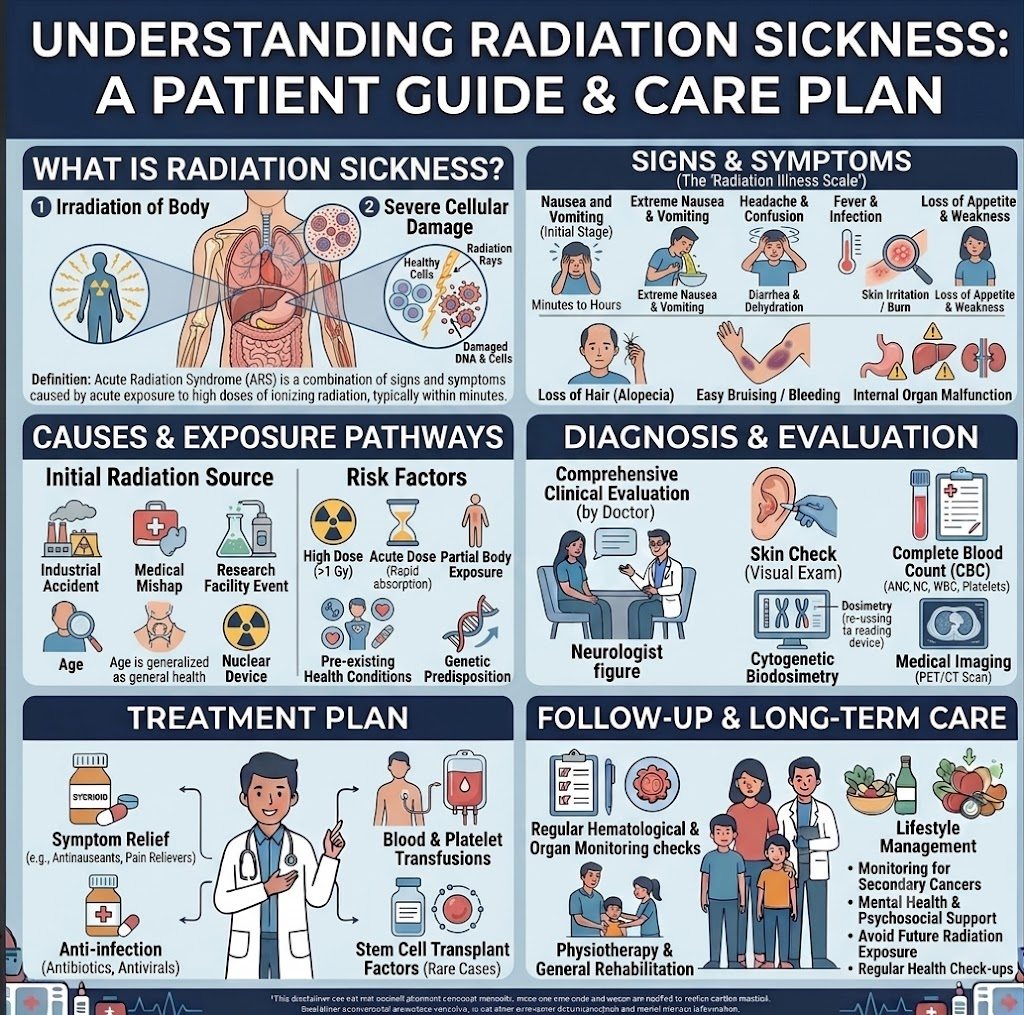
Radiation sickness, also known as acute radiation syndrome or radiation poisoning, is severe damage to the body caused by a very large dose of radiation absorbed over a short period. This condition is rare but serious and often fatal. It is distinctly different from the low-dose radiation used in common medical imaging tests like X-rays or CT scans, which do not cause radiation sickness. Most historical cases have been linked to major nuclear incidents rather than everyday exposures.
Understanding the Condition
Radiation Sickness: Understanding Acute Radiation Syndrome
Understanding the Condition
Common Symptoms
Initial Symptoms: The first treatable signs often include nausea and vomiting. The time it takes for these initial symptoms to appear provides a critical clue about the amount of radiation absorbed; quicker onset suggests a higher dose.
Latent Period: Following this initial phase, a person may experience a brief period feeling relatively well, before more serious and diverse symptoms emerge. Symptoms can begin minutes to days after a very high exposure, or hours to weeks after a milder exposure.
Possible Symptoms: Symptoms include nausea and vomiting, dizziness and disorientation, weakness and extreme fatigue, bloody vomit and stools (indicating internal bleeding), increased susceptibility to infections, and low blood pressure.
Consultation Guide
Which Specialist to Meet
In an emergency, you would first encounter emergency room physicians and critical care specialists. For ongoing care and long-term management, a team may include hematologists (blood disorders), gastroenterologists (digestive system specialists), infectious disease specialists, oncologists (cancer specialists), and mental health professionals like psychiatrists or psychologists. Radiation exposure experts may also be involved.
Preparations Before Your Visit
If a radiation emergency occurs, immediate medical attention is the priority. If you believe you’ve been exposed and are developing symptoms, gather any available information about the exposure event: the date, time, duration, estimated distance from the source, and if possible, the type of radiation. Be prepared to describe your symptoms and when they started. No specific personal preparation is needed beyond seeking immediate care.
Book a doctor visit near me
Doctors will assess your physical condition, review your symptoms, and gather details about your potential radiation exposure to estimate severity and guide treatment.
You will be asked about the exposure event, your location, and the onset of any symptoms. A thorough physical exam will check for any visible signs of injury or illness.
Pain Management: Medications are administered to alleviate discomfort and pain caused by symptoms or injuries. (Duration: As symptoms persist.)
Anti-Nausea and Anti-Vomiting Medications: These drugs help control severe nausea and vomiting, common initial symptoms, improving comfort and preventing dehydration. (Duration: For the initial phase of illness, typically days to weeks.)
Antibiotics: Given to prevent and treat infections, as radiation severely weakens the immune system by damaging bone marrow. (Duration: Often for an extended period, until bone marrow function recovers.)
Consultation Guide
Radiation sickness, also known as acute radiation syndrome or radiation poisoning, is severe damage to the body caused by a very large dose of radiation absorbed over a short period. This condition is rare but serious and often fatal. It is distinctly different from the low-dose radiation used in common medical imaging tests like X-rays or CT scans, which do not cause radiation sickness. Most historical cases have been linked to major nuclear incidents rather than everyday exposures.
Diagnostic Procedures
Factors Affecting Severity: The severity depends on the amount of radiation absorbed, energy strength, exposure duration, distance from the source, type of exposure (e.g., whole body vs. partial), and sensitivity of affected tissues like bone marrow and the gastrointestinal system.
Physical Examination and Medical History
What to Expect
Blood tests, especially a complete blood count, measure red and white blood cells and platelets. Rapid drops in white blood cells (lymphocytes) are key indicators of radiation dose and severity.
What to Expect
A healthcare professional will draw blood, usually from a vein in your arm. This is a quick procedure, and you may feel a brief pinch or sting.
Chromosome Aberration Analysis (Cytogenetics)
This specialized blood test examines changes in your chromosomes. As radiation damages DNA, specific changes can be identified in blood cells, providing a very accurate estimate of the absorbed radiation dose.
What to Expect
Similar to a standard blood test, a sample of your blood will be taken. Results may take longer due to specialized laboratory processing.
Radiation Dosimetry (if applicable)
If available, direct measurements from personal dosimeters provide an immediate and direct measurement of the absorbed radiation dose. Biological samples (e.g., urine) might also be tested for internal radioactive contamination.
What to Expect
If a personal dosimeter was worn, its data will be processed. If biological samples are needed, you might be asked to provide urine or stool samples for lab analysis.
Treatment Options
Fluid and Electrolyte Management: Intravenous (IV) fluids are given to prevent dehydration and maintain essential mineral balance, crucial due to severe vomiting and diarrhea. (Duration: Ongoing, as long as needed for stabilization.)
Medications
Bone Marrow Stimulating Factors: These medications encourage the bone marrow to produce new blood cells, especially white blood cells, which are crucial for fighting infection. (Duration: Administered daily or several times a week, typically for weeks or months, until blood counts normalize.)
Potassium Iodide (for specific exposures): If the exposure involves radioactive iodine, this medication is given to protect the thyroid gland from absorbing it, thus reducing the risk of future thyroid cancer. (Duration: Single or short-term dose, usually within hours of exposure.)
Chelating Agents (for internal contamination): For internal contamination with certain radioactive metals, these drugs bind to the radioactive material, helping the body excrete it more quickly. (Duration: Depends on the specific contaminant and exposure level, often given over days to weeks.)
Blood Transfusions: To replace crucial blood components (red blood cells for oxygen, platelets for clotting) when the bone marrow is too damaged to produce them sufficiently. (Duration: Repeated as needed, potentially over weeks or months.)
If Advised to Evacuate: Follow all evacuation routes and instructions from authorities. Travel lightly but take essential supplies such as water, non-perishable food, medications, and important documents. Remain calm and move efficiently.
Long-Term Monitoring and Support
Regular Health Screenings: Due to the increased risk of developing certain cancers and other chronic health issues later in life, long-term survivors of radiation sickness require ongoing medical surveillance, including regular check-ups and specialized screenings.
Ongoing Mental Health Support: The psychological trauma from such an event can be profound. Continued access to mental health services, including therapy and support groups, is essential for coping with anxiety, depression, post-traumatic stress, and grief.
Prevention & Long-Term Wellbeing
Nutritional Support: Specialized diets or intravenous feeding may be necessary if the digestive system is severely damaged, ensuring the body receives vital nutrients for healing. (Duration: As required, until normal eating is possible.)
Stem Cell Transplant (Bone Marrow Transplant): In extremely severe cases where the bone marrow is irreparably damaged, a transplant of healthy blood-forming stem cells might be considered to restore blood production. This is a complex and high-risk procedure. (Duration: A single procedure, followed by months of recovery and immune suppression.)
Psychotherapy and Counseling: Talking with mental health professionals helps individuals cope with the profound fear, anxiety, grief, and long-term psychological impacts of experiencing a radiation event and facing a life-threatening illness. (Duration: Ongoing, as needed for mental health support, potentially for months or years.)
Prevention in a Radiation Emergency
Follow Emergency Instructions: In a radiation emergency, immediately listen to local, state, and federal authorities via radio or television for guidance on whether to stay indoors or evacuate. Your life depends on following these instructions precisely.
If Advised to Stay Indoors (Shelter-in-Place): Quickly move to an interior room or basement, close and lock all doors and windows, turn off external fans, air conditioners, and heating units, close fireplace dampers, and bring pets inside. Stay informed via emergency broadcasts for at least 24 hours.
Lifestyle Adjustments: Adopting a healthy lifestyle, including balanced nutrition, regular exercise, and stress management techniques, can support overall well-being and resilience in the face of potential long-term health challenges.
Tags & Topics
Notice an error or need an update?
Help us keep medical information accurate. Report incorrect info or suggest an edit.


