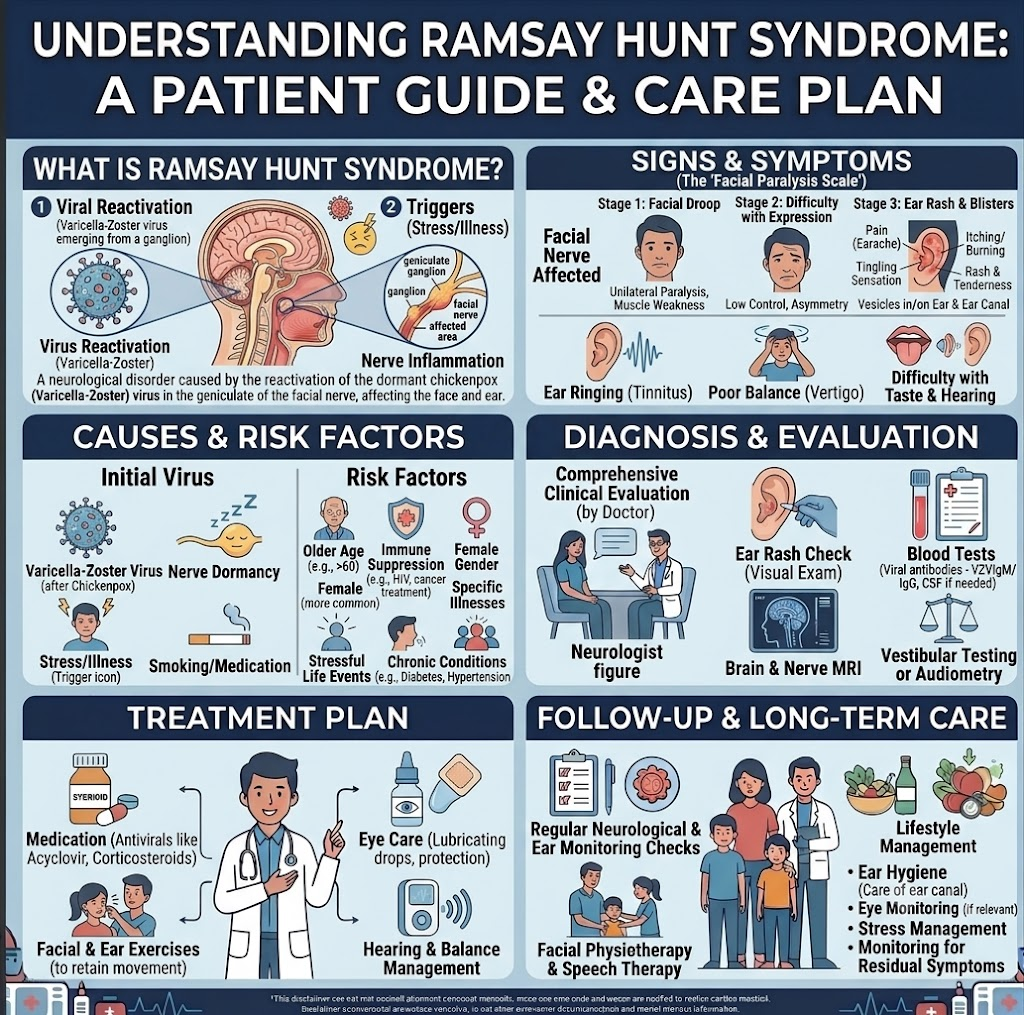
Ramsay Hunt syndrome is a condition caused by the varicella-zoster virus, the same virus responsible for chickenpox and shingles. It occurs when this virus reactivates and affects specific nerves in the face, particularly near the ear. This leads to a painful rash, often accompanied by weakness or paralysis of facial muscles on one side. The syndrome can also impact hearing, balance, and taste. Prompt medical attention is crucial to reduce the risk of long-term complications, and vaccination against shingles can help lower the risk of developing Ramsay Hunt syndrome.
Understanding the Condition
Ramsay Hunt Syndrome: Understanding a Nerve Condition
Understanding the Condition
Common Symptoms
Painful Rash with Blisters: The most noticeable symptom is a painful rash appearing as fluid-filled blisters. This rash typically develops on, inside, or around one ear. The color of the rash can vary, appearing red, purple, or brown depending on your skin tone. It can also extend to the mouth or face.
If you experience facial weakness or a painful rash on your face, contact a healthcare professional immediately. Your initial visit may be with a primary care physician, who might then refer you to specialists such as a neurologist (brain and nerve specialist), an otolaryngologist (ear, nose, and throat specialist), or an ophthalmologist (eye specialist) if eye symptoms are present.
Preparations Before Your Visit
Before your appointment, prepare a list of your symptoms, including when they started and how they have progressed. Note any recent illnesses, your medical history (especially if you've had chickenpox or shingles), and all medications, supplements, and allergies. Be ready to discuss any questions or concerns you have. The doctor will likely perform a thorough physical examination, including checking your facial movements, ears, and assessing your neurological function.
Book a doctor visit near me
Blood tests may be performed to look for antibodies against the varicella-zoster virus or to rule out other conditions that might present with similar symptoms.
Antiviral Medications: These medications are prescribed to fight the varicella-zoster virus and are most effective when started within three days of symptom onset. They help reduce the severity and duration of the illness. (Duration: Typically 7-10 days)
Anti-Nausea and Anti-Dizziness Medications: These medications can help alleviate symptoms of vertigo and nausea if they are present. (Duration: As needed for symptom relief)
Eye Drops and Ointments: If you cannot fully close your eye, lubricating eye drops and ointments are crucial to prevent dryness and damage to the cornea. (Duration: As long as facial weakness affecting eye closure persists)
Cold Compresses: Applying cool, damp compresses to the rash area can help soothe pain and reduce discomfort. (Duration: As needed for symptom relief)
Rash Care: Keep the rash area clean and dry to prevent secondary bacterial infections. (Duration: Until the rash heals)
Eye Protection: If your eye cannot close completely, wear an eye patch or protective glasses, especially during sleep, to shield it from dust and irritation. (Duration: As long as facial weakness affecting eye closure persists)
Soft Foods: If eating is difficult due to facial weakness or sores on the tongue, consuming soft or pureed foods can be helpful. (Duration: As needed for comfortable eating)
Regular Medical Follow-ups: Ongoing appointments with your doctor are important to monitor the recovery of your facial function, hearing, and balance, and to address any persistent symptoms.
Specialized Eye Care: If facial paralysis affects your eye, continued monitoring by an ophthalmologist is crucial to prevent long-term complications such as dry eye syndrome or corneal damage.
Mental Health Support: Coping with facial paralysis or other persistent symptoms can be challenging. Seeking support from mental health professionals or support groups can help you manage emotional and psychological impacts.
Chronic Pain Management: Some individuals may develop long-lasting nerve pain (post-herpetic neuralgia) after the rash heals. This requires ongoing pain management strategies, which your doctor can help you with.
Speech Therapy: If facial paralysis significantly impacts your speech or swallowing, a speech-language pathologist can provide exercises and strategies to improve these functions.
Consultation Guide
Ramsay Hunt syndrome is a condition caused by the varicella-zoster virus, the same virus responsible for chickenpox and shingles. It occurs when this virus reactivates and affects specific nerves in the face, particularly near the ear. This leads to a painful rash, often accompanied by weakness or paralysis of facial muscles on one side. The syndrome can also impact hearing, balance, and taste. Prompt medical attention is crucial to reduce the risk of long-term complications, and vaccination against shingles can help lower the risk of developing Ramsay Hunt syndrome.
Facial Weakness or Paralysis: Weakness or complete loss of movement (paralysis) on one side of the face is common. This can cause one corner of the mouth to droop, make it difficult to close the eye on the affected side, and impair facial expressions.
Ear Pain: Intense pain within the affected ear, which can sometimes be deep and persistent.
Hearing Changes: You might experience hearing loss in the affected ear or a ringing sensation (tinnitus).
Dizziness and Balance Issues: A sensation of spinning (vertigo) and problems with balance can occur due to nerve involvement.
Eye Irritation: Difficulty closing the eye can lead to dryness and irritation. Conversely, some people experience excessive tearing from the affected eye.
Taste Alterations: Changes in how food tastes on one side of the tongue, or the development of sores on the tongue, may occur.
Consultation Guide
Which Specialist to Meet
In some cases, an MRI scan may be recommended to rule out other potential causes of facial paralysis or to assess the extent of nerve inflammation.
Diagnostic Procedures
Diagnosis often begins with a thorough physical examination by a healthcare professional. They will look for the characteristic rash with blisters on or around the ear and assess the extent of facial weakness or paralysis.
What to Expect
During the examination, the doctor will carefully inspect your ear, face, and mouth for the rash. They will also ask you to make various facial expressions (e.g., smile, frown, raise eyebrows) to evaluate muscle movement and identify any weakness. Your hearing and balance may also be briefly assessed.
Viral Testing (Swab Test)
To confirm the presence of the varicella-zoster virus, a sample of fluid from one of the blisters may be collected and sent to a laboratory for testing.
What to Expect
The doctor will gently use a sterile swab to collect fluid from an active blister. This is a quick and generally minimally uncomfortable procedure. The swab is then sent for specialized laboratory analysis, such as a polymerase chain reaction (PCR) test, to detect the virus's genetic material.
What to Expect
A small sample of blood will be drawn, typically from a vein in your arm. This is a common procedure that involves a brief pinch as the needle is inserted. The blood sample is then sent to a lab for analysis.
MRI Scan (Magnetic Resonance Imaging)
What to Expect
You will lie on a movable table that slides into a large, tube-shaped machine. The MRI machine uses powerful magnets and radio waves to create detailed images of your brain and facial nerves. You will need to remain very still during the scan, and you might hear loud knocking or buzzing noises (earplugs or headphones are usually provided). The procedure can take from 30 to 60 minutes.
Treatment Options
Medications
Corticosteroids: Anti-inflammatory medications given to reduce swelling and inflammation of the affected nerves, which can help improve recovery of facial function. (Duration: Gradually tapered over several days to weeks)
Pain Relievers: Over-the-counter or prescription pain medications are used to manage the often severe pain associated with the rash and nerve inflammation. (Duration: As needed for pain control)
Prevention & Long-Term Wellbeing
Physical Therapy: Specific facial exercises can help stimulate nerves and muscles, aiding in the recovery of facial movement and reducing the risk of permanent facial weakness. (Duration: Weeks to months, ongoing as needed)
Occupational Therapy: Occupational therapists can help you adapt to daily activities that might be challenging due to facial weakness, such as eating or speaking. (Duration: As needed based on functional limitations)
Supportive Care and Home Remedies
Prevention
Shingles Vaccination: The shingles vaccine is highly effective in preventing shingles, and by doing so, significantly lowers your risk of developing complications like Ramsay Hunt syndrome. Discuss vaccination with your healthcare provider, especially if you are over 50 or have a weakened immune system.
Immune System Support: Maintaining a strong immune system through a balanced diet, regular physical activity, adequate sleep, and stress management can help your body keep the varicella-zoster virus in check.
Long-Term Monitoring and Support
Tags & Topics
Notice an error or need an update?
Help us keep medical information accurate. Report incorrect info or suggest an edit.


