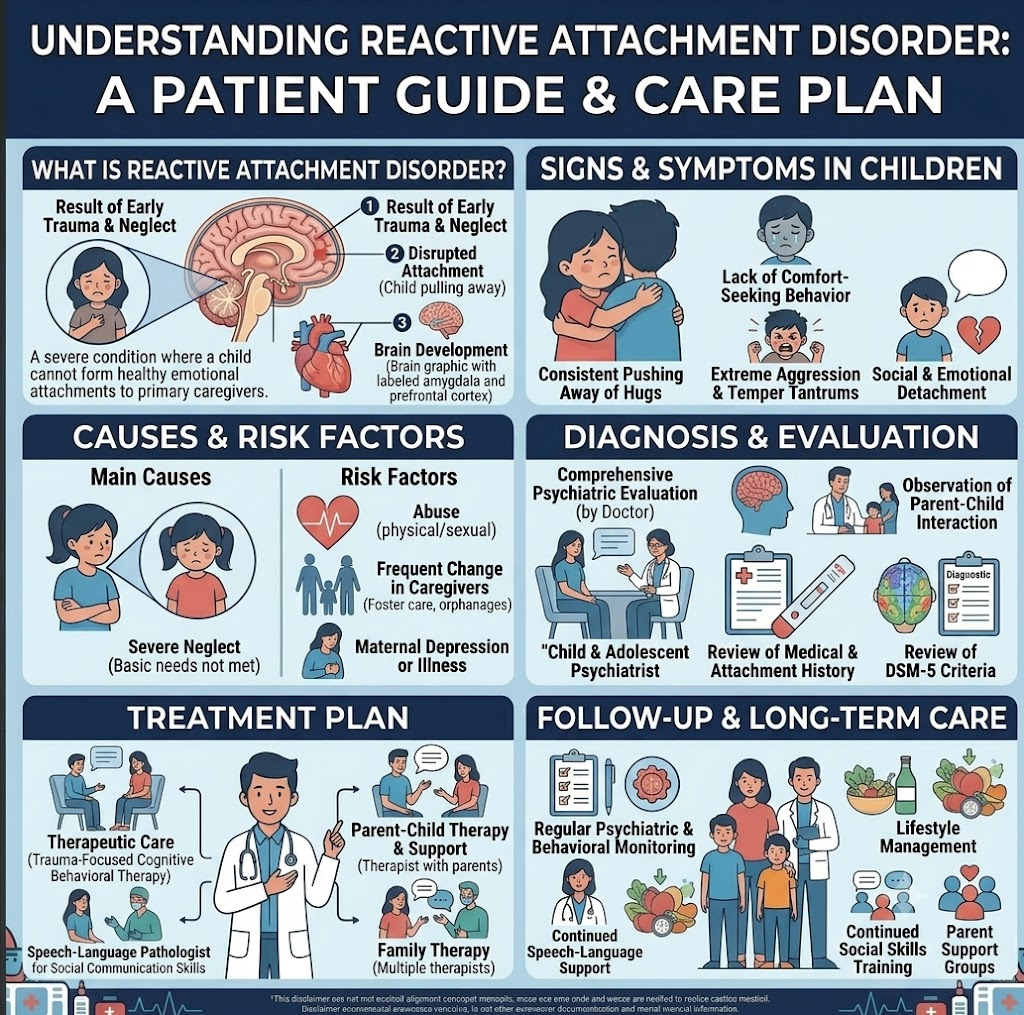
Reactive Attachment Disorder (RAD) is a rare but serious condition affecting infants and young children. It occurs when a child struggles to form healthy, secure emotional bonds with their primary caregivers. This often happens if a child's basic needs for comfort, affection, and consistent nurturing are not met. While serious, with appropriate treatment, children with RAD can develop more stable and healthy relationships. Treatment focuses on creating a stable, loving environment and improving positive interactions between the child and their caregivers. RAD usually begins in infancy, with less certainty about its occurrence in children older than five years.
Understanding the Condition
Reactive Attachment Disorder: Understanding and Support for Children
Understanding the Condition
Common Symptoms
Limited Positive Emotions: The child rarely shows joy, smiles, or interacts playfully and warmly with caregivers, often appearing emotionally withdrawn.
Difficulty Seeking or Responding to Comfort: The child may not reach out to caregivers for comfort when upset, distressed, or hurt, and might not respond positively when comfort is offered.
Unexplained Irritability, Sadness, or Fear: The child may display these emotions even during interactions that are not threatening or frightening, often without a clear reason.
Minimal Social and Emotional Responsiveness: A general lack of back-and-forth social engagement, such as not engaging in age-appropriate interactive games or showing interest in social interactions.
Resistance to Affection: The child may pull away from hugs, cuddling, or other forms of physical closeness from caregivers.
Watching Others Without Engaging: The child might observe social interactions or play without actively participating or initiating engagement.
Lack of Eye Contact: Avoidance of direct eye contact, especially during comforting or bonding interactions with caregivers.
Difficulty Being Soothed: It can be very challenging for caregivers to calm the child down when they are upset, even with consistent effort.
Consultation Guide
Which Specialist to Meet
You should seek an evaluation from a pediatric psychiatrist or a child psychologist who specializes in early childhood development and attachment disorders. A developmental pediatrician may also be involved in the care team.
Preparations Before Your Visit
Before the visit, it's helpful to keep a detailed log of your child's behaviors, noting when they started, how often they occur, any specific triggers, and how your child responds to comfort or interaction. Be prepared to discuss your child's developmental history, medical background, and early life experiences, including any changes in caregivers or significant events. Also, prepare a list of any questions you have for the specialist.
Book a doctor visit near me
Standardized tools and assessments are used to evaluate the child's overall emotional, social, and cognitive development. This helps to understand the child's strengths and weaknesses, and to rule out other conditions that might have similar symptoms, such as autism spectrum disorder, anxiety disorders, or intellectual disabilities.
Symptom-Targeted Medications: While no medication directly treats RAD, a doctor may prescribe medicines to help manage severe co-occurring symptoms like anxiety, depression, hyperactivity, or severe behavioral outbursts. These are typically used as a temporary aid in conjunction with therapy, not as a standalone treatment. (Duration: As determined by a medical professional, can be short-term or longer-term, regularly reviewed for effectiveness.)
Diagnostic Procedures
Clinical Interview and Behavioral Observation
This involves a specialist conducting thorough interviews with parents or primary caregivers to gather detailed information about the child's behaviors, emotional responses, developmental milestones, and their early environment. The specialist will also observe the child's interactions with caregivers and others in a structured or play-based setting.
What to Expect
You will meet with a pediatric psychiatrist or child psychologist who will ask many questions about your child's history, daily routines, how they interact with you and others, and any challenging behaviors. Your child may be observed playing, interacting with you, or participating in simple tasks. This process may involve multiple sessions to get a complete picture.
Developmental and Psychological Assessment
What to Expect
Your child might participate in age-appropriate play activities, puzzles, or tasks with the specialist. You might also be asked to complete questionnaires about your child's behavior and development. These assessments help the specialist gain a comprehensive understanding of your child's functioning across different areas.
Treatment Options
Reactive Attachment Disorder (RAD) is a rare but serious condition affecting infants and young children. It occurs when a child struggles to form healthy, secure emotional bonds with their primary caregivers. This often happens if a child's basic needs for comfort, affection, and consistent nurturing are not met. While serious, with appropriate treatment, children with RAD can develop more stable and healthy relationships. Treatment focuses on creating a stable, loving environment and improving positive interactions between the child and their caregivers. RAD usually begins in infancy, with less certainty about its occurrence in children older than five years.
Therapies
Caregiver-Child Interaction Therapy (Attachment-Based Therapy): This therapy focuses on improving the bond and interaction between the child and their primary caregiver. It teaches caregivers how to respond sensitively and consistently to the child's emotional and physical needs, fostering trust and a secure attachment. Sessions often involve guided play and interaction. (Duration: Typically ranges from several months to a year, with regular weekly or bi-weekly sessions.)
Parent/Caregiver Education and Counseling: This crucial component helps caregivers understand the unique challenges of RAD, learn effective parenting strategies, and develop skills to manage difficult behaviors. It also provides support for caregivers, recognizing the stress involved in caring for a child with attachment issues. Support groups can be very beneficial. (Duration: Ongoing, as needed, often integrated throughout the child's therapy process.)
Family Therapy: Involving the entire family, this therapy aims to improve communication, resolve conflicts, and create a supportive family environment that helps the child heal and thrive. It addresses family dynamics that may impact the child's attachment. (Duration: Varies, generally a few months, depending on family needs.)
Environmental Support
Creating a Stable and Nurturing Home Environment: This is a fundamental 'home remedy.' It involves ensuring the child experiences consistent, predictable care from primary caregivers, a structured daily routine, and a home atmosphere rich in warmth, affection, and emotional responsiveness. This consistency builds a sense of safety and security. (Duration: Long-term and ongoing, essential for continued healing and development.)
Medications
Prevention & Long-Term Wellbeing
Prevention
Early Identification and Intervention: Recognizing and addressing signs of neglect or attachment difficulties as early as possible, especially in vulnerable infants and young children. This includes providing immediate support to at-risk families and caregivers.
Consistent and Responsive Caregiving: Ensuring that infants and young children consistently receive stable, loving care that meets both their physical and emotional needs. This consistent responsiveness helps build trust and secure attachment from birth.
Caregiver Support and Education: Offering resources, education, and practical support to new parents or caregivers, particularly those facing socioeconomic challenges or who may lack adequate support networks, to help them understand child development and the importance of attachment.
Long-Term Monitoring and Support
Ongoing Therapeutic Support: Continuing with family or individual therapy as recommended to reinforce healthy attachment patterns, address new challenges as the child grows, and provide tools for coping with past experiences.
Maintaining a Predictable Environment: Consistently providing a stable, structured, and predictable home environment with clear boundaries and routines helps the child feel secure, safe, and understood.
Collaboration with Schools and Community: Working closely with teachers, school counselors, and other community resources to ensure the child receives appropriate academic and social support, fostering their overall development and well-being.
Prioritizing Caregiver Self-Care: Caregivers must also prioritize their own mental and emotional health. Seeking personal support, stress management techniques, and understanding that caring for a child with RAD can be demanding are crucial for their sustained ability to provide care.
Tags & Topics
Notice an error or need an update?
Help us keep medical information accurate. Report incorrect info or suggest an edit.


