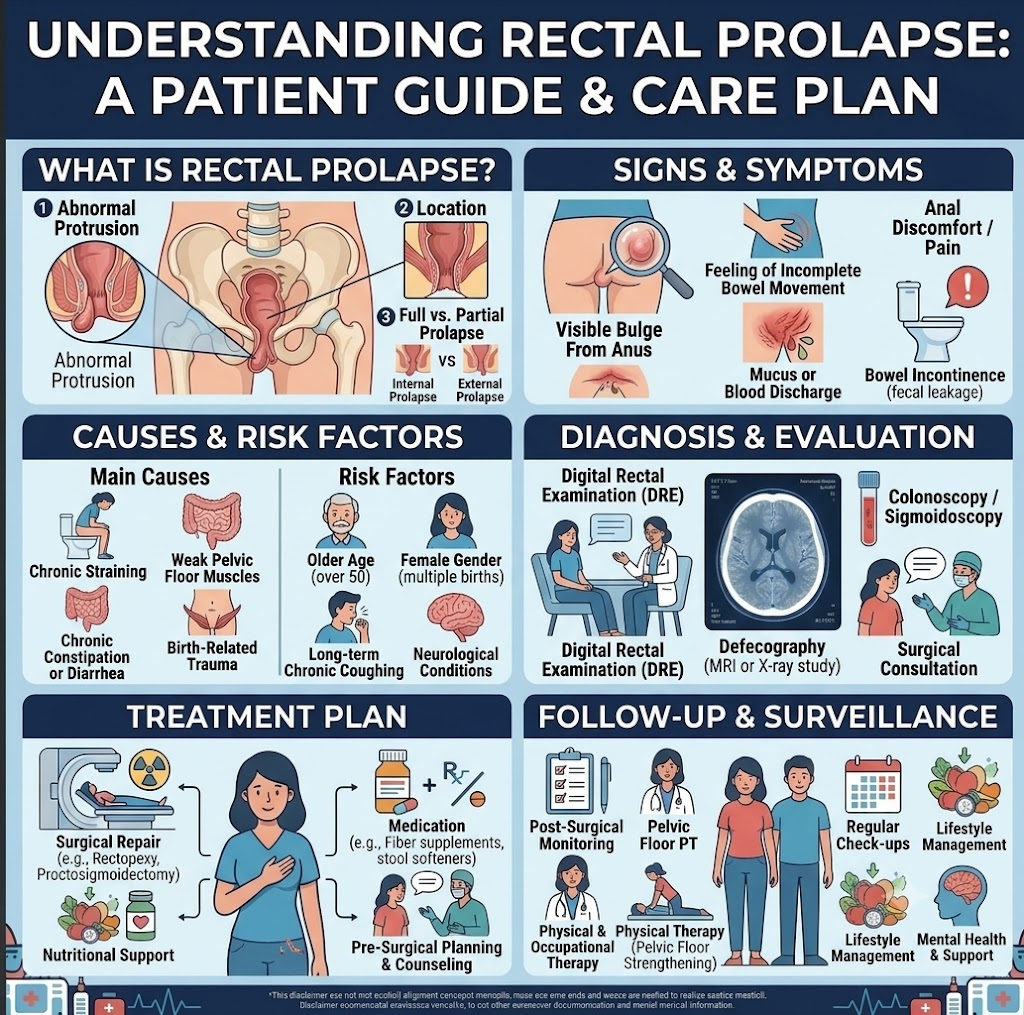
Rectal prolapse occurs when the last part of the large intestine, called the rectum, stretches and slides out of its normal position, becoming visible outside the anus. While it can cause discomfort and impact quality of life, it is rarely a medical emergency. Treatment often involves lifestyle changes and medications, but surgery is frequently required to permanently correct the condition.
Understanding the Condition
Rectal Prolapse: Understanding and Managing the Condition
Understanding the Condition
Common Symptoms
Visible Lump: You may notice a reddish, soft lump protruding from the anus, especially during or after a bowel movement. This lump might retract on its own or remain outside.
Bowel Control Issues: Difficulty controlling bowel movements, known as fecal incontinence, leading to unexpected leakage of stool or gas.
Changes in Bowel Habits: Experiencing either persistent constipation (difficulty passing stool) or loose, watery stools.
Leakage: Discharge of blood or clear/sticky fluid (mucus) from the rectum.
Incomplete Emptying Sensation: A persistent feeling that your rectum has not completely emptied, even after having a bowel movement.
Consultation Guide
Which Specialist to Meet
Before your visit, make a detailed list of all your symptoms, including when they started, how often they occur, and what seems to make them better or worse. Note any over-the-counter or prescription medications, vitamins, and supplements you are currently taking. Be prepared to discuss your medical history, including any previous surgeries, childbirth history, and chronic health conditions. It's helpful to write down any questions you have for the doctor.
Book a doctor visit near me
Regular Follow-up with Doctor: Attend all scheduled follow-up appointments with your specialist to monitor your condition, especially after surgery, and address any new symptoms or concerns.
Consultation Guide
Rectal prolapse occurs when the last part of the large intestine, called the rectum, stretches and slides out of its normal position, becoming visible outside the anus. While it can cause discomfort and impact quality of life, it is rarely a medical emergency. Treatment often involves lifestyle changes and medications, but surgery is frequently required to permanently correct the condition.
You will lie on an examination table, typically on your side or back with your knees bent. The doctor will visually inspect the area and then gently insert a gloved, lubricated finger into your rectum. You may be asked to push down or bear down. This is usually brief and may cause a feeling of pressure but is not typically painful.
Defecography (or Dynamic Pelvic MRI)
Diagnostic Procedures
To diagnose and treat rectal prolapse, you should consult a colorectal surgeon or a gastroenterologist. A pelvic floor physical therapist may also be involved in your care to help strengthen relevant muscles.
Preparations Before Your Visit
Physical Examination, including Digital Rectal Exam
A doctor examines the area around and inside your anus, asking you to strain as if having a bowel movement to observe for prolapse. This helps identify the type and extent of prolapse.
What to Expect
An imaging test using X-rays or magnetic resonance imaging (MRI) to record the movement of your pelvic floor muscles and rectum during a simulated bowel movement. It helps visualize how the rectum functions and if it prolapses.
What to Expect
For an X-ray defecography, a thick liquid (barium paste) is inserted into your rectum. You then sit on a special toilet-like chair within an X-ray machine, and images are taken while you rest, squeeze, and strain. For an MRI defecography, a gel is inserted, and you lie in the scanner, performing similar actions. The procedure can take 30-60 minutes; some discomfort or embarrassment may occur.
A procedure where a long, flexible tube with a camera on the end is used to examine the entire length of the colon and rectum. This helps rule out other conditions and assess the overall health of your bowel.
What to Expect
Before the procedure, you will need to follow a special diet and bowel preparation to clear your colon. During the procedure, you will be given sedation to help you relax or sleep. The doctor will then insert the colonoscope into your anus and gently guide it through your large intestine. The procedure typically takes 30-60 minutes, followed by grogginess, bloating, or gas.
This test measures the strength of the muscles in your rectum and anus, and checks the sensitivity of the rectum. It helps understand how well these muscles work to hold stool.
What to Expect
A thin, flexible tube with a balloon on the end is gently inserted into your rectum. The balloon is inflated slightly, and the tube measures pressure changes as you squeeze your muscles, relax, and respond to sensations. The procedure usually takes about 30 minutes and is generally not painful, though you may feel some pressure or urge to have a bowel movement.
Pudendal Nerve Function Test (Electromyography - EMG)
This test assesses the health and function of the pudendal nerve, which controls the muscles of the pelvic floor and helps with bowel control.
What to Expect
Small needle electrodes are inserted into the muscles around the anus or in the buttocks. These electrodes record the electrical activity of the muscles as you contract and relax them. You may feel a brief pinch or discomfort during electrode insertion. The test usually takes about 20-30 minutes.
Treatment Options
Non-Surgical Treatments
Stool Softeners and Laxatives: Oral medications that help make stools softer and easier to pass, reducing the need to strain. (Duration: As needed, under medical guidance)
Suppositories: Medications inserted into the rectum to lubricate the bowel or stimulate a bowel movement. (Duration: As needed, under medical guidance)
Pelvic Floor Physical Therapy: Exercises and techniques taught by a specialized therapist to strengthen the pelvic floor muscles, which can improve bowel control and support the rectum. (Duration: Several weeks to months, with ongoing home exercises)
Surgical Procedures
Rectal Prolapse Surgery (Abdominal Approach): This surgery involves making an incision in the abdomen (either open or minimally invasive using a laparoscope) to pull the rectum back into its proper position and secure it to the sacrum (a bone at the base of the spine). (Duration: One-time procedure, with several weeks for recovery)
Rectal Prolapse Surgery (Perineal Approach): This surgery is performed through an incision around the anus. Part of the prolapsed rectum is removed, and the remaining rectum is stitched back into place. This approach is often considered for elderly or less healthy patients as it is generally less invasive than abdominal surgery. (Duration: One-time procedure, with several weeks for recovery)
Prevention & Long-Term Wellbeing
Dietary and Lifestyle Modifications: Increasing fiber intake through fruits, vegetables, and whole grains, along with drinking plenty of water, helps soften stools and prevent straining during bowel movements. Regular, gentle exercise also supports bowel regularity. (Duration: Ongoing)
Prevention
Maintain Regular Bowel Habits: Avoid constipation by ensuring a diet rich in fiber (fruits, vegetables, whole grains) and adequate fluid intake. Establish a regular time for bowel movements and avoid delaying the urge.
Avoid Straining: Do not strain excessively during bowel movements. If you feel the need to strain, adjust your diet or consult your doctor about stool softeners.
Stay Hydrated: Drink plenty of water throughout the day to help keep stools soft and prevent constipation.
Engage in Pelvic Floor Exercises: Perform exercises to strengthen the pelvic floor muscles, which provide support to the rectum and other pelvic organs. A physical therapist can guide you on proper techniques.
Long-Term Wellbeing
Adhere to Lifestyle Recommendations: Continue with dietary fiber, hydration, and exercise habits as recommended by your doctor to prevent recurrence and maintain overall bowel health.
Tags & Topics
Notice an error or need an update?
Help us keep medical information accurate. Report incorrect info or suggest an edit.


