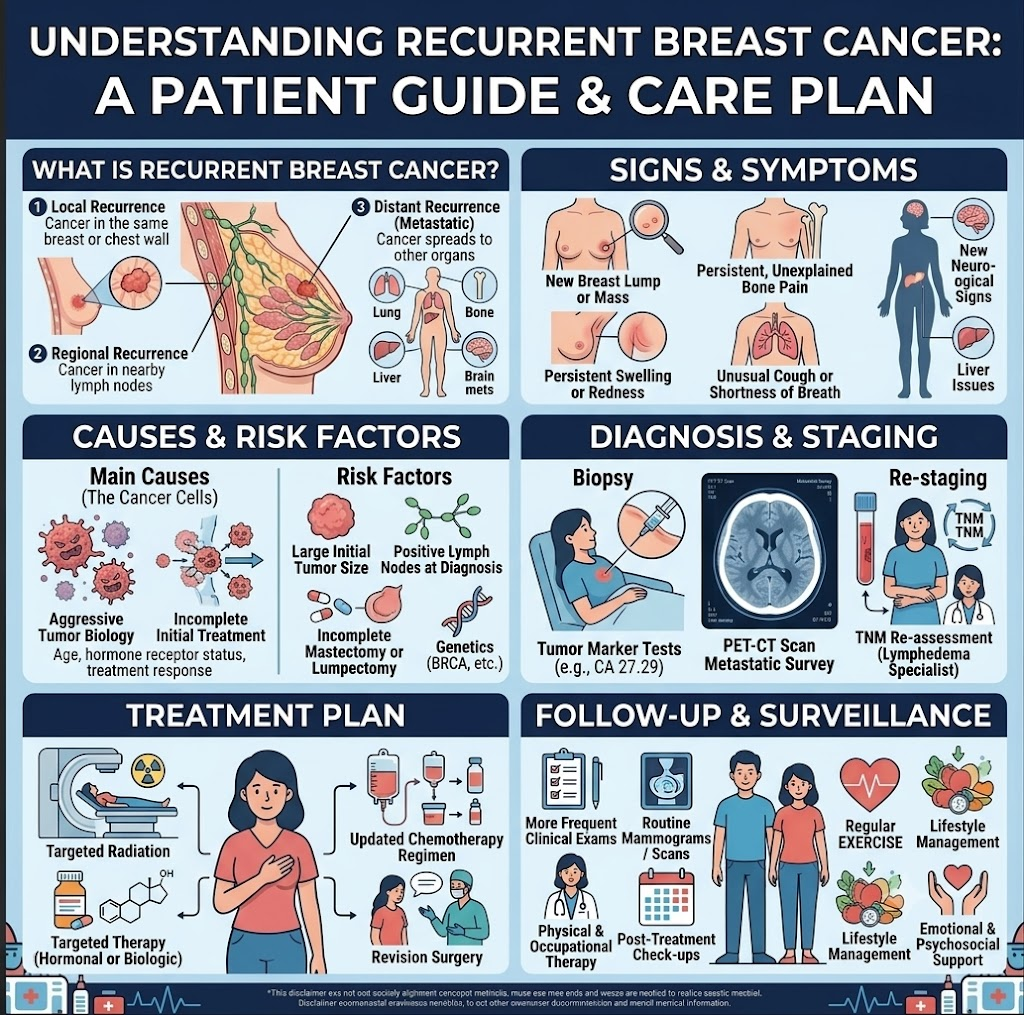
Recurrent breast cancer means that breast cancer has returned after a period of time when it could not be detected. It can reappear in the original breast or chest area (local recurrence), in nearby lymph nodes (regional recurrence), or spread to distant parts of the body like bones, lungs, liver, or brain (metastatic or distant recurrence). Recognizing symptoms early and understanding treatment options are crucial for managing this condition.
Understanding the Condition
Understanding Recurrent Breast Cancer
Understanding the Condition
Recurrent breast cancer means that breast cancer has returned after a period of time when it could not be detected. It can reappear in the original breast or chest area (local recurrence), in nearby lymph nodes (regional recurrence), or spread to distant parts of the body like bones, lungs, liver, or brain (metastatic or distant recurrence). Recognizing symptoms early and understanding treatment options are crucial for managing this condition.
Common Symptoms
Local Recurrence Symptoms: If breast cancer returns in the same breast or chest wall where it was first treated, you might notice a new lump or thickening in the breast or chest wall. Other signs can include changes to the skin, such as redness, swelling, dimpling, or an orange-peel texture. Nipple changes, like discharge, inversion, or a rash on the nipple, can also occur. Pain or tenderness in the area is another possible symptom.
Regional Recurrence Symptoms: When breast cancer recurs in nearby lymph nodes, commonly in the armpit, above or below the collarbone, or near the breastbone, you might feel new lumps or swelling in these areas. These lumps are often painless but can sometimes cause discomfort or tenderness.
Distant (Metastatic) Recurrence Symptoms: If breast cancer spreads to other parts of the body, symptoms will depend on the affected area. Common signs include persistent bone pain (if it spreads to bones), chronic cough or shortness of breath (lungs), yellowing of the skin or eyes, or abdominal pain (liver), and headaches, dizziness, or seizures (brain). Unexplained weight loss and fatigue can also be general indicators of distant recurrence.
Consultation Guide
Which Specialist to Meet
You should consult with an oncologist, who specializes in cancer treatment. Other specialists who may be involved include a breast surgeon, radiation oncologist (for radiation therapy), and a palliative care specialist to manage symptoms and improve quality of life. A breast nurse navigator can also provide support and guide you through your care.
Preparations Before Your Visit
Before your visit, gather your complete medical history, including details of your previous breast cancer diagnosis and treatments. Make a list of all current symptoms, including when they started and how often they occur. Write down any questions you have for the doctor. It's often helpful to bring a trusted family member or friend to take notes and offer support during the appointment.
Book a doctor visit near me
The doctor will gently feel your breasts, underarms, and collarbone areas. You will be asked questions about your symptoms, general health, and any concerns you might have. This part of the exam is usually quick and painless.
Lymph Node Dissection: If cancer has returned in the lymph nodes, these nodes may be surgically removed to prevent further spread and reduce symptoms. (Duration: A single surgical procedure, with recovery typically lasting a few weeks.)
External Beam Radiation Therapy: High-energy beams are directed at the cancerous area to kill cancer cells. This may be used if radiation was not part of your initial treatment or if the recurrence is in a new, unradiated area. It can also be used to manage pain if cancer has spread to bones. (Duration: Daily treatments for several weeks, typically 3-6 weeks, or shorter courses for symptom relief.)
Symptom Management: This involves treatments focused on relieving symptoms like pain, fatigue, nausea, and shortness of breath, often in conjunction with active cancer treatment, to improve quality of life. (Duration: Ongoing, as needed throughout the course of treatment and beyond.)
Consultation Guide
Your breast will be positioned and compressed between two plates for a few seconds while X-ray images are taken. This can be uncomfortable or cause some pressure, but it is brief. Two views of each breast are usually taken.
An ultrasound uses sound waves to create images of the inside of your body. It is often used to get a closer look at a suspicious area found on a mammogram or during a physical exam, particularly to determine if a lump is solid or fluid-filled.
Diagnostic Procedures
Physical Exam and Medical History
What to Expect
Blood tests, including complete blood count (CBC), liver and kidney function tests, and sometimes tumor marker tests (like CA 15-3 or CA 27-29), can provide information about your overall health and may help monitor cancer activity. Elevated tumor markers can sometimes suggest a recurrence, but they are not always definitive.
What to Expect
A healthcare professional will draw a small sample of blood from a vein, typically in your arm. You might feel a brief pinch or sting. The process is quick, usually lasting a few minutes.
A mammogram is an X-ray of the breast tissue. It helps in detecting changes in the breast that might indicate a local recurrence, especially if you have remaining breast tissue.
What to Expect
What to Expect
You will lie down, and a clear gel will be applied to your skin over the area to be examined. A small handheld device called a transducer will be moved over the gelled area, sending sound waves and capturing echoes to create images. This procedure is generally painless and takes about 15-30 minutes.
Magnetic Resonance Imaging (MRI)
An MRI uses powerful magnets and radio waves to produce detailed cross-sectional images of the breast and other body parts. It can be very effective in finding small recurrences or assessing the extent of disease.
What to Expect
You will lie on a movable table that slides into a large tunnel-shaped scanner. You must remain very still during the scan, which can take 30-60 minutes. The machine makes loud knocking noises, so you will be offered earplugs or headphones. Sometimes, a contrast dye is injected into a vein to make tissues show up more clearly.
Computed Tomography (CT) Scan
A CT scan uses a series of X-ray images taken from different angles to create detailed cross-sectional pictures of organs, bones, and soft tissues. It is commonly used to check for recurrence in the chest, abdomen, and pelvis.
What to Expect
You will lie on a motorized table that slides into a large, donut-shaped machine. You may be asked to hold your breath for short periods. A contrast dye may be given orally or injected intravenously to enhance image clarity. The scan typically takes 15-30 minutes and is usually painless.
A bone scan uses a small amount of radioactive tracer injected into a vein to detect areas of abnormal bone activity, which could indicate cancer spread to the bones.
What to Expect
A small amount of radioactive tracer is injected into your arm. You will wait 2-3 hours for the tracer to be absorbed by your bones. Then, you will lie on a table while a special camera scans your body to create images of your bones. The scan itself takes about 30-60 minutes and is painless.
Positron Emission Tomography (PET) Scan
A PET scan uses a small amount of radioactive sugar to identify areas where cells are highly active, which is common in cancer cells. It can help detect cancer spread throughout the body and assess the extent of recurrence.
What to Expect
You will receive an injection of a radioactive sugar solution. After about 60 minutes for your body to absorb the sugar, you will lie on a table that moves through a scanner. You need to remain still during the 30-60 minute scan. The procedure is painless, but you must avoid strenuous activity before the test.
A biopsy is the most definitive diagnostic test. A small tissue sample from the suspicious area is removed and examined under a microscope by a pathologist to confirm the presence of cancer and determine its characteristics.
What to Expect
Regular Follow-up Care: Consistent follow-up appointments with your oncology team are vital. This includes physical exams and imaging tests as recommended, to monitor for any new signs of recurrence or side effects from treatment. Early detection often leads to more effective management.
Treatment Options
Your doctor will conduct a thorough physical examination, carefully checking your breasts, chest wall, and lymph node areas for any lumps, skin changes, or other abnormalities. They will also review your complete medical history, including your previous breast cancer treatments, to understand your unique situation.
Depending on the location of the suspicious area, a needle biopsy (guided by ultrasound or mammogram) or a surgical biopsy may be performed. For a needle biopsy, the area is numbed, and a small needle is used to extract tissue. For a surgical biopsy, a small incision is made to remove a tissue sample. You may feel some pressure or discomfort, but pain medication and local anesthetic are used. The sample is then sent to a lab for analysis, which typically takes several days.
Surgical Procedures
Mastectomy: If you had a lumpectomy for your original cancer, a mastectomy (removal of the entire breast) may be an option for a local recurrence in the breast, especially if radiation therapy was part of your initial treatment. For chest wall recurrences, surgery to remove the cancerous tissue and a margin of healthy tissue may be performed. (Duration: A single surgical procedure, followed by a recovery period of several weeks.)
Chemotherapy: Powerful drugs are used to kill rapidly growing cancer cells throughout the body. It may be given intravenously (into a vein) or orally (as a pill). Chemotherapy is often recommended for widespread recurrence or for cancers that are not responsive to hormone or targeted therapies. (Duration: Cycles of treatment, typically lasting 3-6 months, sometimes longer, depending on the regimen and response.)
Hormone Therapy: For hormone-receptor-positive breast cancers, these medications block the effects of hormones (like estrogen) that fuel cancer growth. They are taken as pills. (Duration: Typically ongoing for several years, often 5-10 years, or as long as beneficial.)
Targeted Therapy: These drugs specifically target certain characteristics of cancer cells, such as specific proteins or genetic mutations, to block their growth and spread while minimizing harm to healthy cells. (Duration: Often ongoing for months to years, or as long as the treatment is effective and tolerable.)
Immunotherapy: These treatments help your body's own immune system recognize and fight cancer cells. They are often given intravenously. (Duration: Cycles of treatment, often ongoing for months to years, or as long as beneficial.)
Supportive and Palliative Care
Bone Health: Breast cancer and its treatments can sometimes weaken bones. Discuss strategies with your doctor to maintain bone health, such as adequate calcium and vitamin D intake, weight-bearing exercises, and potentially specific medications.
Seek Emotional Support: Recurrence can be emotionally challenging. Connect with support groups, where you can share experiences and feelings with others facing similar situations. Counseling from a psychologist, social worker, or therapist can also provide valuable coping strategies and emotional tools.
Manage Treatment Side Effects: Work closely with your healthcare team to manage any side effects from your treatments. This might involve medications for pain or nausea, physical therapy for lymphedema, or other supportive measures to maintain your quality of life.
Mind-Body Practices: Techniques such as meditation, yoga, deep breathing exercises, or mindfulness can help reduce stress, anxiety, and improve overall well-being. These practices can be integrated into your daily routine.
Prevention & Long-Term Wellbeing
Prevention and Long-Term Monitoring
Healthy Lifestyle Choices: Adopting a healthy lifestyle is crucial. This includes maintaining a healthy weight through a balanced diet rich in fruits, vegetables, and whole grains, and limiting processed foods, red meat, and alcohol. Regular physical activity, such as walking, jogging, or cycling, is also encouraged.
Avoid Tobacco and Limit Alcohol: Quitting smoking and avoiding tobacco products significantly improves overall health and may reduce the risk of certain cancers. Limiting alcohol intake to moderate levels (if at all) is also advised.
Tags & Topics
Notice an error or need an update?
Help us keep medical information accurate. Report incorrect info or suggest an edit.


