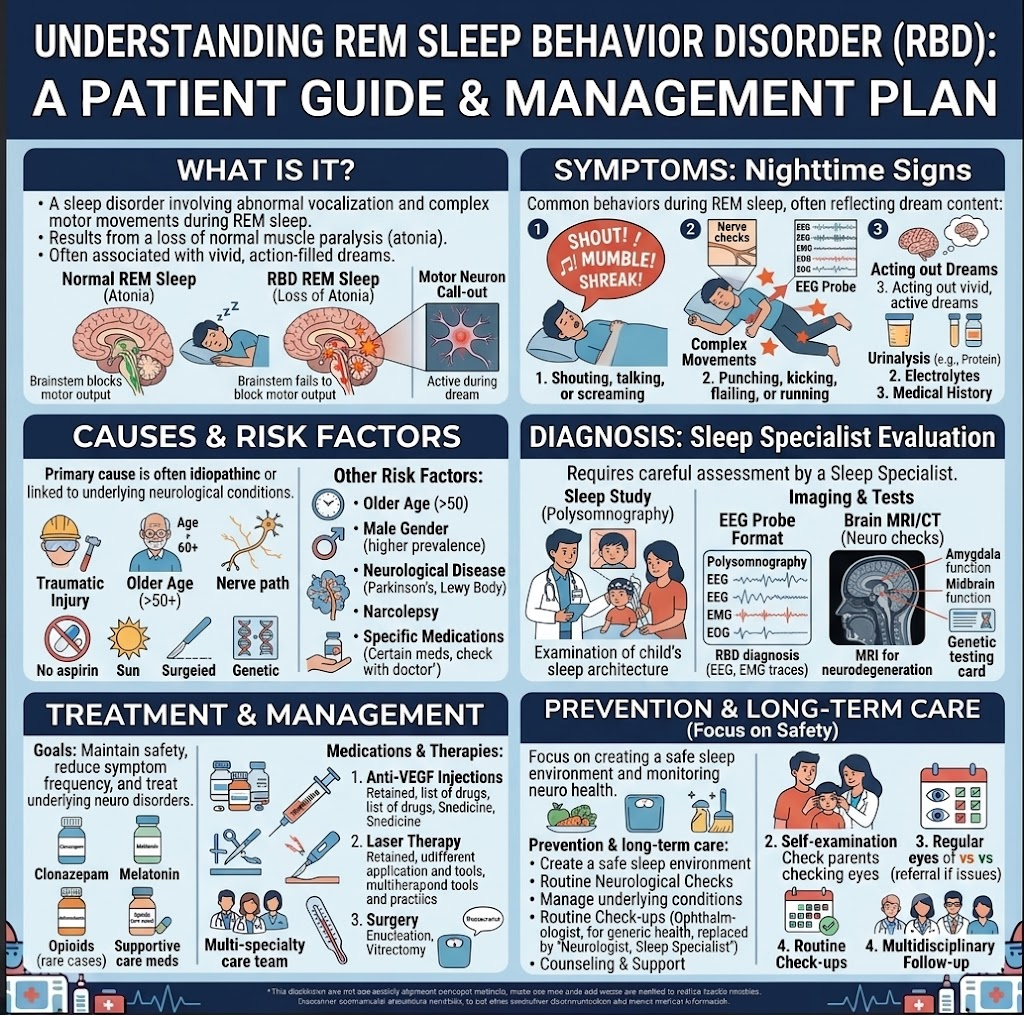
REM Sleep Behavior Disorder (RBD) is a sleep condition where you physically act out vivid, often unpleasant dreams. Normally, during REM sleep—the stage where most dreaming happens—your body is temporarily paralyzed, preventing movement. However, with RBD, this natural paralysis doesn't occur, leading you to make vocal sounds and sudden movements like kicking or punching while dreaming. This disorder usually starts gradually and can worsen over time. It is sometimes connected to other brain conditions like Parkinson's disease or a specific type of dementia.
Understanding the Condition
REM Sleep Behavior Disorder: Understanding Your Dreams and Sleep
Understanding the Condition
REM Sleep Behavior Disorder (RBD) is a sleep condition where you physically act out vivid, often unpleasant dreams. Normally, during REM sleep—the stage where most dreaming happens—your body is temporarily paralyzed, preventing movement. However, with RBD, this natural paralysis doesn't occur, leading you to make vocal sounds and sudden movements like kicking or punching while dreaming. This disorder usually starts gradually and can worsen over time. It is sometimes connected to other brain conditions like Parkinson's disease or a specific type of dementia.
Common Symptoms
Acting Out Dreams: Instead of staying still during REM sleep, you move your body as if you're living out your dream. This can be sudden or happen many times a night.
Physical Movements: Kicking, punching, flailing your arms, or even jumping out of bed, especially during dreams where you feel you are being chased or attacked.
Vocalizations: Making noises like talking, laughing, shouting, emotional cries, or even cursing while asleep.
Dream Recall: Often, if you wake up during an episode, you can clearly remember the dream you were acting out.
Gradual Onset: Symptoms might appear slowly and become more frequent or intense over time.
Consultation Guide
Which Specialist to Meet
You should seek advice from a doctor who specializes in sleep disorders, such as a sleep medicine physician, or a neurologist who has expertise in sleep conditions.
Preparations Before Your Visit
During the exam, the doctor will ask about your medical history and symptoms. They will perform a series of tests to assess your mental status, coordination, balance, reflexes, muscle strength, and sensation. This might involve simple tasks like walking in a straight line, touching your finger to your nose, or responding to light touches. The exam can take anywhere from a few minutes to over an hour.
Polysomnography (Sleep Study)
Sleep-Promoting Medications: Other medications may be used to improve overall sleep quality and reduce awakenings, which can indirectly lessen the disruptive episodes of RBD. (Duration: Ongoing, as prescribed, for as long as symptoms persist.)
Avoid Triggers: Steer clear of alcohol, caffeine, and heavy meals close to bedtime. Discuss any medications you are taking with your doctor, as some might worsen symptoms. (Duration: Ongoing lifestyle change.)
Early Recognition: Being aware of the symptoms and seeking medical attention early can help manage the condition and potentially slow its progression, especially if linked to other neurological disorders.
Managing Underlying Conditions: For individuals with conditions like Parkinson's disease or certain dementias, diligently managing these diseases with your healthcare team may positively impact RBD symptoms.
Regular Medical Check-ups: Scheduled visits with your doctor or neurologist are important to monitor the disorder's progression, adjust treatments, and screen for any new or worsening symptoms or associated conditions.
Continuous Safety Measures: Regularly reassess your bedroom environment for safety. As the disorder can worsen, safety needs may change over time.
Support Systems: Engaging with support groups or seeking counseling can help you and your sleeping partner cope with the challenges of RBD, reducing social isolation and distress.
Diagnostic Procedures
Neurological Examination
This exam checks how well different parts of your nervous system—your brain, spinal cord, nerves, and muscles—are working. It helps your healthcare team identify any underlying nervous system issues that might be contributing to your sleep disorder.
What to Expect
A sleep study is the primary test used to diagnose REM Sleep Behavior Disorder. It involves monitoring your brain waves, breathing, heart rate, oxygen levels, and muscle activity while you sleep overnight. This helps doctors see if your body is paralyzed as it should be during REM sleep, or if you are physically acting out your dreams.
What to Expect
You will typically spend a night in a sleep lab. Technicians will attach small sensors to your scalp, face, chest, and limbs using a mild adhesive. These sensors are connected to a computer that records your physiological activities throughout the night. You'll be in a private room and encouraged to sleep as you normally would. The sensors are comfortable and generally do not interfere with sleep. The staff will monitor you from an adjacent room.
Treatment Options
Before your visit, it's helpful to keep a sleep diary for a week or two, noting your sleep patterns and any unusual behaviors. Make a list of all your current medications, including over-the-counter drugs and supplements. Prepare a list of questions for your doctor. If possible, bring your sleeping partner or a family member who has witnessed your sleep behaviors, as their observations can provide valuable information.
Book a doctor visit near me
Medications
Relaxing Medications: Certain medications can help reduce muscle activity and promote relaxation during sleep, significantly decreasing the intensity and frequency of acting out dreams. These are usually taken nightly before bed. (Duration: Ongoing, as prescribed by your doctor, often for long periods.)
Prevention & Long-Term Wellbeing
Home and Lifestyle Adjustments
Bedroom Safety: Modifying your sleeping environment is crucial to prevent injury. This includes moving furniture away from the bed, padding sharp corners, placing mattresses on the floor, and ensuring windows are secure. You might also consider placing barriers around the bed. (Duration: Continuous for safety.)
Regular Sleep Schedule: Maintaining a consistent bedtime and wake-up time, even on weekends, can help regulate your sleep-wake cycle. (Duration: Ongoing lifestyle change.)
Sleep Hygiene Practices: Implementing good sleep habits, such as creating a dark, quiet, and cool bedroom environment, and avoiding screen time before bed, can improve overall sleep quality. (Duration: Ongoing lifestyle change.)
Prevention
Lifestyle Management: Maintain healthy lifestyle habits, including regular exercise and a balanced diet, which can generally support brain health and overall wellbeing.
Tags & Topics
Notice an error or need an update?
Help us keep medical information accurate. Report incorrect info or suggest an edit.


