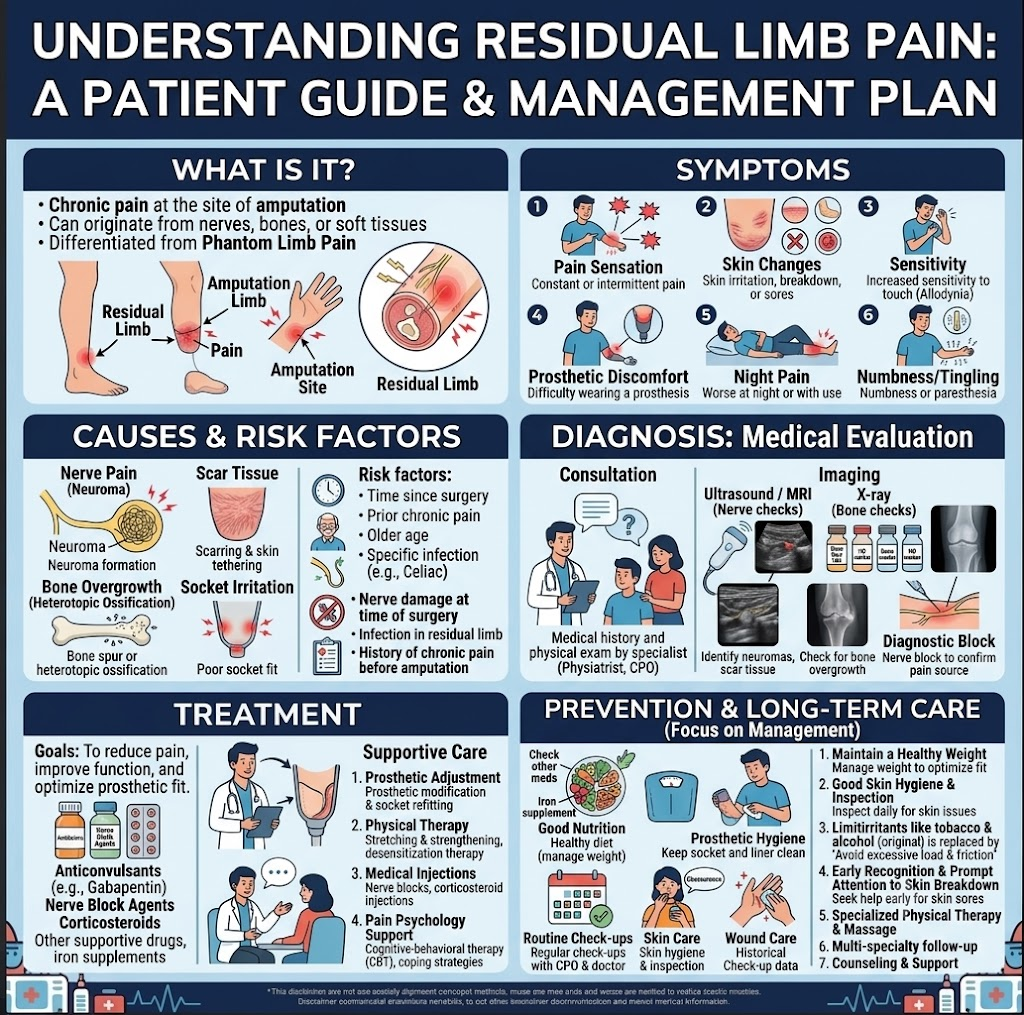
Residual limb pain is discomfort felt in the remaining part of an arm or leg after amputation. Over half of amputees experience it, often soon after surgery or years later. It's distinct from "phantom pain" (pain from the missing limb), though many have both. While some recover naturally, effective treatments are available.
Understanding the Condition
Residual Limb Pain: Understanding and Managing Discomfort After Amputation
Understanding the Condition
Common Symptoms
Sharp/Burning Pain: Intense, piercing, or persistent hot sensation.
Aching/Throbbing: Dull, continuous, or rhythmic pulsing discomfort.
Tingling/Electric Shocks: Pins-and-needles or sudden, sharp jolts.
Cramping: Tight, involuntary muscle spasms.
Shooting Pain: Quick, traveling discomfort.
Pressure/Heaviness: Sensation of weight or compression.
Involuntary Movement: Limb may twitch or move unintentionally.
Consultation Guide
Which Specialist to Meet
You may consult a pain management specialist, orthopedic surgeon, physical therapist, occupational therapist, prosthetist (artificial limb specialist), neurologist, and a mental health professional (such as a psychologist or psychiatrist).
Preparations Before Your Visit
Before your visit, prepare by writing down your symptoms (including when they started, what makes them better or worse, and their intensity), a list of all current medications, any relevant medical history documents, and a list of questions you want to ask. Wear comfortable clothing to allow for examination.
Book a doctor visit near me
Consultation Guide
Optimal Prosthesis Fit: Ensure your artificial limb fits correctly; a poor fit can cause pressure and rubbing, leading to pain. Regular adjustments by a prosthetist are crucial. (Duration: Ongoing)
Daily Limb and Skin Care: Inspect the residual limb daily for sores, blisters, or signs of infection. Keep the skin clean and moisturized, addressing any issues promptly, especially with reduced sensation. (Duration: Ongoing)
Nerve Pain Medications: Specific medications designed to target pain caused by nerve damage, which often manifest as burning or tingling sensations. (Duration: Ongoing, as prescribed.)
Physical and Occupational Therapy: Exercises and techniques to improve strength, flexibility, and function of the residual limb, as well as strategies for daily activities with a prosthesis. (Duration: Varies, typically several weeks to months.)
Psychological Support: Counseling or therapy to help cope with emotional stress, anxiety, or depression that can accompany chronic pain. (Duration: Varies, short-term or ongoing.)
Hypnosis: A guided state of focused attention and relaxation that can help manage chronic pain by changing how your brain processes pain signals and promoting behavioral changes. (Duration: Sessions as needed, typically 30-60 minutes each, over several weeks.)
Procedures and Interventions
Injections: Targeted injections, such as nerve blocks or local anesthetics, can temporarily relieve pain by numbing specific nerves. (Duration: Temporary relief, may be repeated as needed.)
Nerve Stimulation: Techniques like transcutaneous electrical nerve stimulation (TENS) or spinal cord stimulation, which use electrical impulses to block pain signals. (Duration: Ongoing use or implanted devices for long-term management.)
Diagnostic Procedures
An X-ray is a quick, painless imaging test using a small amount of radiation to create pictures of structures inside your body, primarily bones. Dense materials (like bones) appear white, while soft tissues appear as shades of gray.
What to Expect
You will be positioned (standing, sitting, or lying) on an examination table. A technician will place your body correctly. You must stay still for a few seconds while the X-ray is taken. It's a brief and generally comfortable procedure.
Also known as sonography, ultrasound uses high-frequency sound waves to create real-time images of internal body structures, such as soft tissues, blood vessels, and nerves. It’s a safe procedure as it doesn’t use radiation.
What to Expect
You will typically lie on an examination table. A technician will apply a special gel to your skin over the area to be examined, then move a handheld transducer (a small device) against your skin. You might feel a slight pressure. Depending on the area, specific preparation (e.g., having a full bladder) may be required.
CT Scan (Computerized Tomography)
A CT scan combines a series of X-ray images taken from different angles around your body. A computer processes these to create detailed cross-sectional (slice-like) views of bones, blood vessels, and soft tissues. It provides more detail than standard X-rays.
What to Expect
You will lie on a motorized table that slides into a large, donut-shaped machine. You may hear whirring or clicking noises during the scan. For some scans, a contrast dye might be injected into a vein or given orally. You will need to remain still and may be asked to hold your breath for short periods. The procedure is generally painless.
Treatment Options
Residual limb pain is discomfort felt in the remaining part of an arm or leg after amputation. Over half of amputees experience it, often soon after surgery or years later. It's distinct from "phantom pain" (pain from the missing limb), though many have both. While some recover naturally, effective treatments are available.
Home Remedies and Self-Care
Medications
General Pain Relief: Over-the-counter or prescription medicines to reduce general pain and inflammation. (Duration: As needed, short-term or ongoing under medical supervision.)
Revision Surgery: If underlying issues like bone spurs, neuromas (tangles of nerve endings), or poor blood supply are identified, surgery may be performed to address these problems, relieve pressure, or improve nerve health. (Duration: One-time procedure with recovery time.)
Regular Medical Monitoring: Maintain routine appointments with your healthcare team to monitor your residual limb health, adjust treatments as needed, and ensure your prosthesis continues to meet your needs.
Prevention & Long-Term Wellbeing
Prevention
Correct Prosthesis Fit: Collaborate with your prosthetist to ensure your artificial limb fits correctly. A poorly fitting prosthesis can create pressure points and irritation leading to pain. Regular adjustments are crucial.
Diligent Limb Care: Daily clean and inspect your residual limb for any redness, sores, or changes. Promptly address any issues to prevent infection or further irritation, especially if you have impaired sensation.
Manage Health Conditions: If you have underlying conditions like diabetic neuropathy that can impair sensation, be extra vigilant in checking your residual limb for potential problems you might not feel.
Long-Term Wellbeing
Emotional Support: Seek professional help for any anxiety, depression, or stress related to chronic pain. Mental health support can significantly impact pain perception and overall quality of life.
Active Lifestyle: Follow recommendations from your physical therapist for activity to maintain general health, strength, and mobility, which can contribute to better pain management.
Tags & Topics
Notice an error or need an update?
Help us keep medical information accurate. Report incorrect info or suggest an edit.


