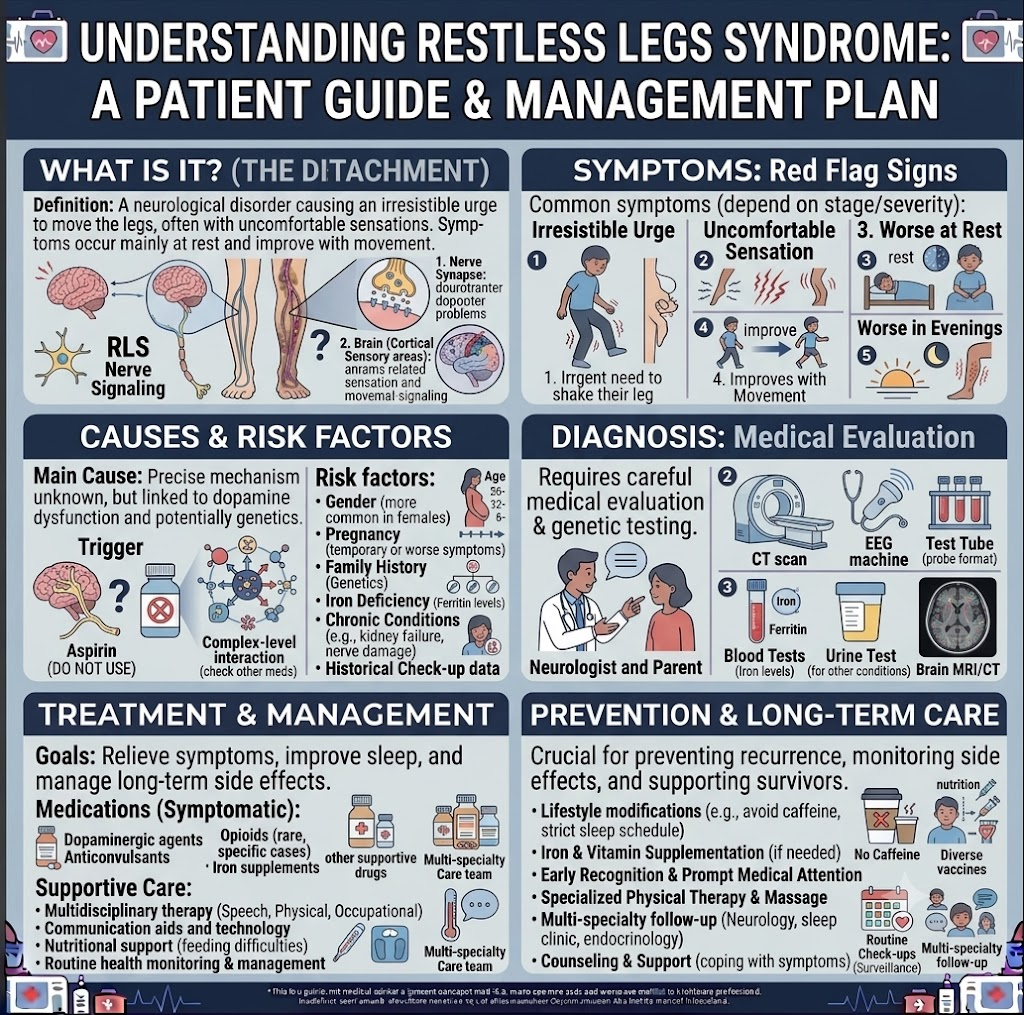
Restless Legs Syndrome (RLS), also known as Willis-Ekbom disease, is a neurological condition that causes an irresistible, often uncomfortable, urge to move the legs. This sensation typically occurs when a person is resting, especially in the evening or at night while sitting or lying down. Moving the legs usually provides temporary relief from the discomfort. RLS can begin at any age, often worsening over time, and can significantly disrupt sleep, leading to daytime tiredness and affecting overall quality of life. Simple self-care measures, lifestyle adjustments, and various medications can effectively help manage symptoms for many individuals.
Understanding the Condition
Restless Legs Syndrome (Willis-Ekbom Disease)
Understanding the Condition
Restless Legs Syndrome (RLS), also known as Willis-Ekbom disease, is a neurological condition that causes an irresistible, often uncomfortable, urge to move the legs. This sensation typically occurs when a person is resting, especially in the evening or at night while sitting or lying down. Moving the legs usually provides temporary relief from the discomfort. RLS can begin at any age, often worsening over time, and can significantly disrupt sleep, leading to daytime tiredness and affecting overall quality of life. Simple self-care measures, lifestyle adjustments, and various medications can effectively help manage symptoms for many individuals.
Common Symptoms
Irresistible Urge to Move Legs: The primary symptom is a strong, compelling need to move the legs, often described as an internal restlessness.
Uncomfortable Sensations at Rest: These feelings typically begin or worsen after periods of inactivity, such as sitting for a long time in a car, airplane, movie theater, or while lying in bed. The sensations are usually felt deep within the legs, rather than on the skin, and can also affect the feet or, less commonly, the arms.
Relief with Movement: Moving the affected limbs, such as stretching, jiggling the legs, pacing, or walking, temporarily lessens or eliminates the uncomfortable sensations. The relief often stops as soon as movement ceases.
Worsening in the Evening or Night: Symptoms are most prominent and troublesome during the evening and nighttime hours, which can severely interfere with falling asleep and staying asleep.
Nighttime Leg Twitching (Periodic Limb Movement of Sleep): Many people with RLS also experience a related condition where their legs (and sometimes arms) twitch or kick involuntarily during sleep, potentially throughout the night. This can further disrupt sleep quality.
Nature of Sensations: While sometimes difficult to explain, the feelings are generally unpleasant and can be described as crawling, creeping, pulling, throbbing, aching, itching, or an electric sensation. Importantly, they are not typically described as muscle cramps or numbness, but rather a persistent inner unease and a strong desire to move.
Fluctuating Symptoms: RLS symptoms can vary in intensity and frequency. They may get better or worse over time, and some individuals experience periods where symptoms disappear completely before returning.
Consultation Guide
Which Specialist to Meet
Initially, you should consult your primary care doctor. Depending on your symptoms and their impact, your doctor may refer you to a neurologist (a doctor specializing in conditions of the brain and nervous system) or a sleep specialist.
Preparations Before Your Visit
Before your visit, it's helpful to keep a detailed symptom diary for a week or two. Note when symptoms occur, how severe they are, what makes them better or worse, how they affect your sleep, and any potential triggers. Be prepared to discuss your complete medical history, including any other health conditions, medications (both prescription and over-the-counter), supplements, and any family history of RLS. Write down any questions you have for your doctor.
Book a doctor visit near me
Restless Legs Syndrome is primarily diagnosed based on a detailed review of your symptoms and medical history. Your doctor will ask specific questions to determine if your experiences match the diagnostic criteria for RLS.
This examination assesses the function of your nervous system, including your brain, spinal cord, nerves, and muscles, to rule out other conditions that might cause similar symptoms.
Regular, Moderate Exercise: Engaging in moderate physical activity most days of the week, such as walking or cycling. Avoid intense workouts close to bedtime, as this can sometimes worsen symptoms. (Duration: Ongoing)
Good Sleep Hygiene: Establishing a regular sleep schedule (going to bed and waking up at the same time each day), creating a dark, quiet, and cool sleep environment, and avoiding screen time before bed. (Duration: Ongoing)
Warm Baths and Leg Massage: Soaking in a warm bath or massaging your legs can help relax muscles and provide temporary relief from uncomfortable sensations. (Duration: As needed)
Hot or Cold Packs: Applying warm compresses or cold packs to your legs can sometimes help alleviate symptoms by changing blood flow or nerve signals. (Duration: As needed)
Avoid Triggers: Identifying and minimizing consumption of caffeine, alcohol, and nicotine, as these substances can often worsen RLS symptoms. Discuss with your doctor if any of your current medications (e.g., some antihistamines or antidepressants) might be contributing. (Duration: Ongoing)
Alpha-2 Delta Ligands: This class of medication is also used for nerve pain and epilepsy and has shown effectiveness in managing RLS symptoms. (Duration: Long-term, as prescribed by your doctor)
Iron Supplements: If blood tests reveal an iron deficiency, your doctor will prescribe iron supplements to restore healthy iron levels, which can significantly improve or resolve RLS symptoms. (Duration: Varies depending on iron levels, typically several months or longer)
Opioids: For severe RLS symptoms that do not respond to other treatments, low doses of certain pain-relieving medications may be considered, but their use requires careful monitoring due to potential side effects. (Duration: Short-term or carefully monitored long-term, as prescribed)
Pneumatic Compression Devices: These devices use air-filled cuffs to intermittently massage the legs, which can help improve circulation and potentially reduce RLS symptoms for some individuals. (Duration: Regular use, as recommended by your doctor)
Transcutaneous Electrical Nerve Stimulation (TENS): This therapy involves placing electrodes on the skin to deliver mild electrical impulses to nerves, which may help alleviate discomfort and sensations in the legs. (Duration: As needed or regular sessions)
Prevention and Symptom Management
Address Underlying Medical Conditions: Work with your doctor to manage any contributing conditions like iron deficiency, peripheral neuropathy, or kidney disease, as treating these often leads to significant improvement in RLS symptoms.
Maintain a Healthy Lifestyle: Regular, moderate exercise, a balanced diet, and avoiding known triggers like excessive caffeine, alcohol, and nicotine are crucial for symptom management.
Prioritize Quality Sleep: Stick to a consistent sleep schedule, create a conducive sleep environment, and practice relaxation techniques before bed to improve sleep architecture.
Regular Stretching and Movement: Incorporate gentle stretching routines or short walks throughout the day, especially if you have to sit for extended periods, to preemptively address discomfort.
Long-Term Monitoring and Support
Consistent Medical Follow-ups: Regular visits with your healthcare provider are essential to monitor symptom progression, assess the effectiveness of treatments, and make necessary adjustments to your management plan.
Symptom Tracking: Maintain a symptom diary to record the frequency, intensity, and duration of RLS episodes, along with any potential triggers and how well treatments are working. This information is valuable for your doctor.
Manage Mental Health: Be aware of the potential for RLS to impact mood and quality of life. Seek support if you experience symptoms of depression or anxiety, as managing these can improve overall wellbeing.
Education and Support Groups: Learning more about RLS and connecting with others who have the condition can provide valuable insights, coping strategies, and emotional support.
Diagnostic Procedures
What to Expect
What to Expect
During the exam, your doctor will check your reflexes (e.g., knee jerks), muscle strength (e.g., pushing against resistance), sensation (e.g., light touch, pinprick), coordination (e.g., walking heel-to-toe), and balance. This is a non-invasive and generally painless procedure.
Blood tests are often conducted to identify or rule out underlying medical conditions that can contribute to or worsen RLS, such as iron deficiency or kidney problems.
What to Expect
A healthcare professional will draw a small sample of blood, usually from a vein in your arm. You might feel a brief sting or pinch at the site. The entire process is quick, typically lasting only a few minutes. The blood sample will then be sent to a laboratory for analysis.
Treatment Options
Your doctor will ask you to describe your leg sensations in detail, including when they occur, what they feel like, what makes them better or worse, and how they affect your sleep and daily life. They will also inquire about your sleep patterns, medical history, family history, and any medications you are currently taking.
Neurological Examination
Medications
Dopamine-Affecting Medications: These medicines help regulate muscle movement by influencing a brain chemical called dopamine. They are often effective in reducing leg sensations and the urge to move. (Duration: Long-term, as prescribed by your doctor)
Sleep Aids and Muscle Relaxants: While these medications do not treat RLS directly, they can help improve sleep quality for individuals struggling with insomnia due to RLS. They are generally used cautiously. (Duration: Short-term or intermittent, as prescribed)
Prevention & Long-Term Wellbeing
Lifestyle Changes and Home Remedies
Tags & Topics
Notice an error or need an update?
Help us keep medical information accurate. Report incorrect info or suggest an edit.


