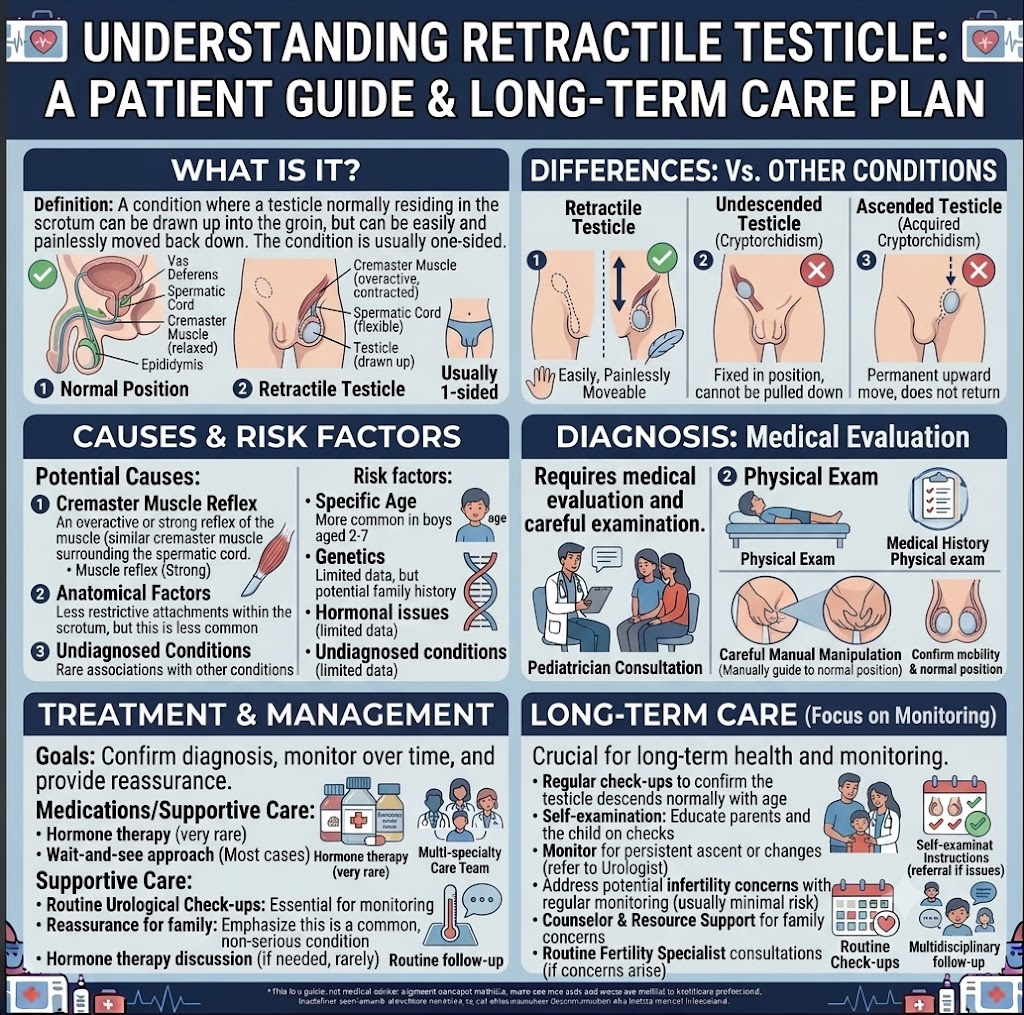
A retractile testicle is one that can move back and forth between the scrotum (the sac behind the penis) and the groin. It often appears to 'hide' in the groin but can usually be gently guided back into the scrotum by hand. While in the scrotum, it stays there for a period, but may later retract again. This movement happens due to an overactive cremaster muscle. This muscle, which normally pulls the testicle closer to the body for warmth or in response to touch or emotions like fear, can sometimes be overly sensitive, causing the testicle to be pulled out of the scrotum. This condition is different from an undescended testicle, which never fully reaches the scrotum in the first place. For most boys, a retractile testicle corrects itself, settling permanently in the scrotum by or during puberty. However, sometimes it can get stuck in the groin and no longer be easily moved; this is then called an ascending or acquired undescended testicle.
Understanding the Condition
Common Symptoms
Consultation Guide
Your child will typically lie down, often on their back, for the examination. The doctor will gently feel the groin area and the scrotum to locate the testicle. They will attempt to guide the testicle down into the scrotum if it's retracted, assessing if it stays in place, even temporarily, and if it moves easily. The examination is generally not painful, though it can sometimes cause slight discomfort due to the doctor's cold hands or unexpected touch. The doctor might also gently stroke the inner thigh, which can trigger the cremaster reflex (a muscle contraction that pulls the testicle up), to confirm if the reflex is active and contributing to the retraction.
Diagnostic Procedures
Retractile Testicle: Understanding a Common Childhood Condition
Understanding the Condition
A retractile testicle is one that can move back and forth between the scrotum (the sac behind the penis) and the groin. It often appears to 'hide' in the groin but can usually be gently guided back into the scrotum by hand. While in the scrotum, it stays there for a period, but may later retract again. This movement happens due to an overactive cremaster muscle. This muscle, which normally pulls the testicle closer to the body for warmth or in response to touch or emotions like fear, can sometimes be overly sensitive, causing the testicle to be pulled out of the scrotum. This condition is different from an undescended testicle, which never fully reaches the scrotum in the first place. For most boys, a retractile testicle corrects itself, settling permanently in the scrotum by or during puberty. However, sometimes it can get stuck in the groin and no longer be easily moved; this is then called an ascending or acquired undescended testicle.
Normal Testicle Descent: Testicles develop inside a baby's belly during pregnancy and typically drop into the scrotum before birth. If this descent isn't completed at birth, the testicle usually descends within a few months. In contrast, with a retractile testicle, it did originally descend correctly, but doesn't consistently stay in place.
Testicle Movement: The testicle can be easily moved by hand from the groin area into the scrotum, and it won't immediately spring back up into the groin.
Temporary Presence in Scrotum: The testicle might spontaneously appear in the scrotum and remain there for a period of time.
Temporary Disappearance: The testicle might spontaneously disappear from the scrotum and move back into the groin area on its own for a period of time.
Consultation Guide
Which Specialist to Meet
Before the visit, it is helpful to make notes about your observations: when you typically notice the testicle in the groin versus the scrotum, if you can easily move it, and if your child experiences any discomfort. Prepare a list of questions you have for the doctor regarding the condition and its management.
Book a doctor visit near me
A retractile testicle is primarily diagnosed through a careful physical examination performed by a healthcare professional. This involves observing and gently feeling your child's groin and scrotum to locate the testicle and assess its mobility.
What to Expect
Watchful Waiting: For most retractile testicles, the condition resolves on its own as the child grows, particularly before or during puberty, with the testicle settling permanently in the scrotum. The doctor will likely recommend regular check-ups to monitor the testicle's position and mobility. No active treatment is typically needed as long as the testicle can still be brought down into the scrotum. (Duration: Ongoing monitoring until the testicle is permanently settled, often until puberty.)
Orchiopexy (for Ascending Testicle): If a retractile testicle becomes an 'ascending testicle' – meaning it moves into the groin and can no longer be easily brought down into the scrotum, or it gets stuck there permanently – surgical intervention may be recommended. This procedure involves carefully moving the testicle into the scrotum and stitching it into place to prevent it from retracting again. This surgery helps ensure proper development and reduces potential long-term risks associated with an undescended testicle, such as impaired fertility or a slightly increased risk of certain cancers later in life. (Duration: A single surgical procedure, typically lasting about an hour, followed by a recovery period of several weeks.)
Regular Well-Child Check-ups: It's crucial to continue with your child's scheduled well-child check-ups. During these visits, the doctor will consistently monitor the position of the testicles to ensure proper development and detect any changes.
Parental Observation: Parents should regularly observe their child's scrotum and report any changes to their doctor. Pay attention to whether the testicle is consistently visible in the scrotum, how often it retracts, and if it can still be easily moved down. If the testicle appears to be permanently lodged in the groin and cannot be gently moved into the scrotum, or if its size or texture feels different, contact your healthcare provider promptly.
Comfort and Protection
Appropriate Clothing: Ensure your child wears comfortable underwear that provides adequate support without being overly restrictive. While this doesn't prevent retraction, it contributes to overall comfort and healthy development.
Sports Protection: For boys participating in sports or activities where there's a risk of testicular injury, wearing appropriate protective gear (such as an athletic cup) is always advisable, regardless of whether they have a retractile testicle. This is a general safety measure for all boys.
Treatment Options
Initially, you should consult with your child's pediatrician or family doctor. If further specialized evaluation or treatment is deemed necessary, they may refer you to a pediatric urologist, who is a doctor specializing in children's urinary and reproductive systems.
Preparations Before Your Visit
Observation and Monitoring
Prevention & Long-Term Wellbeing
Long-Term Monitoring
Tags & Topics
Notice an error or need an update?
Help us keep medical information accurate. Report incorrect info or suggest an edit.


