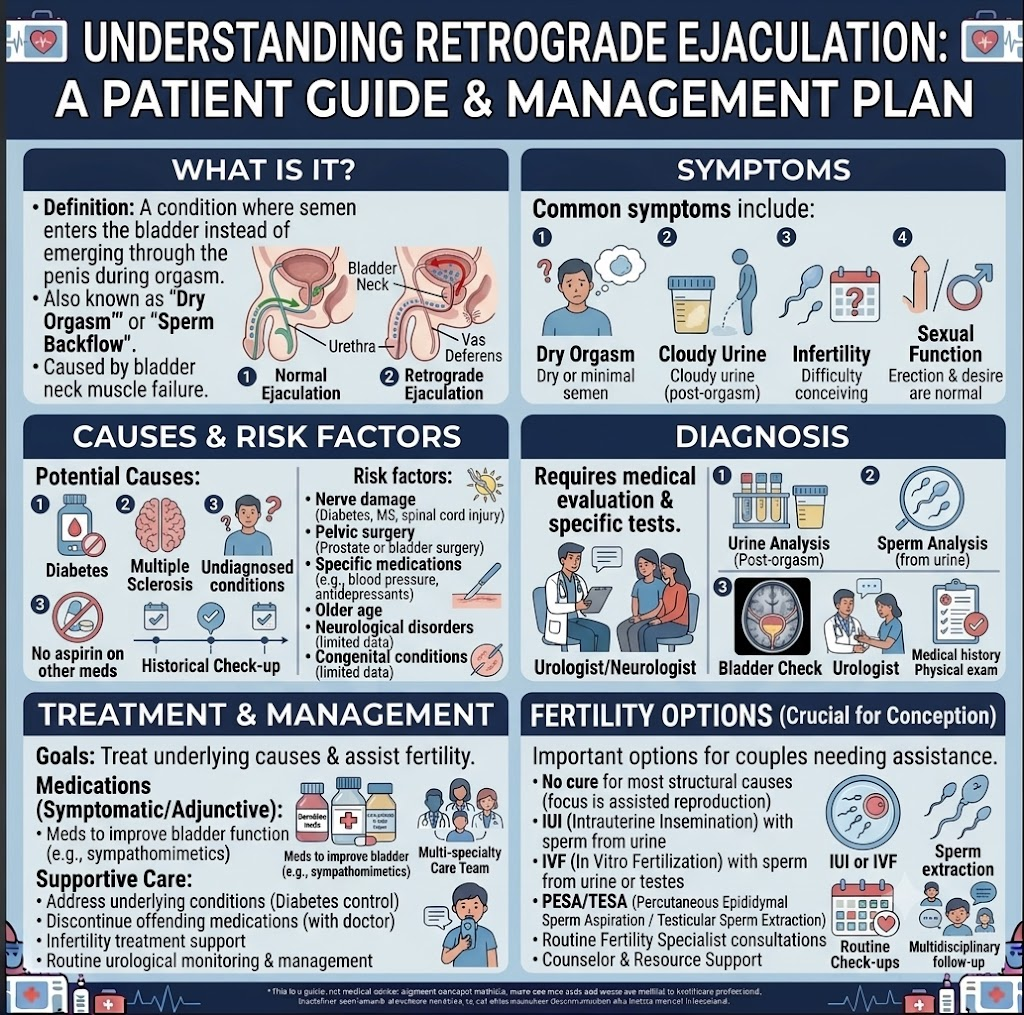
Retrograde ejaculation (pronounced: RET-ro-grade ee-jak-yoo-LAY-shun) is a condition where semen, which contains sperm, enters the bladder instead of being released from the penis during orgasm. Although you still experience the pleasure and climax of orgasm, very little or no fluid comes out of your penis. This is often referred to as a "dry orgasm." While not physically harmful, retrograde ejaculation is a common cause of male infertility, as the sperm does not reach the outside to fertilize an egg. It does not typically affect your ability to get an erection or experience orgasm itself.
Understanding the Condition
Retrograde Ejaculation: Understanding 'Dry Orgasm'
Understanding the Condition
Common Symptoms
Very Little or No Ejaculation During Orgasm: The primary sign of retrograde ejaculation is noticing that during sexual climax, you release very little or no semen from your penis, even though you still feel the sensation of orgasm. This is often called a 'dry orgasm'.
Consultation Guide
Which Specialist to Meet
Before your appointment, gather the following information to share with your doctor:* A detailed description of your symptoms, including when they started and how often they occur.* A complete list of all medications you are currently taking, including prescriptions, over-the-counter drugs, vitamins, and herbal supplements.* Your full medical history, including any chronic health conditions (such as diabetes, multiple sclerosis, or spinal cord injuries) and any past surgeries, particularly those involving the prostate or bladder.* Information about your sexual health and any fertility concerns, including how long you and your partner have been trying to conceive.* Any questions you have for your doctor. It can be helpful to write these down beforehand.* Your doctor may ask you to provide a urine sample immediately after an orgasm during your visit or instruct you on how to collect one at home for analysis. This is a key diagnostic step to check for the presence of sperm in your urine.
Book a doctor visit near me
Treating the Root Cause: Retrograde ejaculation can be a symptom of underlying health issues like diabetes, multiple sclerosis, or spinal cord injury, which can damage the nerves controlling the bladder neck muscle. Optimizing the management of these primary conditions, often in collaboration with relevant specialists, can sometimes improve nerve function and, in turn, bladder neck control, potentially resolving the ejaculation issue. (Duration: Ongoing, long-term management of the chronic condition.)
Assisted Reproductive Technologies (ART)
Maintain Regular Medical Check-ups: Regular visits to your doctor are important for monitoring your overall health, managing existing conditions, and promptly addressing any new symptoms or concerns. This proactive approach ensures early detection and intervention for any health issues, including those that might contribute to retrograde ejaculation.
Open Communication with Healthcare Providers: Do not hesitate to openly discuss any changes in your sexual health, ejaculation patterns, or fertility concerns with your doctor. Honest communication allows your healthcare team to provide the most appropriate and supportive care tailored to your individual needs.
Consultation Guide
Retrograde ejaculation (pronounced: RET-ro-grade ee-jak-yoo-LAY-shun) is a condition where semen, which contains sperm, enters the bladder instead of being released from the penis during orgasm. Although you still experience the pleasure and climax of orgasm, very little or no fluid comes out of your penis. This is often referred to as a "dry orgasm." While not physically harmful, retrograde ejaculation is a common cause of male infertility, as the sperm does not reach the outside to fertilize an egg. It does not typically affect your ability to get an erection or experience orgasm itself.
Changing or Adjusting Medications: If certain medications, such as those prescribed for high blood pressure, an enlarged prostate, or mood disorders, are identified as the cause of retrograde ejaculation, your doctor might recommend adjusting the dosage or switching to alternative medications that do not have this side effect. This change can sometimes restore normal ejaculation. (Duration: Effects can be seen within weeks to a few months after medication adjustment.)
Management of Underlying Conditions
Diagnostic Procedures
If you suspect you have retrograde ejaculation, you should first consult with your primary care doctor. They may then refer you to a urologist, a specialist in male urinary and reproductive health, or a fertility specialist if conception is a primary concern. These specialists can accurately diagnose the condition and discuss treatment options.
Preparations Before Your Visit
Urinalysis with Post-Ejaculatory Urine Sample
A urinalysis is a common test that examines your urine. To diagnose retrograde ejaculation, a special urinalysis is performed using a urine sample collected specifically after you have ejaculated. Normally, semen is released outside the body. If semen is found in your urine sample after orgasm, it indicates that it has traveled backward into the bladder instead of exiting through the penis.
What to Expect
You will be asked to provide a urine sample after you have recently ejaculated. This might happen during your clinic visit in a private restroom, or you might be given instructions on how to collect the sample at home and bring it in. The collected urine will then be sent to a laboratory where it will be examined under a microscope to check for the presence of sperm. If sperm is found in your urine, it helps confirm the diagnosis of retrograde ejaculation.
Sperm Retrieval for Fertility: When natural conception is not possible due to retrograde ejaculation, sperm can be collected. One method involves collecting sperm from your urine after ejaculation, which is then processed to separate healthy sperm. In some cases, if sperm cannot be retrieved from urine or if the quality is insufficient, sperm can be directly extracted from the testicles (testicular sperm extraction). These collected sperm can then be used in fertility treatments such as intrauterine insemination (IUI), where sperm is placed directly into the uterus, or in-vitro fertilization (IVF), where fertilization occurs outside the body. (Duration: Sperm retrieval is a short procedure, followed by fertility treatment cycles that typically span weeks to months depending on the method and number of attempts.)
Treatment Options
Medication Adjustments
Discuss Medication Side Effects: Before starting any new medication, especially those for an enlarged prostate (BPH), high blood pressure, or psychiatric conditions, discuss potential side effects with your doctor. Inquire if the medication could affect sexual function or ejaculation, and explore alternatives if necessary.
Long-Term Monitoring and Support
Prevention & Long-Term Wellbeing
Prevention
Manage Chronic Health Conditions Effectively: Work closely with your healthcare providers to maintain strict control over chronic conditions such as diabetes, high blood pressure, or multiple sclerosis. Effective management helps prevent nerve damage that can affect bladder neck function and lead to retrograde ejaculation.
Tags & Topics
Notice an error or need an update?
Help us keep medical information accurate. Report incorrect info or suggest an edit.


