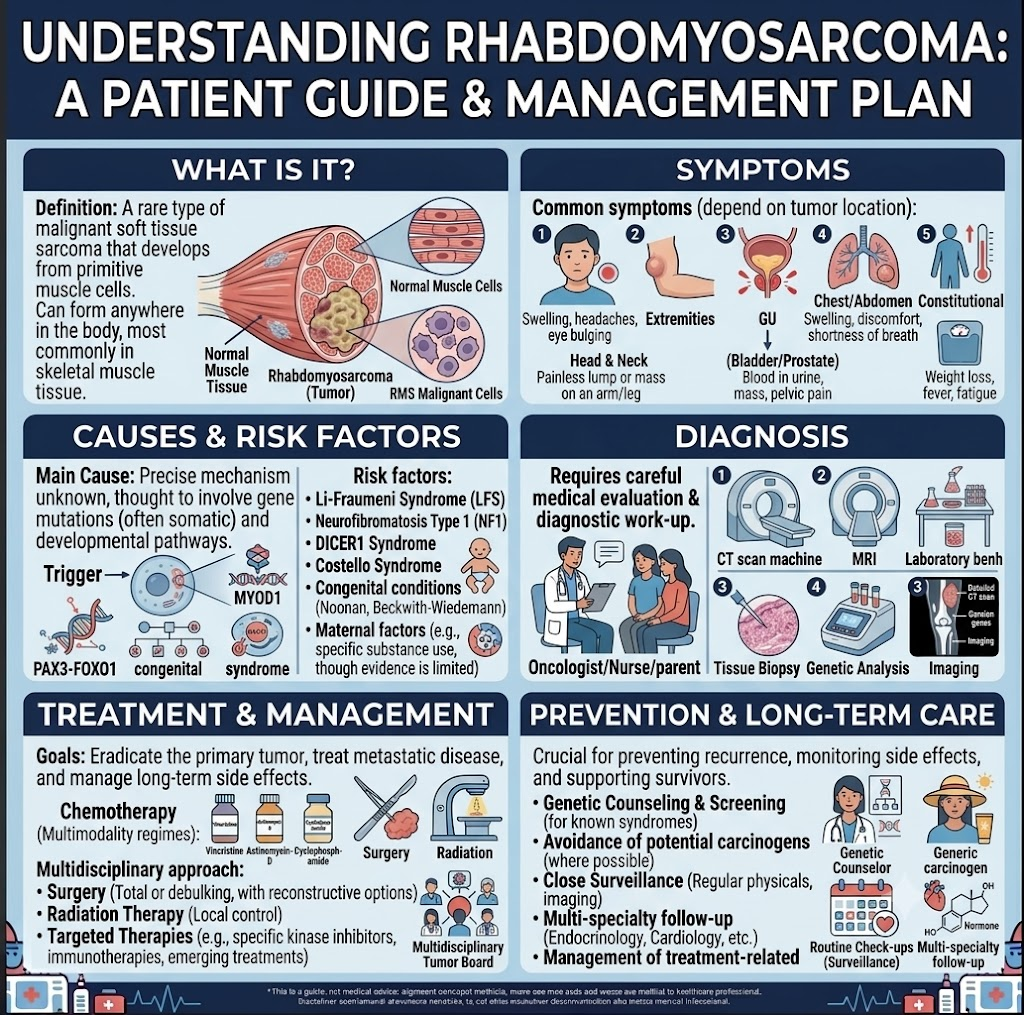
Rhabdomyosarcoma is a rare form of cancer that originates in the body's soft tissues, particularly muscle tissue. Soft tissues are essential structures that support and connect organs and other body parts. While this cancer can appear anywhere, it is most frequently found in the head and neck, urinary or reproductive systems (like the bladder, vagina, uterus, or testes), and the arms and legs. Treatment typically involves a combination of surgery, chemotherapy, and radiation therapy. The specific approach depends on the cancer's starting location, size, and whether it has spread. Advances in diagnosis and treatment have significantly improved the outlook for individuals diagnosed with rhabdomyosarcoma, leading to more people living longer after their diagnosis.
Understanding the Condition
Rhabdomyosarcoma: Understanding This Rare Cancer
Understanding the Condition
Common Symptoms
Symptoms in the Head and Neck Area: Bleeding from the nose, throat, or ears; tearing, bulging, or swelling around the eyes.
Symptoms in the Urinary or Reproductive System: A noticeable lump or bleeding in the vagina or rectum; difficulty urinating or blood in the urine; issues with bowel movements.
Symptoms in the Arms and Legs: A lump or swelling in the affected limb, potentially with pain if the cancer presses on nerves or other structures.
Consultation Guide
Which Specialist to Meet
You would typically see a primary care doctor first for an initial assessment. If rhabdomyosarcoma is suspected, you will be referred to a cancer specialist (an oncologist), often a pediatric oncologist since this cancer mostly affects children. Other specialists may include a surgeon, a radiation oncologist (who uses radiation to treat cancer), a pathologist (who examines tissue samples), and a radiologist (who interprets imaging scans).
Preparations Before Your Visit
Before your visit, gather information about your medical history and any previous health conditions. Make a detailed list of all symptoms you or your child has experienced, including when they started and how they have changed. Write down any questions you have for the doctor. If you have any previous medical reports, test results, or medications, bring them along.
Book a doctor visit near me
The doctor will gently feel areas of concern and ask about symptoms. This is usually a quick, non-invasive assessment.
Consultation Guide
No Known Prevention: There are no specific known ways to prevent rhabdomyosarcoma from developing, as its causes are not fully understood.
Genetic Counseling: For families with a history of rare genetic syndromes linked to rhabdomyosarcoma (like Li-Fraumeni syndrome), genetic counseling can provide information and risk assessment.
Managing Side Effects: Rhabdomyosarcoma and its treatments can cause a range of short-term and long-term side effects. Your healthcare team will provide guidance on managing these, which might include medications, physical therapy, or other supportive care.
Diagnostic Procedures
Rhabdomyosarcoma is a rare form of cancer that originates in the body's soft tissues, particularly muscle tissue. Soft tissues are essential structures that support and connect organs and other body parts. While this cancer can appear anywhere, it is most frequently found in the head and neck, urinary or reproductive systems (like the bladder, vagina, uterus, or testes), and the arms and legs. Treatment typically involves a combination of surgery, chemotherapy, and radiation therapy. The specific approach depends on the cancer's starting location, size, and whether it has spread. Advances in diagnosis and treatment have significantly improved the outlook for individuals diagnosed with rhabdomyosarcoma, leading to more people living longer after their diagnosis.
A doctor will thoroughly check for any lumps, swelling, or other unusual signs.
What to Expect
Imaging Tests (MRI, CT, PET Scan, Ultrasound)
These tests create detailed images of the body to locate tumors, assess their size, and check if the cancer has spread.
What to Expect
You will lie on a table that moves into a specialized scanner. Depending on the test, you might hear loud noises (MRI), receive a contrast dye injection (CT, PET), or have a gel applied to your skin (Ultrasound). Staying still during the scan is important.
This is essential for diagnosis. A small sample of tissue from the suspected tumor is removed and examined under a microscope by a specialist.
What to Expect
The procedure is performed under local or general anesthesia. A needle might be used to extract tissue, or a surgeon might remove a larger piece. Some soreness or bruising may occur afterward.
Bone Marrow Biopsy and Aspiration
These check for cancer spread to the bone marrow, often in the hip bone.
What to Expect
Typically done with local anesthesia and sedation, a small amount of liquid and solid bone marrow is taken. You might feel pressure and a brief, sharp discomfort.
Lumbar Puncture (Spinal Tap)
Performed to check for cancer spread to the brain or spinal fluid, especially for certain tumor locations.
What to Expect
After numbing the area in your lower back, a thin needle is inserted to collect a small fluid sample. You might feel pressure during the procedure.
Regular Follow-Up Care: After treatment, ongoing medical check-ups are crucial to monitor for any recurrence of cancer and to manage long-term side effects. This includes regular physical exams, blood tests, and imaging scans.
Psychological and Emotional Support: Dealing with cancer can be emotionally challenging. Support groups, counseling, or therapy can help individuals and families cope with the stress, anxiety, and other emotions associated with the diagnosis and treatment.
Treatment Options
Surgical Procedures
Tumor Removal: The primary goal is to surgically remove as much of the cancer as possible. If the tumor is small and accessible, the entire growth may be removed. (Duration: A single procedure, with recovery time varying from weeks to months depending on the extent of surgery.)
Chemotherapy: This uses powerful medicines to kill cancer cells throughout the body. It is often given before surgery to shrink the tumor (neoadjuvant) or after to kill any remaining cancer cells (adjuvant). (Duration: Typically given in cycles over several months, often 6 to 12 months, sometimes longer.)
Targeted Therapy: These medications focus on specific vulnerabilities in cancer cells, often with fewer side effects than traditional chemotherapy. (Duration: Varies widely, potentially for several months or longer, depending on response and specific therapy.)
External Beam Radiation: High-energy beams are directed at the tumor from outside the body to destroy cancer cells. It is often used after surgery to kill any remaining cells or for tumors that cannot be fully removed. (Duration: Daily treatments typically over several weeks, usually 5 to 7 weeks.)
Internal Radiation (Brachytherapy): Radioactive material is placed directly inside or very close to the tumor. (Duration: Can be a single treatment or several over a few days.)
Participation in Research Studies: These offer access to new treatments not yet widely available, providing an opportunity to receive cutting-edge care. (Duration: Varies depending on the trial protocol, often many months to years.)
Nutritional Support: Maintaining good nutrition is vital during and after cancer treatment to support healing and overall health. A dietitian can offer personalized advice.
Education and Advocacy: Understanding the condition and being an active participant in treatment decisions can empower patients and families. Keep a list of questions for your healthcare team.
Prevention & Long-Term Wellbeing
Prevention
Physical Activity: Gentle, regular physical activity, as advised by your doctor, can help improve energy levels, strength, and overall well-being during recovery.
Tags & Topics
Notice an error or need an update?
Help us keep medical information accurate. Report incorrect info or suggest an edit.


