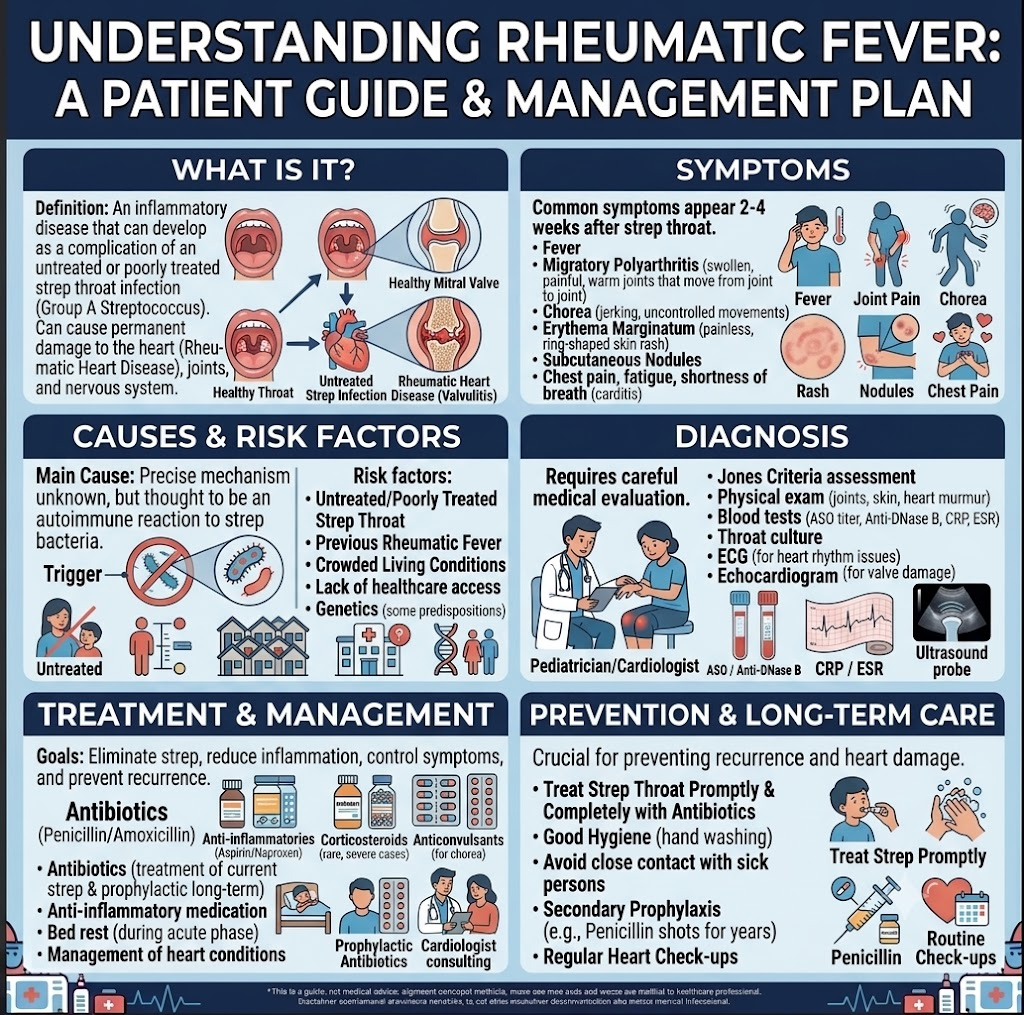
Rheumatic fever is a serious inflammatory illness that can affect the heart, joints, brain, and skin. It typically develops in children and teenagers, usually between ages 5 and 15, if a strep throat or scarlet fever infection is not properly treated. While rare in many developed countries today, it remains a concern. The main danger of rheumatic fever is its potential to cause permanent heart damage, known as rheumatic heart disease, which can lead to severe heart valve problems and even heart failure years later.
Understanding the Condition
Common Symptoms
Joint Pain or Swelling: Often affects knees, ankles, elbows, and wrists. Joints may feel hot, tender, or painful, and the pain can "travel" from one joint to another.
Chest Pain: Can occur if the heart is inflamed.
Skin Changes: May include small, painless bumps under the skin or a flat/slightly raised, painless rash with an uneven edge.
Uncontrolled Movements (Sydenham Chorea): Jerky, involuntary movements, most commonly affecting the hands, feet, and face. This can also include sudden outbursts of crying or inappropriate laughing. Symptoms usually appear 2-4 weeks after a strep throat infection and can vary greatly, appearing, disappearing, or changing over time.
Consultation Guide
Which Specialist to Meet
Before your visit, make a list of all your symptoms, when they started, and if you recently had a sore throat or strep throat. Bring a list of any medications you are taking and be prepared to discuss your medical history and any family history of heart conditions. Write down any questions you have for the doctor.
Book a doctor visit near me
Anti-inflammatory Medicines: These medications reduce pain and swelling in the joints and heart. They help manage the symptoms and inflammation associated with rheumatic fever. (Duration: Prescribed as needed to control symptoms, often for several weeks or months, gradually decreasing the dose as inflammation subsides.)
Surgical Procedures (for long-term complications)
Rest: Adequate rest is crucial, especially during the acute phase of the illness, to help the body recover and minimize stress on the heart. (Duration: Varies depending on symptom severity and may last several weeks to months.)
Prompt Treatment of Strep Throat: The most effective way to prevent rheumatic fever is to ensure all strep throat and scarlet fever infections are diagnosed and treated with the full course of prescribed antibiotics right away. Do not stop taking medication early, even if symptoms improve.
Good Hygiene: Practicing good hand hygiene, like frequent handwashing, can help prevent the spread of strep bacteria.
Long-Term Monitoring & Management
Regular Medical Check-ups: Individuals who have had rheumatic fever, especially those with heart involvement, require regular follow-up appointments with a doctor or cardiologist to monitor heart health and detect any developing issues early.
Consultation Guide
Rheumatic fever is a serious inflammatory illness that can affect the heart, joints, brain, and skin. It typically develops in children and teenagers, usually between ages 5 and 15, if a strep throat or scarlet fever infection is not properly treated. While rare in many developed countries today, it remains a concern. The main danger of rheumatic fever is its potential to cause permanent heart damage, known as rheumatic heart disease, which can lead to severe heart valve problems and even heart failure years later.
This test identifies the presence of Group A streptococcus bacteria, the cause of strep throat. A rapid strep test gives quick results, while a throat culture takes a day or two but is more accurate.
A healthcare professional will gently rub a sterile swab over the back of your throat and tonsils to collect a sample. It's a quick procedure and might cause a brief tickling or gagging sensation, but it's not painful.
Electrocardiogram (ECG or EKG)
An ECG records the electrical signals of your heart to show how fast or slow it's beating and if the rhythm is regular. It can help identify problems with heart rate or rhythm that might be caused by rheumatic fever.
This test uses sound waves to create moving pictures of your heart. It allows doctors to see the heart's chambers, valves, and how blood flows through them, helping to detect any damage or inflammation caused by rheumatic fever.
Heart Valve Repair or Replacement: If rheumatic fever causes significant, lasting damage to the heart valves (rheumatic heart disease), surgery may be needed to repair a narrowed or leaky valve, or to replace it with an artificial one. (Duration: A one-time surgical procedure, followed by recovery and ongoing monitoring.)
Long-Term Antibiotic Therapy: To prevent repeat episodes of rheumatic fever, which can cause further heart damage, many individuals are prescribed long-term, low-dose antibiotics. This preventative measure is vital.
Diagnostic Procedures
Start with your primary care doctor or pediatrician. If rheumatic fever is suspected or diagnosed, you may be referred to a cardiologist (heart specialist) to monitor heart health, a rheumatologist (joint specialist), or a neurologist (brain/nervous system specialist) if movements like Sydenham chorea are present.
Preparations Before Your Visit
Strep Throat Test (Rapid Strep Test/Throat Culture)
What to Expect
What to Expect
You will lie down while several small, sticky patches (electrodes) are placed on your chest, and sometimes your arms and legs. Wires connect these patches to a machine that records your heart's electrical activity. The test is quick, painless, and you just need to relax and lie still.
What to Expect
You will lie on a bed. A technician will apply a special gel to your chest and then move a small handheld device (transducer) over the area. You might feel some pressure from the transducer, but the test is generally painless. You may be asked to hold your breath briefly or change positions.
Treatment Options
Rheumatic Fever: Understanding, Treatment, and Prevention
Understanding the Condition
Medications
Antibiotics: Used to eliminate any remaining strep bacteria in the body. This prevents the initial infection from worsening and helps reduce the risk of future rheumatic fever episodes. (Duration: Typically a 10-day course initially. Long-term, low-dose antibiotics may be prescribed for several years, sometimes into adulthood, to prevent recurrence, especially if heart damage has occurred.)
Management of Uncontrolled Movements: For Sydenham chorea, specific medications may be prescribed to help control the involuntary movements and emotional changes. (Duration: As needed, under medical supervision, often for several weeks or months.)
Prevention & Long-Term Wellbeing
Prevention
Heart Health Management: If rheumatic heart disease develops, managing overall heart health through lifestyle choices, regular exercise (as advised by a doctor), and adherence to medical advice is essential.
Tags & Topics
Notice an error or need an update?
Help us keep medical information accurate. Report incorrect info or suggest an edit.


