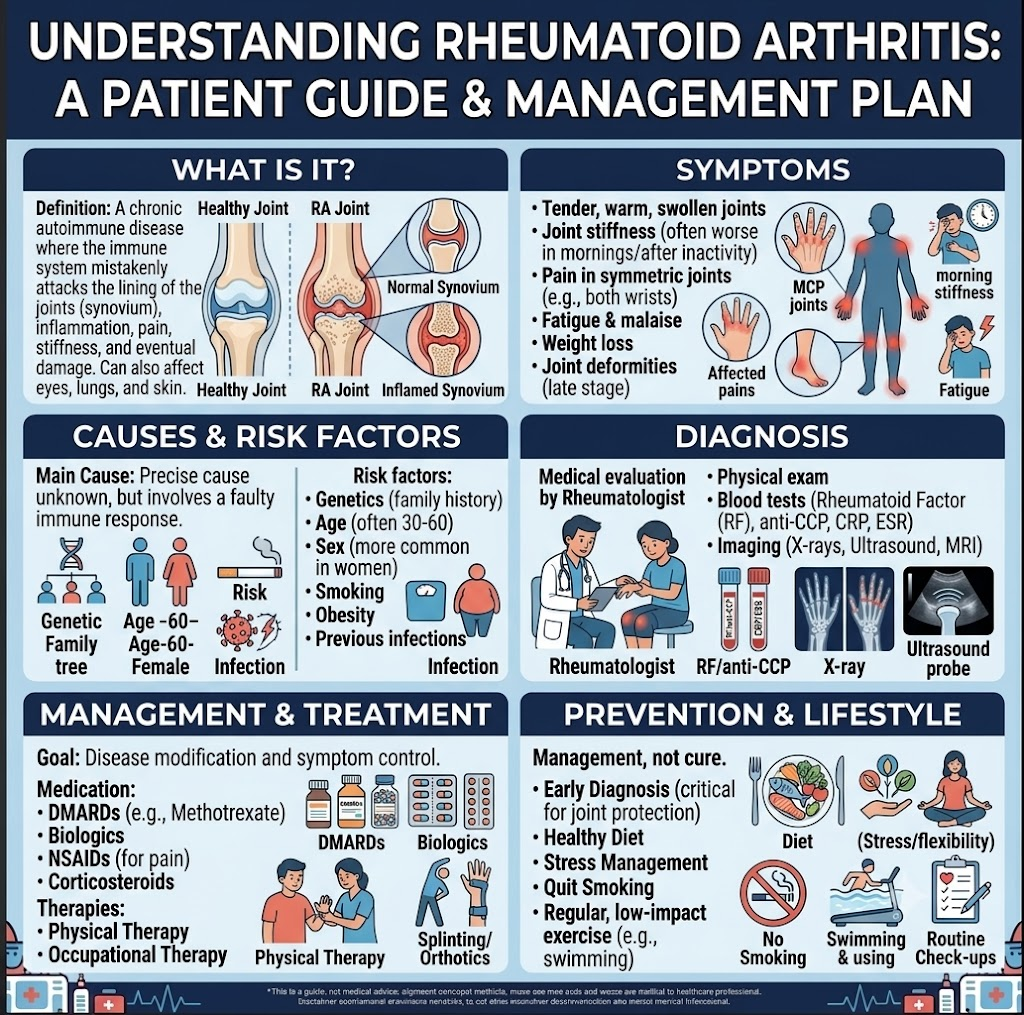
Rheumatoid arthritis (RA) is a chronic autoimmune condition where the body's immune system mistakenly attacks its own healthy tissues, primarily causing pain, swelling, and inflammation in the joints. Unlike osteoarthritis (wear and tear), RA targets the joint lining, leading to bone damage and potential joint deformity over time. Beyond joints, RA can affect other body parts like skin, eyes, lungs, heart, and blood vessels, increasing risks such as heart disease. Modern treatments have greatly improved outcomes, but RA can still cause long-term damage.
Understanding the Condition
Rheumatoid Arthritis: Understanding an Autoimmune Condition
Understanding the Condition
Common Symptoms
Painful, Warm, Swollen Joints: Affected joints feel tender, swollen, and warm to the touch, often starting in the small joints of hands and feet.
Morning Stiffness: Joint stiffness is notably worse in the mornings or after periods of rest, frequently lasting over 45 minutes.
Fatigue, Fever, and Appetite Loss: General tiredness, a low-grade fever, and a reduced desire to eat are common systemic symptoms.
Symmetrical Joint Involvement: Typically affects the same joints on both sides of the body, potentially spreading from small joints to wrists, elbows, hips, knees, and ankles.
Flares and Remission: Symptoms can vary in severity, with periods of increased activity (flares) followed by times of reduced or no pain and swelling (remission).
Beyond the Joints: RA can also impact other body systems, including the nervous system, eyes, lungs, and heart, potentially affecting daily life activities significantly.
Consultation Guide
Which Specialist to Meet
Before your appointment, prepare a detailed list of all your symptoms, including when they started, their severity, and how they affect your daily life. Gather information about your family's medical history, especially any autoimmune conditions. Compile a list of all current medications, supplements, and known allergies. Write down any specific questions you have for your doctor to ensure all your concerns are addressed.
Book a doctor visit near me
Stress Reduction: Practice relaxation methods such as deep breathing, meditation, or gentle yoga, as stress can worsen RA symptoms like pain and stiffness. (Duration: Daily as needed)
Temperature Therapy: Apply heat packs to soothe stiff joints and muscles, or use cold packs to reduce swelling and acute pain. (Duration: As needed, 15-20 minutes per application)
Joint Protection: Learn adaptive ways to perform daily tasks, such as grocery shopping or house cleaning, and use assistive devices to minimize strain on your joints. (Duration: Ongoing)
Adequate Rest: Prioritize sufficient sleep and incorporate short rest periods throughout the day to help combat fatigue, a common RA symptom. (Duration: Daily)
Quit Smoking: Stopping smoking can significantly reduce your risk of developing RA or worsening existing symptoms, as well as improve overall health.
Consultation Guide
Rheumatoid arthritis (RA) is a chronic autoimmune condition where the body's immune system mistakenly attacks its own healthy tissues, primarily causing pain, swelling, and inflammation in the joints. Unlike osteoarthritis (wear and tear), RA targets the joint lining, leading to bone damage and potential joint deformity over time. Beyond joints, RA can affect other body parts like skin, eyes, lungs, heart, and blood vessels, increasing risks such as heart disease. Modern treatments have greatly improved outcomes, but RA can still cause long-term damage.
An imaging test that uses a small amount of radiation to create pictures of bones. It can help identify joint damage, bone erosion, or deformities caused by RA.
Heart Health Monitoring: Actively monitor blood pressure, cholesterol, and other heart disease risk factors with your doctor, as RA significantly increases the risk of heart problems.
Eye and Lung Health: Report any dry eyes, pain, vision changes, or unexplained breathing problems to your doctor promptly, as RA can affect these organs.
Diagnostic Procedures
Consult a rheumatologist, a doctor specializing in autoimmune diseases affecting joints and connective tissues, for diagnosis and management. Depending on how RA impacts your body, you might also need to see an orthopedist for severe joint damage, an ophthalmologist for eye issues, a pulmonologist for lung complications, a cardiologist for heart concerns, and physical or occupational therapists to improve joint function. Mental health support can also be beneficial.
Preparations Before Your Visit
C-Reactive Protein (CRP) Test
A blood test that measures a protein produced by the liver, which increases when there's inflammation in the body. A high-sensitivity CRP test can detect even smaller increases, indicating inflammatory activity.
What to Expect
A healthcare professional will draw a small blood sample, usually from a vein in your arm. This is a quick process, and you can typically resume normal activities immediately afterward.
Rheumatoid Factor (RF) Test
A blood test that detects specific proteins (rheumatoid factors) made by your immune system that can mistakenly attack healthy tissues. High levels are often linked to autoimmune diseases like RA.
What to Expect
Similar to a CRP test, a small blood sample will be collected from a vein in your arm and sent to a lab for analysis. The procedure is brief and generally well-tolerated.
Erythrocyte Sedimentation Rate (ESR or Sed Rate)
A blood test that measures how quickly red blood cells settle at the bottom of a test tube in one hour. A faster rate suggests higher inflammatory activity in the body.
What to Expect
A blood sample is drawn from your arm. The sample is then placed in a specialized tube in a lab to measure the distance red blood cells fall within one hour.
What to Expect
You will be asked to position the affected joint(s) on an X-ray table or against a plate. You may need to hold still or change positions. A technician will operate the X-ray machine from behind a protective shield. The procedure is quick and painless.
An imaging technique that uses high-frequency sound waves to create real-time pictures of soft tissues, including joint linings, tendons, and ligaments. It can visualize inflammation, fluid buildup, and early damage.
What to Expect
A technician will apply a special gel to the skin over the affected joint. A small handheld device (transducer) is then moved gently over the area, sending sound waves and capturing images on a screen. The procedure is generally painless and non-invasive.
Treatment Options
Medications
Anti-Inflammatory Drugs: Medications used to quickly reduce pain and inflammation. (Duration: As prescribed, often short-term for flares or until other medications take effect)
Disease-Modifying Antirheumatic Drugs (DMARDs): A class of medications that slow the progression of RA and help prevent permanent joint damage. (Duration: Long-term, often lifelong)
Biologic Therapies: A newer, advanced type of DMARD that targets specific parts of the immune system involved in inflammation. (Duration: Long-term, often lifelong)
Steroids: Powerful anti-inflammatory medications used to quickly reduce severe inflammation and pain, typically for short periods. (Duration: Short-term, usually days to weeks)
Therapies
Physical Therapy: Exercises and techniques designed to maintain or restore joint flexibility, strength, and range of motion. (Duration: Varies, often several weeks to months, with ongoing home exercises)
Occupational Therapy: Helps you learn strategies and use assistive devices to adapt daily activities, protect your joints, and manage tasks more easily. (Duration: Varies, often several weeks, with ongoing application of strategies)
Surgical Procedures
Joint Replacement Surgery (Arthroplasty): Replaces severely damaged joints (e.g., hip, knee, elbow, shoulder) with artificial implants made of metal and plastic to reduce pain and restore function. (Duration: One-time procedure with recovery lasting several months)
Regular Medical Follow-ups: Maintain consistent appointments with your rheumatologist to monitor disease activity, adjust treatment as needed, and screen for potential complications.
Timely Vaccinations: Stay up-to-date with recommended vaccinations (e.g., flu, pneumonia, shingles, COVID-19) to protect against infections, as RA and its treatments can weaken the immune system.
Bone Density Screening: Discuss bone density screenings with your doctor, as both RA and some of its treatments can increase the risk of osteoporosis (weak, brittle bones).
Address Mental Health: Be open with your doctor about any feelings of depression or anxiety, as these are common with RA, and addressing them can significantly improve overall treatment effectiveness.
Maintain a Healthy Weight: Managing your weight can reduce stress on your joints and may help improve the overall course of your RA and lower the risk of complications.
Prevention & Long-Term Wellbeing
Home Remedies & Lifestyle
Gentle Exercise: Engage in low-impact activities like swimming, walking, or cycling to improve joint flexibility, strengthen supporting muscles, and reduce fatigue. (Duration: Ongoing daily)
Joint Fusion (Arthrodesis): Permanently joins bones in a damaged joint, typically for smaller joints like in the hand or foot, to reduce pain and provide stability when replacement isn't an option. (Duration: One-time procedure with recovery lasting several months)
Long-Term Management & Complication Prevention
Tags & Topics
Notice an error or need an update?
Help us keep medical information accurate. Report incorrect info or suggest an edit.


