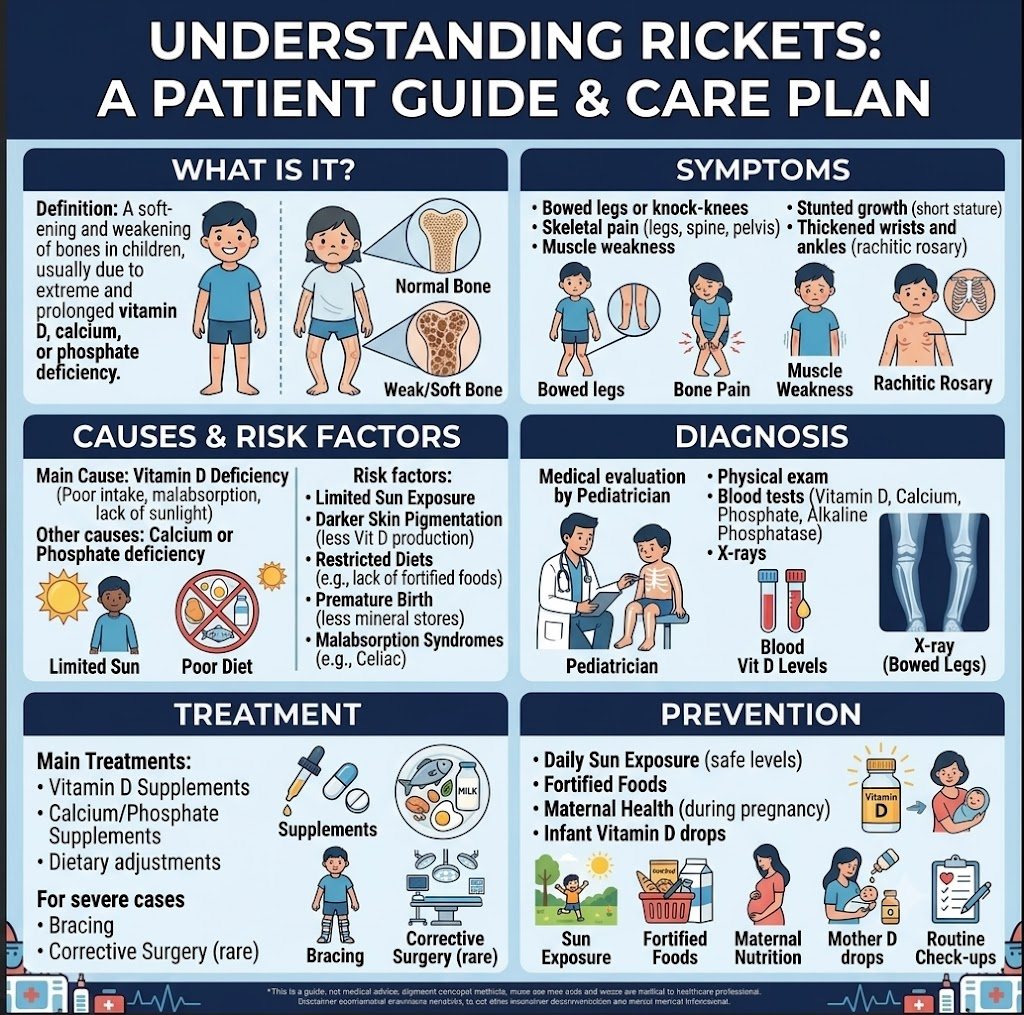
Rickets is a condition affecting children where their bones become soft and weak. This often happens due to a severe and long-lasting lack of vitamin D or calcium in their diet. Vitamin D is crucial because it helps the body absorb calcium and phosphorus from food, which are essential for strong bones. When there isn't enough vitamin D, calcium and phosphorus levels in the bones drop, leading to rickets. In rare cases, genetic problems can also cause rickets. Generally, adding vitamin D or calcium to the diet helps correct bone issues. If another medical problem is the cause, additional treatments or medicines may be needed. Severe bone deformities might require surgery.
Understanding the Condition
Rickets: Soft Bones in Children
Understanding the Condition
Common Symptoms
Common Symptoms
Symptoms in Infants: Low blood calcium levels (hypocalcemia) can cause muscle cramps, twitching, and seizures.Soft spot (fontanelle) on the top of the head may close later than usual.Skull bones may feel softer than normal.
Before your visit, make a list of your child's symptoms, when they started, and any factors that seem to make them better or worse. Note down your child's diet, sun exposure, and any family history of bone problems. Prepare questions you have for the doctor.
Book a doctor visit near me
Consultation Guide
Rickets is a condition affecting children where their bones become soft and weak. This often happens due to a severe and long-lasting lack of vitamin D or calcium in their diet. Vitamin D is crucial because it helps the body absorb calcium and phosphorus from food, which are essential for strong bones. When there isn't enough vitamin D, calcium and phosphorus levels in the bones drop, leading to rickets. In rare cases, genetic problems can also cause rickets. Generally, adding vitamin D or calcium to the diet helps correct bone issues. If another medical problem is the cause, additional treatments or medicines may be needed. Severe bone deformities might require surgery.
Skeletal Deformities: Because rickets softens the growing parts of bones (growth plates), it can lead to:Bowed legs or knock-knees.Thickened wrists and ankles.Breastbone projection (pigeon chest).Abnormal spine curves.
Consultation Guide
Which Specialist to Meet
Start by consulting your child's pediatrician. Depending on the severity and cause, they may refer you to a pediatric endocrinologist (a doctor specializing in children's hormone and metabolism disorders) or an orthopedic specialist (a surgeon focusing on bones and joints) for skeletal deformities.
Preparations Before Your Visit
Blood tests are essential for diagnosing rickets. They measure the levels of key nutrients and minerals in the blood, such as vitamin D, calcium, and phosphorus. These tests can reveal deficiencies or imbalances that lead to rickets, and also help identify specific genetic causes if suspected.
Dietary Changes and Supplements: For rickets caused by nutritional deficiencies, treatment primarily involves increasing the intake of vitamin D and calcium. This can be achieved through a diet rich in fortified foods (like milk, cereals, and orange juice) and naturally calcium-rich foods (like dairy products and leafy greens). Vitamin D supplements are often prescribed, sometimes in higher doses, to quickly correct deficiencies. (Duration: Ongoing, typically for several months or longer to correct deficiencies and support bone healing. The exact duration depends on the severity of the deficiency and the child's response to treatment.)
Prescription Medications: If rickets is due to rare inherited disorders that affect how the body uses phosphorus (another crucial bone mineral), specialized prescription medications may be necessary. These medicines help the body manage phosphorus levels or other metabolic imbalances. (Duration: Varies, depending on the underlying cause and severity, often for several months or long-term management to control the condition.)
Corrective Surgery: In cases where rickets has caused severe or persistent skeletal deformities (like very bowed legs) that do not improve with nutritional or medical treatments, corrective surgery may be recommended. This procedure aims to straighten bones and improve mobility and quality of life. (Duration: A single procedure, followed by a recovery period that typically includes physical therapy. The duration of recovery and rehabilitation varies based on the specific surgery and individual child, usually several weeks to months.)
Monitoring Risk Factors: Be aware of risk factors for vitamin D deficiency, such as darker skin pigmentation, limited sun exposure (e.g., due to geography or lifestyle), and exclusive breastfeeding without vitamin D supplementation. Discuss any concerns with your healthcare professional, who can recommend appropriate testing and preventative measures.
Diagnostic Procedures
An X-ray is a quick, painless imaging test that uses a small amount of radiation to create pictures of the structures inside the body, especially bones. It helps doctors see bone deformities, changes in bone shape, or growth plate abnormalities characteristic of rickets. Dense materials like bone show up as white, while air appears black, and muscles or fat appear as shades of gray.
What to Expect
Your child will be asked to lie on a table or stand in front of an X-ray plate. A technician will carefully position the body part being examined. It's important for your child to stay very still for a few seconds while the X-ray is taken to ensure a clear image. The process is quick and doesn't involve any discomfort.
Urine Test (Urinalysis)
A urinalysis is a test of a urine sample used to detect and manage a variety of health conditions, including kidney issues or metabolic problems. It involves checking the appearance, concentration, and specific contents of the urine, such as protein or other substances that might indicate an underlying medical condition contributing to rickets.
What to Expect
Your child will be asked to provide a urine sample, often using a 'clean catch' method to ensure the sample is not contaminated. For infants or very young children, a special collection bag might be used. The sample is then sent to a laboratory for analysis.
What to Expect
A healthcare professional, typically a nurse or phlebotomist, will draw a small amount of blood, usually from a vein in your child's arm. This involves a brief pinch or sting as the needle is inserted. The blood sample is then collected in a tube and sent to a laboratory for detailed analysis.
Treatment Options
Nutritional and Home Remedies
Medications
Regular Medical Check-ups: Regular visits to your child's doctor are crucial for monitoring bone health, growth, and overall development, especially if your child has a history of rickets or inherited forms. These check-ups allow for early detection of any recurring issues and adjustment of treatment plans.
Prevention & Long-Term Wellbeing
Prevention
Adequate Vitamin D and Calcium Intake: Ensure your child receives sufficient vitamin D through safe, moderate sun exposure (without sunburn), vitamin D-fortified foods (milk, certain cereals, fatty fish like salmon), and, if recommended by a doctor, supplements. Also, provide a diet rich in calcium from dairy products, calcium-fortified plant-based milks, and dark leafy greens.
Nutritional Guidance: Seek ongoing advice from a healthcare provider or a registered dietitian to ensure your child maintains a balanced diet that supports strong bones and overall health, tailored to their specific needs.
Tags & Topics
Notice an error or need an update?
Help us keep medical information accurate. Report incorrect info or suggest an edit.


