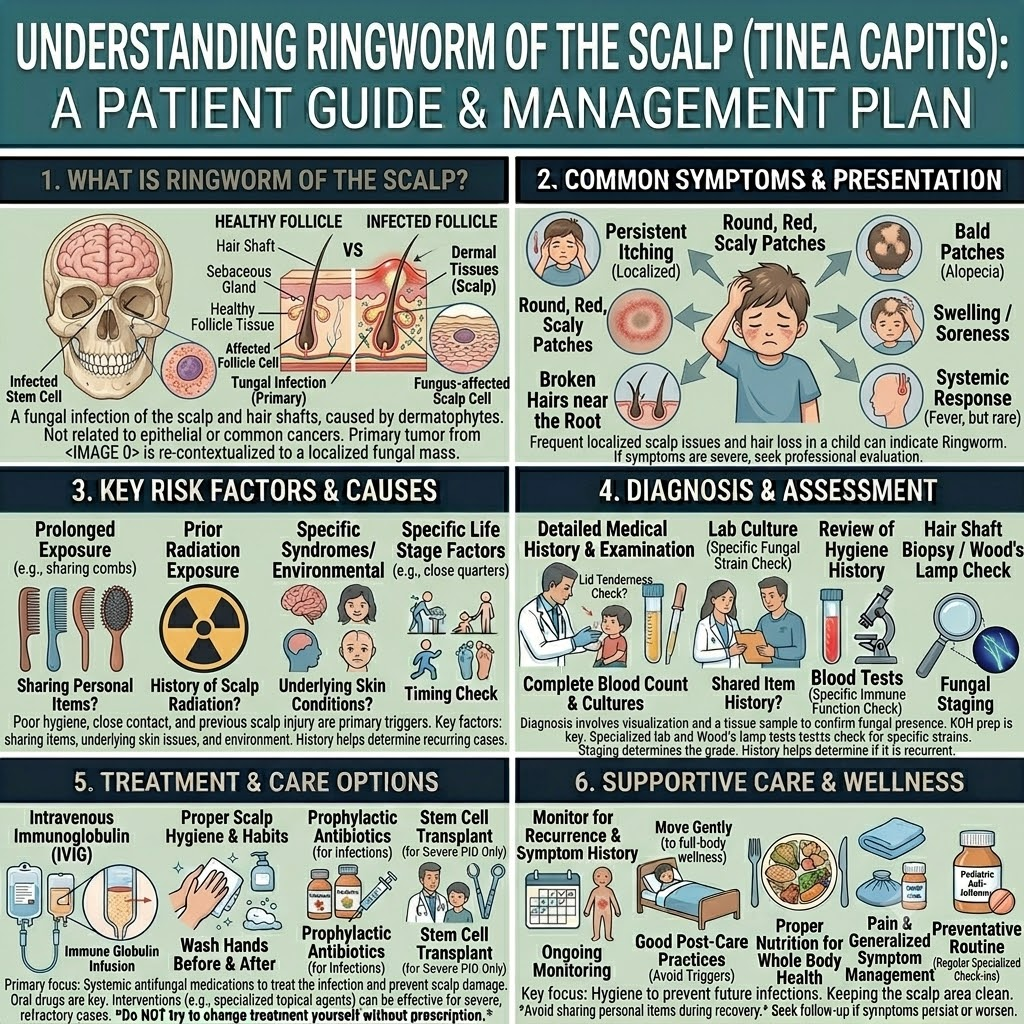
Ringworm of the scalp, medically known as tinea capitis, is a common skin infection caused by a fungus, not a worm. It primarily affects children, leading to itchy, scaly, and often bald patches on the head. The condition gets its 'ringworm' name from its tendency to form circular rashes. It is contagious and can spread among people, animals, and contaminated objects.
Understanding the Condition
Ringworm of the Scalp: A Simple Guide
Understanding the Condition
Common Symptoms
Scaly, Itchy Patches: Areas of the scalp become flaky, red, and intensely itchy.
Hair Loss: Round or irregularly shaped patches where hair has broken off at or near the scalp, leading to bald spots that may slowly grow larger.
Brittle Hair: Hair in affected areas may appear dull, brittle, and break easily.
Small Black Dots: Tiny black dots on the scalp, which are actually hairs that have broken off right at the surface.
Pus-filled Sores or Bumps (Kerion): In some severe cases, the scalp can develop swollen, tender, pus-filled lesions. These may be mistaken for bacterial infections and can potentially lead to permanent scarring and hair loss.
Swollen Lymph Nodes: Lymph nodes (small glands that are part of your immune system) in the neck may become swollen due to the body's immune response to the infection.
Consultation Guide
Which Specialist to Meet
If you notice hair loss, scaling, persistent itchiness, or any unusual appearance on the scalp, especially in a child, it's important to see a doctor. You would typically start with a general practitioner or a pediatrician (for children), who may then refer you to a dermatologist (a skin specialist) for further assessment and management.
Preparations Before Your Visit
Before your visit, be prepared to discuss when symptoms started, how they've progressed, and if there's been any known exposure to other people or animals with similar rashes. Inform your doctor about any recent travel, family history of skin conditions, and any medications or home remedies you may have tried. Avoid using any new shampoos or treatments on the scalp before your appointment, as these might mask symptoms.
Book a doctor visit near me
Follow Doctor's Instructions: Complete the full course of oral antifungal medication as prescribed, even if symptoms improve sooner. Stopping early can lead to recurrence.
Monitor for Recurrence: Be aware that ringworm can sometimes return. Continue to practice good hygiene and seek medical attention promptly if new symptoms appear.
Consultation Guide
Ringworm of the scalp, medically known as tinea capitis, is a common skin infection caused by a fungus, not a worm. It primarily affects children, leading to itchy, scaly, and often bald patches on the head. The condition gets its 'ringworm' name from its tendency to form circular rashes. It is contagious and can spread among people, animals, and contaminated objects.
The doctor will use a sterile scalpel or a blunt instrument to lightly scrape the affected skin, or small tweezers to pluck hairs. You might feel a slight scratching sensation or a brief, mild tugging when hairs are removed. The procedure is quick and generally causes minimal discomfort.
Oral Antifungal Medications: These are prescription medicines taken by mouth that work throughout the body to kill the fungus. They are essential for treating ringworm of the scalp because creams and lotions cannot effectively reach the infection within the hair follicles. (Duration: Typically taken daily for several weeks, often 6 to 8 weeks, but sometimes longer, depending on the specific medication and severity of the infection.)
Manage Risk Factors: Be particularly vigilant with hygiene in environments where ringworm is common, such as schools, daycare centers, and locker rooms. If living in a hot, humid climate, take extra precautions with hygiene.
Diagnostic Procedures
The doctor will carefully examine your scalp, hair, and skin. They will look for the characteristic round, scaly patches, broken hairs, and any signs of inflammation or swelling. They will also check for swollen lymph nodes in your neck.
What to Expect
The examination is non-invasive and painless. The doctor will simply observe and gently touch your scalp to assess its condition.
Wood's Lamp Examination
A Wood's lamp is a special ultraviolet (UV) light that helps identify certain types of fungal infections. Some fungi glow a bright green-yellow under this light, though not all types of ringworm fungus will react.
What to Expect
The doctor will dim the room lights and shine the Wood's lamp directly onto the affected areas of your scalp. This procedure is painless and brief. A negative result does not rule out the infection, as some fungi do not fluoresce.
Skin Scraping or Hair Sample (KOH Preparation)
To confirm a fungal infection, the doctor may gently scrape a small amount of skin scales from the edge of a lesion or pluck a few affected hairs from the scalp. These samples are then examined under a microscope after being treated with potassium hydroxide (KOH), which helps dissolve skin cells but leaves fungal elements intact, making them easier to see.
What to Expect
For a definitive diagnosis, a skin or hair sample can be sent to a lab to grow (culture) the fungus. This helps identify the specific type of fungus causing the infection, which can guide treatment choices.
What to Expect
The sample collection is similar to the KOH preparation. The collected material is placed in a special dish or tube with nutrients that encourage fungal growth. Results typically take several days to a few weeks, as fungi grow slowly.
Regular Follow-ups: Attend all scheduled follow-up appointments to ensure the infection has completely cleared and to monitor for any side effects of medication. The doctor may re-examine the scalp or re-test samples.
Treatment Options
Medications
Medicated Shampoos: These prescription shampoos contain antifungal ingredients designed to reduce the spread of the fungus and kill spores on the scalp. They are generally used alongside oral medications. (Duration: Often used two to three times a week for the duration of the oral antifungal treatment, and sometimes for a period after, to prevent recurrence and spread.)
Home Care and Support
Gentle Scalp Care: While using prescribed treatments, maintain good scalp hygiene. Avoid harsh scrubbing or irritating the scalp. (Duration: Ongoing throughout treatment and as part of regular hygiene.)
Check Pets Regularly: Inspect pets (cats, dogs, farm animals) for signs of ringworm, such as bald spots or scaly skin. If you suspect an animal has ringworm, take it to a veterinarian for treatment to prevent human transmission.
Clean Shared Spaces: If someone in the household has ringworm, regularly clean and disinfect shared surfaces, especially in bathrooms and common areas. Wash bedding, towels, and clothing in hot water.
Educate Children: Teach children about good hygiene habits and the importance of not sharing personal items.
Prevention & Long-Term Wellbeing
Prevention
Practice Good Hygiene: Encourage regular hair washing, especially after haircuts or playing with pets.
Avoid Sharing Personal Items: Do not share combs, brushes, hats, pillows, towels, or hair accessories with others, especially if they have an active infection.
Tags & Topics
Notice an error or need an update?
Help us keep medical information accurate. Report incorrect info or suggest an edit.


