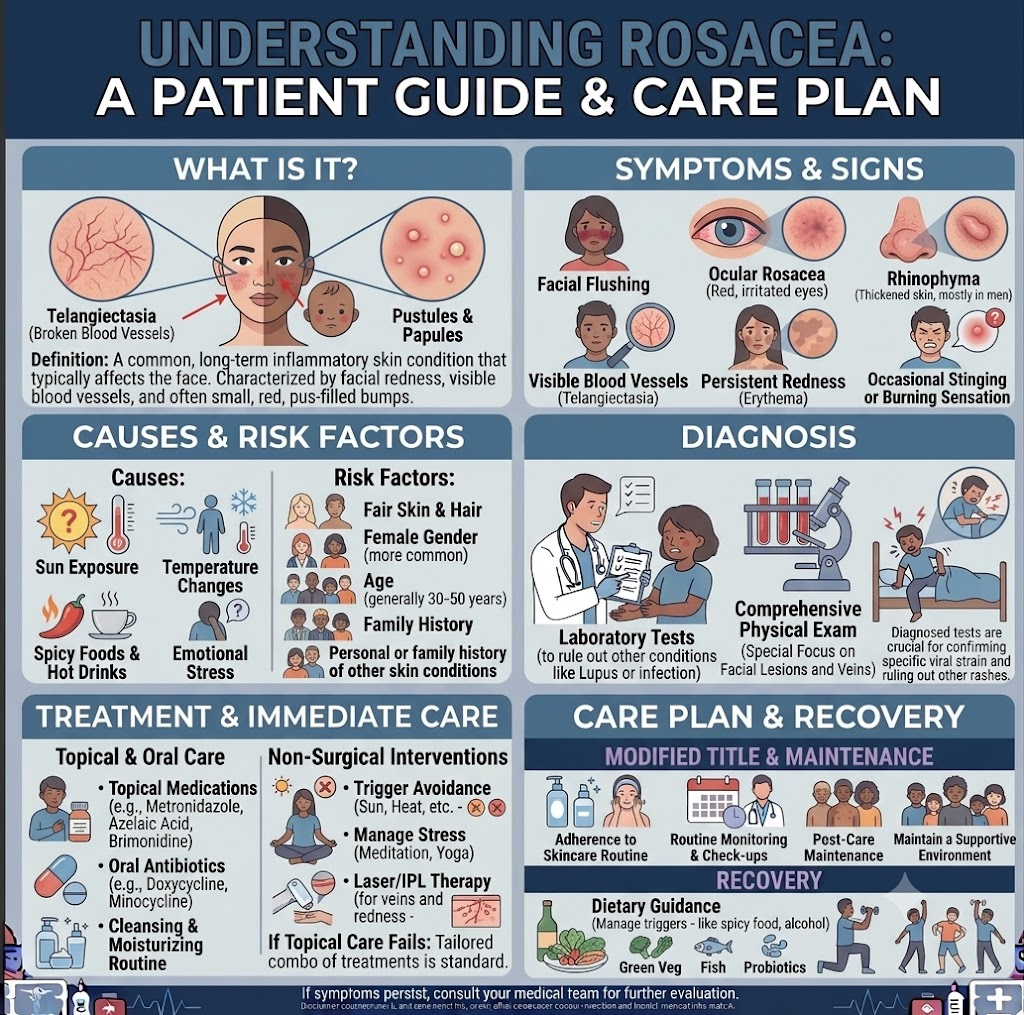
Rosacea (pronounced roe-ZAY-she-uh) is a common, long-lasting skin condition primarily affecting the face. It causes episodes of flushing, persistent redness, and sometimes visible blood vessels, small red bumps, or pus-filled pimples. These symptoms often appear in cycles, flaring up for weeks or months before fading for a period. While it's sometimes confused with acne or other skin issues, rosacea is distinct. There is currently no cure, but various treatments, careful skin care, and avoiding triggers can effectively manage symptoms and improve skin appearance. It is not caused by poor hygiene and cannot be spread to others.
Understanding the Condition
Rosacea: Understanding and Managing a Common Skin Condition
Understanding the Condition
Rosacea (pronounced roe-ZAY-she-uh) is a common, long-lasting skin condition primarily affecting the face. It causes episodes of flushing, persistent redness, and sometimes visible blood vessels, small red bumps, or pus-filled pimples. These symptoms often appear in cycles, flaring up for weeks or months before fading for a period. While it's sometimes confused with acne or other skin issues, rosacea is distinct. There is currently no cure, but various treatments, careful skin care, and avoiding triggers can effectively manage symptoms and improve skin appearance. It is not caused by poor hygiene and cannot be spread to others.
Common Symptoms
Facial Redness and Flushing: Your face might flush more easily, sometimes feeling warm. Over time, this redness can become constant, appearing pink, reddish, or even purplish depending on your natural skin tone.
Visible Veins: Tiny blood vessels, often on the nose and cheeks, may break and become more noticeable. These are sometimes called spider veins and can be subtle or prominent.
Swollen Bumps: Many people develop pimple-like bumps on the face, and sometimes on the chest or back. These can resemble acne and may occasionally contain pus.
Burning Sensation: The affected skin may feel hot, tender, or sting.
Eye Problems (Ocular Rosacea): Your eyes might become dry, irritated, red, swollen, or gritty. Eyelids can also swell. These eye symptoms can appear before, during, or after skin symptoms.
Enlarged Nose (Rhinophyma): In some cases, rosacea can lead to a gradual thickening of the skin on the nose, causing it to look larger and bumpy. This is more common in men.
Consultation Guide
Which Specialist to Meet
For ongoing facial or eye symptoms, it's best to consult a healthcare professional. A dermatologist, a doctor specializing in skin conditions, is the most appropriate specialist for diagnosing and managing rosacea. If eye symptoms are prominent, an ophthalmologist (eye specialist) may also be involved.
Preparations Before Your Visit
Before your visit, it's helpful to: Keep a diary of your symptoms, noting when they started, how often they occur, and any factors that seem to worsen them (e.g., specific foods, sun exposure, stress). List all medications, supplements, and vitamins you are currently taking. Be ready to describe your daily skin care routine, including products used. Mention any family history of rosacea or other skin conditions. Prepare a list of questions you have for the doctor.
Book a doctor visit near me
Diagnosing rosacea primarily involves a thorough visual examination of your skin by a dermatologist, along with a detailed discussion of your medical history and symptoms. The doctor will look for the characteristic signs of rosacea, such as persistent redness, visible blood vessels, and bumps, primarily on the face. They will also ask about when your symptoms started, how frequently they occur, any known triggers, your lifestyle habits, and if you have a family history of rosacea.
During your appointment, the dermatologist will carefully observe your face and possibly other areas of your skin. They may gently touch your skin to assess its texture or sensitivity. You will be asked a series of questions about your symptoms, including what makes them better or worse, and about your general health. This process is usually quick, non-invasive, and painless. In some cases, if there's uncertainty or a need to rule out other skin conditions, the doctor might suggest additional tests, though this is not typical for a standard rosacea diagnosis.
Consultation Guide
Identify and Avoid Personal Triggers: Keep a diary to pinpoint flare-up causes (e.g., sun, wind, hot drinks, spicy foods, extreme temperatures, stress, certain medications or products). Actively minimize exposure.
Daily Broad-Spectrum Sunscreen: Use SPF 30+ broad-spectrum sunscreen daily, wear wide-brimmed hats, and seek shade to protect from UV rays, a major trigger.
Adopt a Mild Skin Care Routine: Use gentle, non-abrasive cleansers and moisturizers. Avoid harsh ingredients like alcohol, fragrance, and strong exfoliants that can irritate skin.
Control Environmental and Emotional Factors: Protect your face from harsh winds, extreme cold/heat. Practice stress reduction techniques like meditation or yoga, as emotional stress can trigger flares.
Be Mindful of Food and Drink: Note how spicy foods, hot beverages, and alcohol affect your skin. Reducing or avoiding these can help manage flushing.
Diagnostic Procedures
Clinical Evaluation and Patient History
What to Expect
Treatment Options
Medications
Topical Medications: These are creams, gels, or lotions applied directly to the skin. They help reduce redness, inflammation, and the number of bumps by constricting blood vessels or fighting inflammation. (Duration: Typically applied once or twice daily for several weeks to months, with ongoing use often needed for maintenance.)
Oral Medications: Low-dose oral antibiotics are often prescribed for their anti-inflammatory effects, not necessarily to kill bacteria. Other oral medications can help reduce severe flushing. (Duration: Usually taken daily for 6 to 12 weeks for initial improvement, followed by a lower dose or intermittent use for long-term management.)
Procedures and Therapies
Laser and Light Therapies: Vascular laser therapy or intense pulsed light (IPL) use targeted light energy to reduce visible blood vessels and persistent redness by carefully destroying the affected vessels. They can also help reduce skin thickening. (Duration: Often requires a series of 2-5 sessions, spaced 3-4 weeks apart, with maintenance treatments possibly needed every 6-12 months.)
Surgical Procedures
Surgery for Rhinophyma: For severe cases of rhinophyma (enlarged nose), surgical techniques like dermabrasion, laser resurfacing, or surgical excision can reshape the nose and remove excess tissue, improving its appearance. (Duration: A single procedure may be sufficient, but follow-up care may be needed. Results are generally long-lasting.)
Consistent Medical Follow-up: Regular check-ups with your dermatologist are essential for adjusting treatment, monitoring your condition, and addressing new concerns like ocular rosacea.
Prevention & Long-Term Wellbeing
Prevention and Lifestyle Management
Tags & Topics
Notice an error or need an update?
Help us keep medical information accurate. Report incorrect info or suggest an edit.


