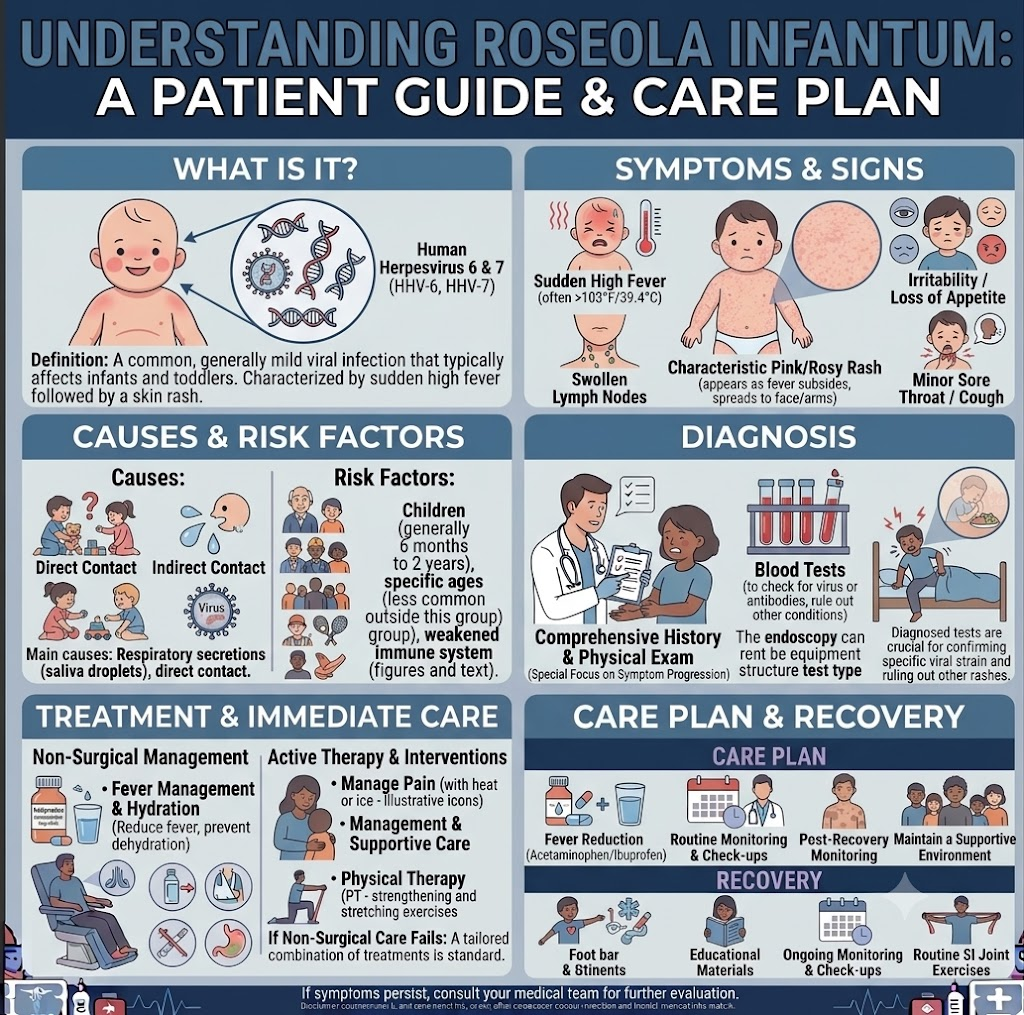
Roseola, also known as Sixth Disease, is a very common and usually mild viral infection that typically affects young children, most often before their second birthday. It spreads easily from person to person through respiratory droplets. The infection is characterized by a sudden high fever, which is then typically followed by a distinctive, non-itchy, and harmless rash. While the rash may appear concerning, roseola usually resolves on its own within about a week without causing serious complications. Many children may get the virus but show no symptoms at all, or only very mild ones.
Understanding the Condition
Roseola: A Common Childhood Infection with Fever and Rash
Understanding the Condition
Roseola, also known as Sixth Disease, is a very common and usually mild viral infection that typically affects young children, most often before their second birthday. It spreads easily from person to person through respiratory droplets. The infection is characterized by a sudden high fever, which is then typically followed by a distinctive, non-itchy, and harmless rash. While the rash may appear concerning, roseola usually resolves on its own within about a week without causing serious complications. Many children may get the virus but show no symptoms at all, or only very mild ones.
Common Symptoms
High Fever: The first sign of roseola is usually a sudden, high fever, often reaching 103°F (39.4°C) or higher. This fever can last for three to five days.
Characteristic Rash: Once the fever breaks and starts to go down, a rash often appears. This rash consists of many small, flat or slightly raised pinkish-red spots or patches. It typically starts on the chest, back, and belly, then may spread to the neck and arms, and sometimes to the legs and face. The rash is usually not itchy or painful and can last from a few hours to a few days. In some cases, the rash might appear without a prior fever.
Irritability: Children with roseola may become more irritable or fussy, especially during the fever phase.
Mild Diarrhea: Some children might experience a mild episode of loose stools.
Swollen Lymph Nodes: You might notice swollen glands (lymph nodes) in the neck and at the back of the head.
Mild Respiratory Symptoms: A runny nose, cough, or sore throat similar to a common cold can sometimes accompany roseola.
Decreased Appetite: Children may temporarily eat less than usual.
Swollen Eyelids: Occasionally, mild puffiness around the eyes can be observed.
Febrile Seizures: In rare cases, the high fever can trigger a febrile seizure (convulsion), especially if the temperature rises very quickly. These seizures are usually short and generally not harmful, but any unexplained seizure requires immediate medical attention.
Consultation Guide
Which Specialist to Meet
For initial concerns about roseola or any fever and rash in a child, you should first consult your pediatrician or a general practitioner. In cases of a febrile seizure or severe symptoms, immediate evaluation in an emergency care setting is necessary.
Preparations Before Your Visit
Before your visit, it's helpful to:* Note down all your child's symptoms, including when they started and how long they've lasted.* Record any fever readings, including the highest temperature and how often it was taken.* Mention if your child has been around anyone who was sick.* List any medications your child is currently taking, including over-the-counter fever reducers.* Be ready to discuss your child's medical history, including any existing conditions or weakened immune system.
Book a doctor visit near me
Clinical Diagnosis based on Symptoms and Physical Examination
Roseola is typically diagnosed by a healthcare provider based on the characteristic pattern of symptoms: a high fever followed by the appearance of a distinctive rash once the fever has subsided. In most cases, specific laboratory tests are not needed.
The doctor will begin by asking you about your child's symptoms, including the timing of the fever and rash, and any other changes you've noticed. They will then perform a physical examination. This involves checking your child's temperature, looking closely at the rash if present, examining their throat, ears, and checking for swollen lymph nodes in the neck and behind the head. The examination is usually quick and non-invasive, meaning no needles or painful procedures are involved. The doctor will evaluate the overall health of your child to rule out other possible causes for the fever and rash.
Home Care and Symptomatic Relief
Rest: Ensure your child gets plenty of rest. Create a comfortable and quiet environment for them to recover. (Duration: Until symptoms resolve, usually about 1 week.)
Hand Hygiene: Although roseola is highly contagious and often spreads before symptoms appear, practicing good hand hygiene can help reduce the general spread of germs. Encourage frequent hand washing with soap and water, especially after coughing, sneezing, or using the bathroom.
Post-Recovery Observation: Roseola typically does not have long-term complications. Once your child has recovered, usually no specific long-term monitoring is required. However, always observe for any new or worsening symptoms that might indicate a different underlying issue.
Consultation Guide
Fever Reduction: Since roseola is caused by a virus, there is no specific antiviral treatment. Treatment focuses on managing the fever and keeping your child comfortable. This includes giving your child age-appropriate, over-the-counter medications to reduce fever and discomfort. Always follow dosage instructions carefully. (Duration: Until fever subsides, typically 3-5 days.)
Hydration: Encourage your child to drink plenty of fluids (water, clear broths, oral rehydration solutions) to prevent dehydration, especially when they have a fever. (Duration: Throughout the illness, usually about 1 week.)
Cool Compresses/Baths: Applying cool, damp cloths to your child's forehead and body or giving them a lukewarm bath can help bring down a high fever and provide comfort. Avoid cold baths, which can cause shivering and actually raise body temperature. (Duration: As needed for fever and discomfort.)
Diagnostic Procedures
What to Expect
Treatment Options
Avoiding Contact (when possible): While difficult to prevent, especially in daycare settings, try to limit close contact with individuals who are actively sick with a fever or have a new rash. Keep a sick child home from school or daycare until their fever has been gone for at least 24 hours (without fever-reducing medication) and they are feeling better.
Monitoring for Dehydration: During the fever stage, it's important to monitor for signs of dehydration, such as decreased urination, dry mouth, or lack of tears, and ensure your child is taking enough fluids.
Prevention & Long-Term Wellbeing
Prevention and Long-Term Monitoring
Tags & Topics
Notice an error or need an update?
Help us keep medical information accurate. Report incorrect info or suggest an edit.


