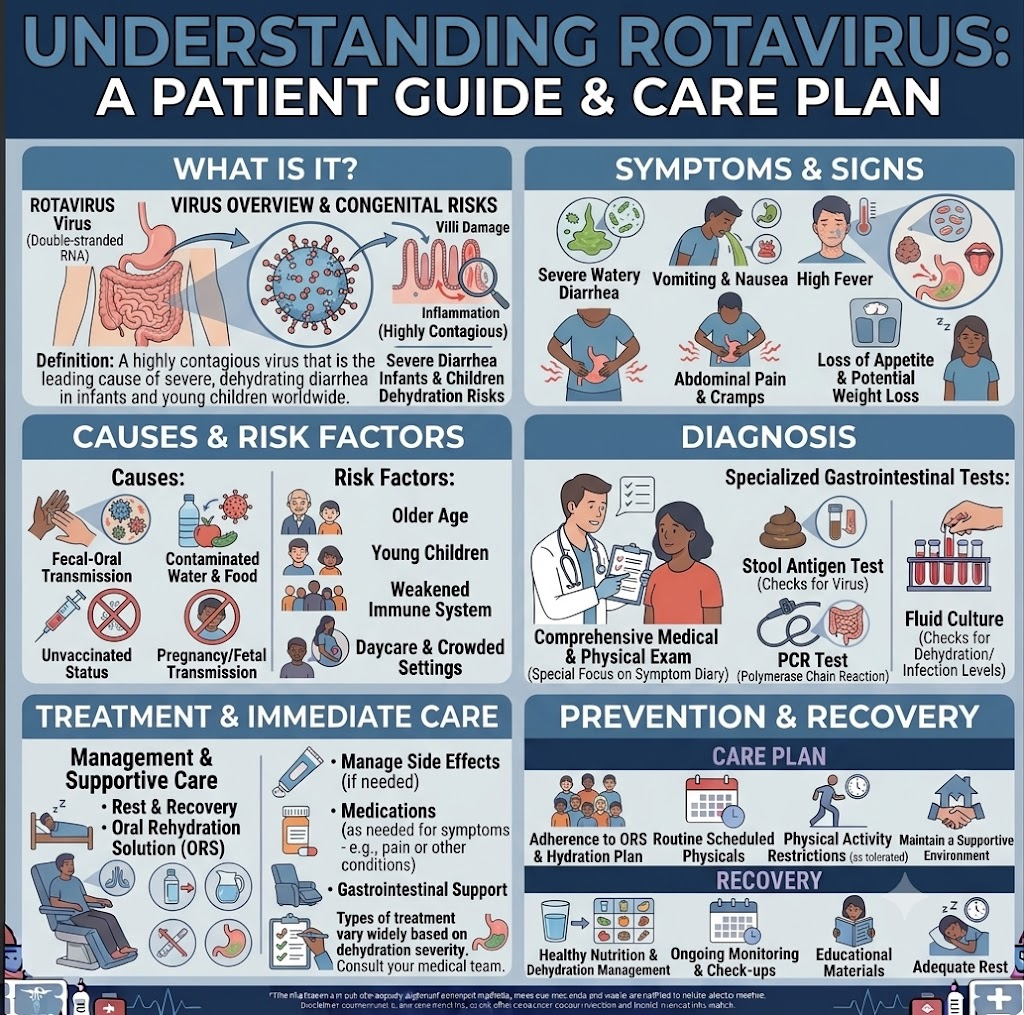
Rotavirus is a highly contagious virus that causes an infection primarily affecting the stomach and intestines. This infection, often called rotavirus gastroenteritis, is a leading cause of severe watery diarrhea, vomiting, fever, and abdominal pain in infants and young children worldwide. While adults can also contract rotavirus, their symptoms are typically milder or nonexistent. The virus spreads easily through the fecal-oral route, meaning it can pass from the stool of an infected person to another person, often via contaminated hands or surfaces. Fortunately, a vaccine is available and highly effective in preventing severe illness.
Understanding the Condition
Understanding Rotavirus: A Common Viral Infection Causing Severe Diarrhea
Understanding the Condition
Rotavirus is a highly contagious virus that causes an infection primarily affecting the stomach and intestines. This infection, often called rotavirus gastroenteritis, is a leading cause of severe watery diarrhea, vomiting, fever, and abdominal pain in infants and young children worldwide. While adults can also contract rotavirus, their symptoms are typically milder or nonexistent. The virus spreads easily through the fecal-oral route, meaning it can pass from the stool of an infected person to another person, often via contaminated hands or surfaces. Fortunately, a vaccine is available and highly effective in preventing severe illness.
Common Symptoms
Common Symptoms
Common Symptoms
Signs of Dehydration in Children: Dehydration is a serious concern with rotavirus. Watch for: decreased urination (no wet diapers for 8 to 12 hours), absence of tears when crying, unusual sleepiness or fussiness, a sunken soft spot (fontanelle) on a baby’s head, sunken eyes, dry mouth and tongue, and extreme thirst.
Signs of Dehydration in Adults: Signs of dehydration in adults include: extreme thirst, infrequent urination, severe weakness or fatigue, lightheadedness, and dizziness.
Consultation Guide
Which Specialist to Meet
For children, you should consult a pediatrician or family doctor. For adults, a general practitioner or family doctor is appropriate. In cases of severe dehydration, a visit to an urgent care clinic or emergency room may be necessary, where emergency medicine physicians can provide immediate care.
Preparations Before Your Visit
Before your visit, make a list of all current symptoms, noting when they started and how severe they are. Include details about recent exposure to sick individuals, any recent travel, and all medications your child (or you) are currently taking, including over-the-counter drugs and supplements. Be prepared to describe your child's (or your) fluid intake and output, such as how many times they have vomited or had diarrhea, and how many wet diapers a child has had. Also, prepare a list of questions you may have for the doctor.
Book a doctor visit near me
Rest: Adequate rest is essential to help the body conserve energy and recover from the infection. Encourage rest as much as possible, especially during the peak of symptoms. (Duration: As needed, typically throughout the duration of active symptoms and until energy levels return to normal.)
Dietary Management: If tolerated, continue breastfeeding or formula feeding infants. For older children and adults, gradually reintroduce a bland, easy-to-digest diet, such as bananas, rice, applesauce, and toast (BRAT diet), soups, and crackers. Avoid fatty, spicy, or sugary foods, which can irritate the digestive system. (Duration: Begin when vomiting subsides and continue until symptoms resolve, typically 3-7 days.)
Medical Care (for severe cases)
Consultation Guide
This is the primary diagnostic test for rotavirus. It involves collecting a small sample of stool (feces) which is then tested in a laboratory for specific proteins (antigens) produced by the rotavirus. This test helps confirm the presence of rot the virus and differentiate it from other causes of gastroenteritis, which can be particularly useful in managing severe cases or during outbreaks.
Diagnostic Procedures
Stool Sample Analysis (Rotavirus Antigen Test)
What to Expect
You will receive a special, clean container from the clinic or laboratory for collecting the stool sample. For adults and older children, you will collect the sample in the container, ensuring it is not mixed with urine or toilet water. For infants and very young children, a special collection bag that adheres around the diaper area can be used, or the sample can be taken directly from a soiled diaper. It is important to label the container correctly and return it to the clinic or lab as instructed. The collection process is typically straightforward and can often be done comfortably at home.
Treatment Options
Home Care and Support
Oral Rehydration Therapy: Drinking plenty of fluids is the most critical treatment for rotavirus infection to prevent or treat dehydration. Oral rehydration solutions (ORS) are specially formulated with a balanced mix of salts and sugars to help the body absorb fluids more effectively. These are highly recommended, especially for infants and young children. Small, frequent sips are often better tolerated than large amounts at once. Plain water, clear broths, and diluted clear juices can also be used. Avoid sugary drinks, undiluted fruit juice, and caffeinated beverages, as they can sometimes worsen diarrhea. (Duration: Continue until diarrhea resolves and signs of dehydration have disappeared, typically 3-7 days, or as advised by a healthcare professional.)
Intravenous (IV) Fluid Rehydration: For severe dehydration, particularly when a person cannot keep down oral fluids or if oral rehydration is insufficient, fluids and electrolytes may need to be administered directly into a vein through an IV line in a hospital setting. This method rapidly replenishes lost fluids and helps stabilize critical electrolyte imbalances. (Duration: Typically a few hours to several days, depending on the severity of dehydration and the patient's response to treatment.)
Prevention & Long-Term Wellbeing
Prevention
Rotavirus Vaccination: The rotavirus vaccine is the most effective method for preventing severe rotavirus infections, especially in infants. It is given orally in a series of doses during the first few months of life, following a recommended childhood vaccination schedule. Vaccination significantly reduces the risk of severe illness, hospitalization, and death from rotavirus-related diarrhea.
Strict Hand Hygiene: Thorough and frequent hand washing with soap and water for at least 20 seconds is crucial, particularly after using the toilet, changing diapers, before preparing food, and before eating. While alcohol-based hand sanitizers can be used when soap and water are unavailable, they may be less effective against rotavirus than proper hand washing with soap and water, especially if hands are visibly soiled.
Environmental Cleaning and Disinfection: Regularly clean and disinfect surfaces that are likely to be contaminated, particularly in homes, daycares, or other shared environments where an infected person is present. This includes frequently touched objects like toys, changing tables, doorknobs, light switches, and bathroom fixtures, using household disinfectants effective against viruses.
Tags & Topics
Notice an error or need an update?
Help us keep medical information accurate. Report incorrect info or suggest an edit.


