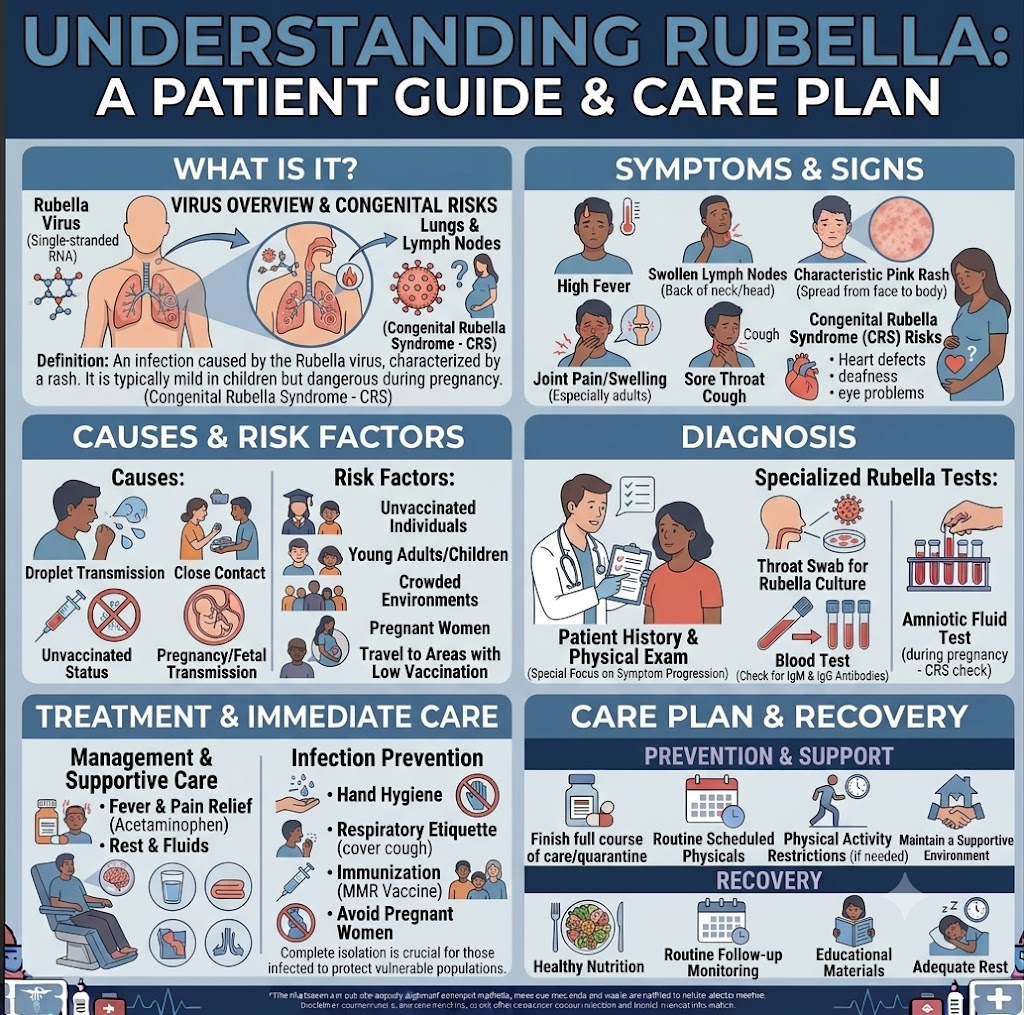
Rubella, commonly known as German measles or three-day measles, is a contagious viral infection characterized by a distinctive rash. While typically causing mild or no symptoms in most individuals, rubella poses significant risks, particularly to unborn babies if a pregnant individual contracts the infection. It's crucial to understand that rubella is distinct from measles, caused by a different virus, and generally less severe and easier to prevent with vaccination. The measles-mumps-rubella (MMR) vaccine offers effective and lifelong protection, making rubella rare in many vaccinated populations. However, where vaccination rates are low, the virus continues to be a concern, especially for pregnant people and their developing fetuses.
Understanding the Condition
Rubella: Understanding German Measles
Understanding the Condition
Rubella, commonly known as German measles or three-day measles, is a contagious viral infection characterized by a distinctive rash. While typically causing mild or no symptoms in most individuals, rubella poses significant risks, particularly to unborn babies if a pregnant individual contracts the infection. It's crucial to understand that rubella is distinct from measles, caused by a different virus, and generally less severe and easier to prevent with vaccination. The measles-mumps-rubella (MMR) vaccine offers effective and lifelong protection, making rubella rare in many vaccinated populations. However, where vaccination rates are low, the virus continues to be a concern, especially for pregnant people and their developing fetuses.
Common Symptoms
Rash: A fine, pink or red rash typically begins on the face, spreading down the body to the belly, arms, and legs. On darker skin tones, the rash may be harder to see or appear subtle. This rash is a hallmark symptom but can be absent in some cases.
Mild Fever: A low-grade fever, usually below 102°F (38.9°C), often accompanies the onset of other symptoms.
Headache: Mild to moderate headaches may occur.
Runny Nose: Clear or slightly cloudy nasal discharge can be present, similar to a common cold.
Inflamed Eyes (Conjunctivitis): The white part of the eyes may appear red or irritated, often accompanied by sensitivity to light.
Enlarged Lymph Nodes: Swelling and tenderness of the lymph nodes, particularly those behind the ears and at the back of the neck, are common. This can be felt as small, firm lumps.
Aching Joints: Joint pain, especially in young adult women, can be a symptom, affecting fingers, wrists, and knees.
Consultation Guide
Which Specialist to Meet
You should consult with a general practitioner (GP) or family doctor. For children, a pediatrician is the appropriate specialist. If you are pregnant or planning pregnancy, an obstetrician/gynecologist should be consulted, particularly if there's a concern about exposure. In complex cases, an infectious disease specialist may be involved.
Preparations Before Your Visit
Before your visit, gather any relevant medical records, especially vaccination history (MMR vaccine dates). Make a list of all your symptoms, noting when they started, how severe they are, and any potential exposure to individuals with rubella. Be prepared to discuss recent travel history. Also, write down any questions you have for the doctor.
Book a doctor visit near me
Rest: Getting plenty of rest helps your body conserve energy to fight the infection. (Duration: Until symptoms subside, typically 1-5 days.)
Hydration: Drinking plenty of fluids like water, juice, or broth helps prevent dehydration, especially if a fever is present. (Duration: Until symptoms subside.)
Consultation Guide
For a throat or nasal swab, a sterile cotton swab will be gently rubbed across the back of your throat or inside your nostril. This might cause a brief tickling sensation or mild discomfort. If a urine sample is needed, you will be asked to provide a clean-catch urine specimen in a sterile container.
Diagnostic Procedures
Rubella Antibody Blood Test (Serology)
This blood test is the most common and definitive method for diagnosing rubella. It measures specific antibodies (proteins produced by the immune system) in your blood. Immunoglobulin M (IgM) antibodies indicate a recent or active infection, while Immunoglobulin G (IgG) antibodies suggest a past infection or successful vaccination, indicating immunity.
What to Expect
A healthcare professional will draw a small sample of blood, usually from a vein in your arm. The area will be cleaned, and a thin needle will be inserted. You might feel a brief pinch or sting. The process typically takes only a few minutes, and a small bandage will be applied afterwards.
Rubella Viral Detection (Swab or Urine Sample)
In some cases, particularly for infants with suspected congenital rubella syndrome or to confirm an active infection, a sample may be taken directly to detect the rubella virus. This can involve a throat swab, nasal swab, or a urine sample to identify the virus's genetic material through molecular tests like PCR (Polymerase Chain Reaction) or to culture the virus in a laboratory.
What to Expect
Vaccination Before Pregnancy: It is critical for individuals planning pregnancy to confirm their immunity to rubella through vaccination records or a blood test. If not immune, vaccination should occur at least one month before attempting to conceive to protect the unborn baby from congenital rubella syndrome.
Avoid Contact with Infected Individuals: If you are not vaccinated or are pregnant, avoid close contact with anyone who has rubella or has recently been exposed to the virus to minimize your risk of infection.
Good Hand Hygiene: Regular and thorough handwashing with soap and water can help reduce the spread of many viral infections, including rubella.
Long-Term Monitoring and Support (for Congenital Rubella Syndrome)
Early Intervention Programs: Engaging in early intervention services such as physical therapy, occupational therapy, speech therapy, and educational support is vital to address developmental delays and maximize the child's potential.
Hearing and Vision Screenings: Regular comprehensive hearing and vision assessments are crucial to detect and manage any changes or progression of sensory impairments often associated with CRS.
Treatment Options
Supportive Care and Home Remedies (for typical rubella infection)
Fever and Pain Management: Over-the-counter medications can help reduce fever and relieve body aches or joint pain. Consult your doctor or pharmacist for appropriate options, especially for children or pregnant individuals. (Duration: As needed, for 1-5 days.)
Cool Compresses for Rash: Applying cool, damp cloths to the skin can help soothe any discomfort from the rash. (Duration: As needed, while rash is present.)
Medical Management (for congenital rubella syndrome in infants)
Monitoring and Specialist Care: Infants born with congenital rubella syndrome (CRS) require comprehensive monitoring and management by a team of specialists, including cardiologists, ophthalmologists, audiologists, and developmental pediatricians, to address specific birth defects and developmental challenges. (Duration: Long-term, often lifelong.)
Cataract Surgery: If cataracts are present, surgical removal can help improve vision. (Duration: Procedure is typically a one-time event, followed by recovery and vision rehabilitation.)
Hearing Aids and Cochlear Implants: For hearing loss, hearing aids can amplify sound, or cochlear implants may be considered for severe cases to provide a sense of sound. (Duration: Long-term use and maintenance.)
Developmental and Physical Therapies: Early intervention programs, including physical therapy, occupational therapy, and speech therapy, are crucial to support the child's development and manage any delays. (Duration: Ongoing as needed for development.)
Prevention & Long-Term Wellbeing
Heart Defect Correction: Surgical procedures may be necessary to correct congenital heart defects, such as patent ductus arteriosus or pulmonary artery stenosis, which are common in CRS. (Duration: Procedure is typically a one-time event, followed by recovery and monitoring.)
Prevention
MMR Vaccination: The measles-mumps-rubella (MMR) vaccine is the most effective way to prevent rubella. It is typically administered in two doses: the first between 12 and 15 months of age, and the second between 4 and 6 years of age. Adults, especially women of childbearing age, should ensure they are vaccinated before pregnancy if they are not already immune.
Tags & Topics
Notice an error or need an update?
Help us keep medical information accurate. Report incorrect info or suggest an edit.


