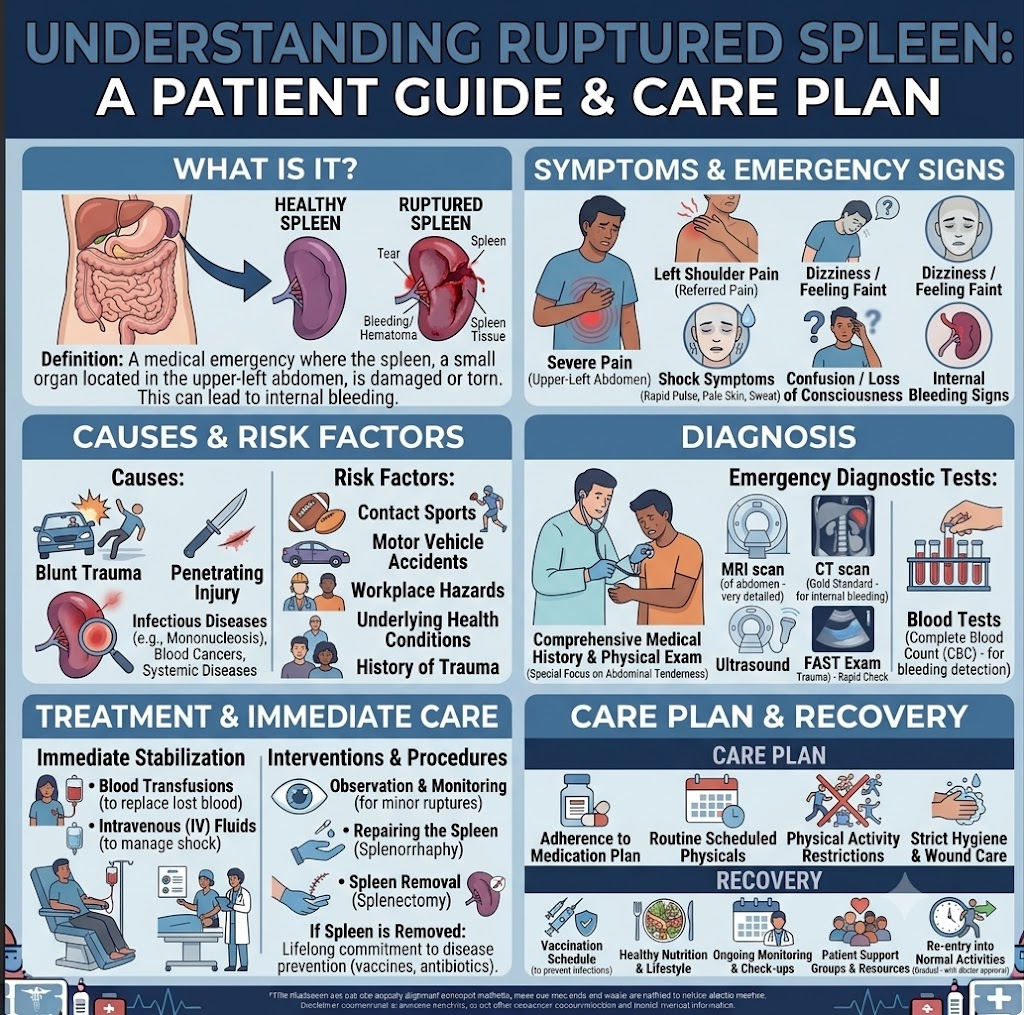
A ruptured spleen is a serious medical emergency where the surface of your spleen, an organ located just under your left rib cage, tears. The spleen plays a vital role in your body's defense system by fighting infections and filtering old or damaged blood cells from your bloodstream.The most common cause of a ruptured spleen is a forceful injury to the abdomen, such as during a sports accident, a physical fight, or a car crash. If your spleen is already enlarged due to conditions like mononucleosis, liver disease, or blood cancers, even a less severe impact could lead to a rupture. Without immediate medical attention, the internal bleeding from a ruptured spleen can be life-threatening. Treatment can range from hospital observation to emergency surgery.
Understanding the Condition
Ruptured Spleen: Understanding a Medical Emergency
Understanding the Condition
Common Symptoms
Upper Left Abdominal Pain: Discomfort or sharp pain in the upper left part of your belly.
Tenderness to Touch: Pain when you gently press on your upper left abdomen.
Left Shoulder Pain: Sometimes, pain from a ruptured spleen is felt in the left shoulder (referred pain).
Confusion, Lightheadedness, or Dizziness: These can be signs of significant blood loss, indicating a serious condition.
Consultation Guide
Which Specialist to Meet
Consultation Guide
A ruptured spleen is a serious medical emergency where the surface of your spleen, an organ located just under your left rib cage, tears. The spleen plays a vital role in your body's defense system by fighting infections and filtering old or damaged blood cells from your bloodstream.The most common cause of a ruptured spleen is a forceful injury to the abdomen, such as during a sports accident, a physical fight, or a car crash. If your spleen is already enlarged due to conditions like mononucleosis, liver disease, or blood cancers, even a less severe impact could lead to a rupture. Without immediate medical attention, the internal bleeding from a ruptured spleen can be life-threatening. Treatment can range from hospital observation to emergency surgery.
You will initially be evaluated by an emergency physician. Depending on the severity, you may need to consult with a general surgeon, especially if surgery is required. If an underlying condition caused your spleen to enlarge, a hematologist (blood specialist) or an infectious disease specialist might also be involved in your long-term care.
Preparations Before Your Visit
Treat Underlying Conditions: Promptly treat any conditions that cause your spleen to enlarge (e.g., mononucleosis, liver disease, blood disorders). Managing these conditions can reduce your risk of a spontaneous spleen rupture.
Wear Protective Gear: When participating in sports or activities where there's a risk of abdominal impact, use appropriate protective gear.
Long-Term Monitoring and Care
Post-Splenectomy Vaccinations: If your spleen has been removed, you are at a higher risk for certain serious infections. Ensure you receive all recommended vaccinations (e.g., for pneumonia, meningitis, and Haemophilus influenzae type b) and stay up-to-date with booster shots. Your doctor will provide a specific vaccination schedule.
Infection Awareness: After spleen removal, be vigilant for signs of infection, such as fever, chills, or extreme tiredness, and seek medical attention promptly if they occur. Inform any healthcare provider that you do not have a spleen.
Regular Follow-Up: Maintain regular follow-up appointments with your doctor to monitor your overall health and address any concerns, especially if your spleen was repaired rather than removed.
Diagnostic Procedures
These tests involve taking a small sample of your blood to check for signs of internal bleeding, such as a drop in red blood cell count (hemoglobin and hematocrit levels). They can also assess your overall blood health and clotting ability.
What to Expect
A healthcare professional will insert a small needle, usually into a vein in your arm, to collect a blood sample. You might feel a brief sting or pinch. The process is quick, typically lasting only a few minutes.
CT Scan (Computerized Tomography Scan)
A CT scan uses specialized X-ray equipment and computer processing to create detailed cross-sectional images, or "slices," of your internal organs, bones, soft tissues, and blood vessels. This provides a much clearer picture than standard X-rays, allowing doctors to precisely locate the injury to the spleen and determine the extent of internal bleeding.
What to Expect
You will lie on a narrow table that slides into a large, donut-shaped machine. You may receive an oral contrast solution to drink or an intravenous (IV) contrast dye injected into a vein, which helps to highlight certain areas on the images. It's crucial to remain very still during the scan, and you might be asked to hold your breath for short periods. The scan itself is painless, though the machine can be noisy. The entire process usually takes between 15 to 60 minutes.
Rest and Close Monitoring: For minor ruptures without significant bleeding, treatment may involve hospital admission for close observation. This includes strict bed rest, frequent monitoring of vital signs (heart rate, blood pressure), and regular blood tests to check for ongoing bleeding. (Duration: Typically several days, sometimes longer, until the spleen stops bleeding and begins to heal.)
Blood Transfusion: If substantial blood loss has occurred, a blood transfusion may be necessary to replace lost blood and stabilize your condition. Donated blood is given through an intravenous (IV) line. (Duration: Each unit of blood typically takes 2-4 hours to infuse. The total duration depends on how many units are needed.)
Avoid High-Risk Activities with an Enlarged Spleen: If you have been diagnosed with an enlarged spleen due to an infection or other condition, it's crucial to avoid contact sports, heavy lifting, and any activities that could lead to a blow to your abdomen. Ask your doctor for specific recommendations on what activities to avoid and for how long.
Treatment Options
If possible before your visit, avoid eating or drinking anything. Be prepared to provide a detailed account of your injury, your medical history, and any medications you are currently taking. This information helps doctors make quick and accurate decisions.
Book a doctor visit near me
Hospital Observation and Supportive Care
Surgical Repair or Removal (Splenectomy): If the bleeding is severe or life-threatening, emergency surgery is usually required. In some cases, if the tear is small, the surgeon might be able to repair the spleen, potentially using stitches or other techniques to stop the bleeding. More commonly, especially with severe ruptures, the entire spleen must be removed. This can be done using a minimally invasive laparoscopic technique (small incisions, camera, and tools) or traditional open surgery (a larger incision). (Duration: Recovery after laparoscopic surgery is typically 1-2 weeks for returning to light activities, with full recovery taking longer. Open surgery requires a longer recovery period, usually several weeks to months.)
Medications
Pain Management: Medications will be given to manage any pain or discomfort during your recovery. (Duration: As needed, typically for a few days to a week post-injury or surgery.)
Antibiotics: After a spleen removal, specific antibiotics may be prescribed to reduce the risk of certain bacterial infections, as the spleen plays a role in immunity. (Duration: As prescribed by your doctor, often a short course after surgery.)
Vaccinations: Individuals who have had their spleen removed will require specific vaccinations to protect against certain bacterial infections (e.g., pneumococcal, meningococcal, Hib vaccines) that the body can no longer fight as effectively without a spleen. (Duration: Initial series of vaccinations, followed by booster shots as recommended by your healthcare provider, often every 5-10 years depending on the vaccine.)
Prevention & Long-Term Wellbeing
Prevention
Tags & Topics
Notice an error or need an update?
Help us keep medical information accurate. Report incorrect info or suggest an edit.


