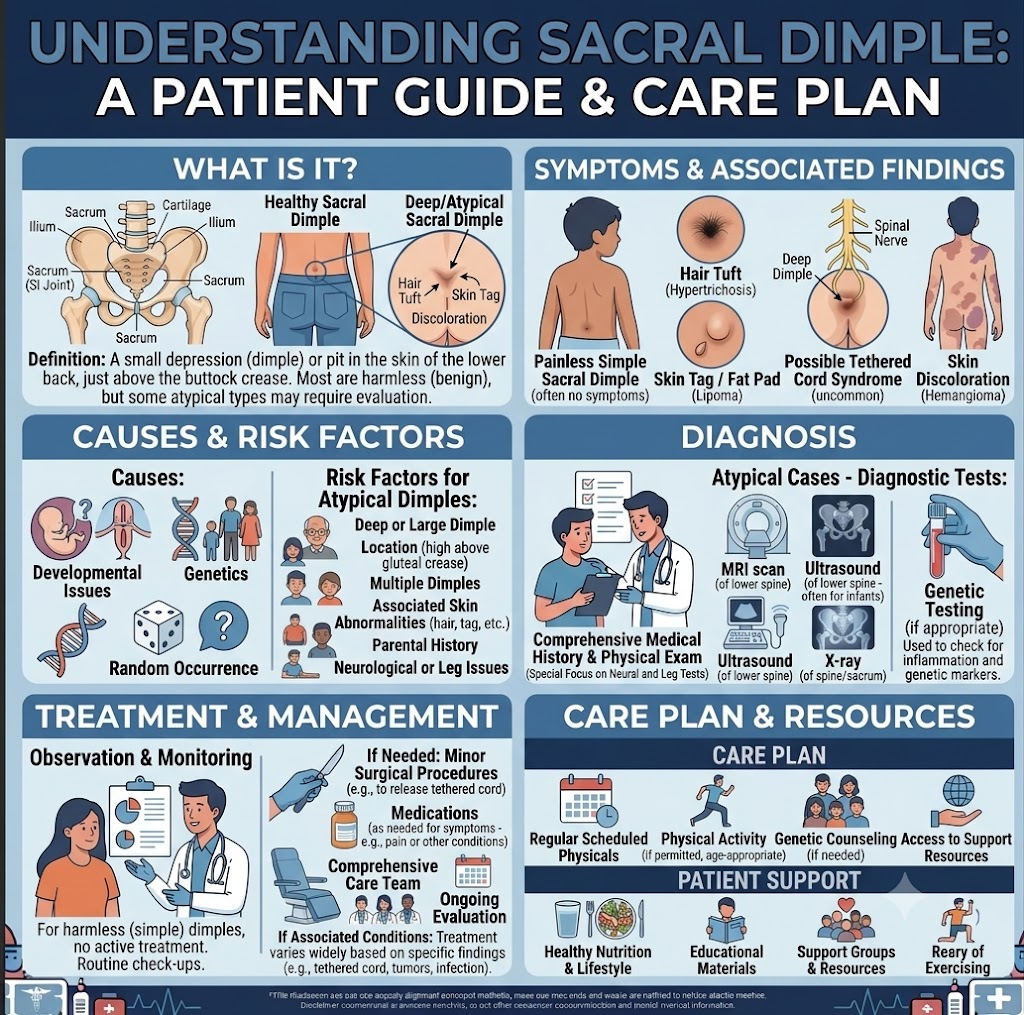
A sacral dimple is a small indentation, pit, or depression in the skin on the lower back, located just above the crease between the buttocks. Present at birth, it is usually a harmless, normal variation in a baby's development that requires no treatment. However, in rare cases, a deeper or larger dimple can be a sign of an underlying developmental issue with the spine or spinal cord, especially if it is accompanied by other skin abnormalities nearby.
Understanding the Condition
Understanding Sacral Dimples in Newborns
Understanding the Condition
Common Symptoms
Skin Indentation: A small, shallow pit or depression located on the lower back, just above the crease of the buttocks.
Abnormal Skin Markers: The presence of a tuft of hair, a skin tag, a small lump, or an area of discolored skin near the dimple. These signs may point to an underlying spinal condition.
Consultation Guide
Which Specialist to Meet
Consultation Guide
An imaging test that uses high-frequency sound waves to create detailed pictures of the tissues and spinal cord inside your baby's lower back. This is the preferred first test for babies under 3 to 4 months of age because their spinal bones have not yet fully hardened, allowing sound waves to pass through easily.
Diagnostic Procedures
What to Expect
Your baby will be placed gently on their stomach. A trained technician will apply a warm, water-based gel to the lower back. They will then glide a small, hand-held device called a transducer over the skin. The procedure is entirely painless, safe, carries no radiation risks, and typically takes 15 to 30 minutes.
Spinal MRI (Magnetic Resonance Imaging)
An advanced imaging test that uses a strong magnetic field and radio waves to produce highly detailed, 3D images of the spinal cord and surrounding nerves. This test is typically recommended if the baby is older than 4 months, or if an initial ultrasound shows suspicious abnormalities.
What to Expect
The baby must remain completely still during the scan. For very young infants, this can often be achieved using a 'feed and sleep' technique. For older babies, mild sedation may be required to keep them still. The baby will lie on a padded table that slides into a large, tunnel-like machine. The scan is noisy but completely painless, lasting between 30 to 60 minutes.
Surgical Untethering: If diagnostic imaging reveals tethered cord syndrome (where the spinal cord is abnormally attached to surrounding tissues, limiting its movement), a pediatric neurosurgeon will perform a surgical procedure to gently release the spinal cord so it can hang freely within the spinal canal. (Duration: The surgery itself takes approximately 2 to 4 hours, followed by a hospital stay of 3 to 5 days, and full recovery over several weeks.)
Spina Bifida Repair: In rare cases where a severe form of spina bifida is diagnosed, surgery is performed to close the opening in the spine and protect the exposed spinal cord from damage or infection. (Duration: Usually performed within the first few days of life, followed by several weeks of post-operative healing and long-term developmental follow-ups.)
Treatment Options
A sacral dimple is a small indentation, pit, or depression in the skin on the lower back, located just above the crease between the buttocks. Present at birth, it is usually a harmless, normal variation in a baby's development that requires no treatment. However, in rare cases, a deeper or larger dimple can be a sign of an underlying developmental issue with the spine or spinal cord, especially if it is accompanied by other skin abnormalities nearby.
Your primary point of contact is your pediatrician. If they detect any concerning signs during a physical exam, they may refer you to a pediatric neurosurgeon (a specialist in children's brain and spinal cord surgery) or a pediatric urologist (if bladder or bowel control issues are present).
Preparations Before Your Visit
Before the appointment, dress your baby in loose, comfortable clothing that is easy to remove. Write down any questions you have and be prepared to discuss if you have noticed any unusual movements in your baby's legs, persistent weakness, or issues with bowel and bladder control.
Book a doctor visit near me
Conservative Management
Observation and Monitoring: For simple, shallow sacral dimples with no other skin markers or abnormal imaging results, no medical intervention is needed. The pediatrician will simply examine the area during routine well-child visits. (Duration: Ongoing throughout infancy and early childhood.)
Surgical Procedures
Prevention & Long-Term Wellbeing
Long-Term Monitoring and Prevention
Daily Skin Care and Hygiene: Clean the dimple area carefully during diaper changes and baths. Keep the area clean and dry to prevent moisture buildup, which can lead to skin irritation or localized infections.
Developmental Milestone Tracking: Monitor your child's physical development closely. Watch for normal progression in milestones such as rolling over, sitting, crawling, standing, walking, and eventual toilet training.
Watch for Neurological Warning Signs: Seek immediate medical advice if your child begins to show leg weakness, difficulty or delay in walking, numbness, or signs of bladder and bowel incontinence as they grow.
Tags & Topics
Notice an error or need an update?
Help us keep medical information accurate. Report incorrect info or suggest an edit.


