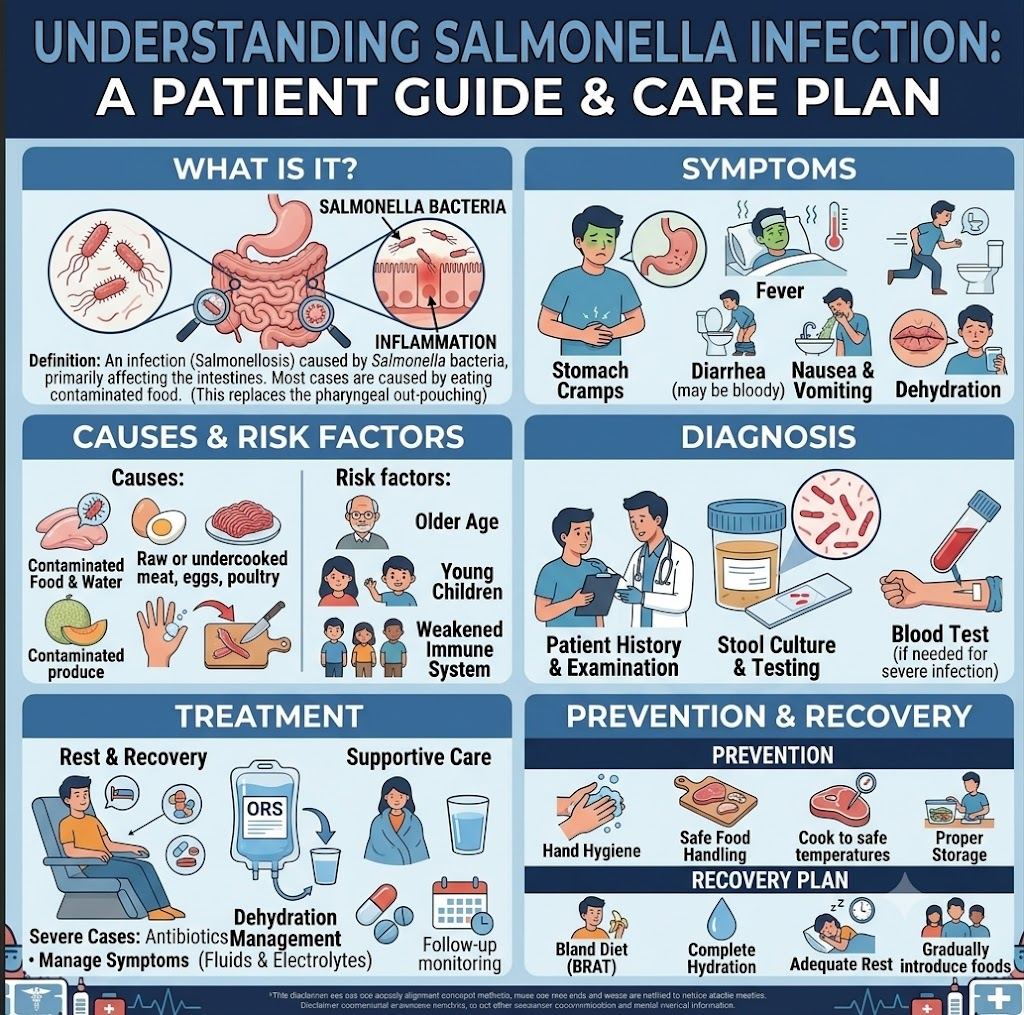
Salmonella infection, also known as salmonellosis, is a common illness caused by bacteria that primarily affects the digestive system. These bacteria typically live in the intestines of animals and humans and are passed out through stool. People most often become infected by consuming contaminated food or water. While some individuals may not show any signs of illness, most develop symptoms like diarrhea, fever, and stomach cramps within 8 to 72 hours after exposure. Healthy individuals usually recover within a few days to a week without specific medical treatment. However, severe cases can lead to significant fluid loss (dehydration) or, rarely, the infection spreading beyond the intestines, which can be life-threatening. The risk of infection is higher when traveling to areas with less reliable sanitation and clean water sources.
Understanding the Condition
Salmonella Infection: Understanding Symptoms, Treatment, and Prevention
Understanding the Condition
Salmonella infection, also known as salmonellosis, is a common illness caused by bacteria that primarily affects the digestive system. These bacteria typically live in the intestines of animals and humans and are passed out through stool. People most often become infected by consuming contaminated food or water. While some individuals may not show any signs of illness, most develop symptoms like diarrhea, fever, and stomach cramps within 8 to 72 hours after exposure. Healthy individuals usually recover within a few days to a week without specific medical treatment. However, severe cases can lead to significant fluid loss (dehydration) or, rarely, the infection spreading beyond the intestines, which can be life-threatening. The risk of infection is higher when traveling to areas with less reliable sanitation and clean water sources.
Common Symptoms
Diarrhea: Often watery, sometimes severe, and can last for several days.
Fever: Mild to high body temperature, often accompanied by chills.
Stomach Cramps: Abdominal pain, discomfort, and cramping in the belly area.
Nausea and Vomiting: Feeling sick to your stomach and throwing up.
Headache: A general discomfort or pain in the head, common with many infections.
No Symptoms: Some people can carry the Salmonella bacteria without experiencing any noticeable illness.
Consultation Guide
Which Specialist to Meet
For initial symptoms, consult your family doctor or a general practitioner. If symptoms are severe, persistent, or if you belong to a high-risk group (infants, young children, older adults, or those with weakened immune systems), your doctor may refer you to an infectious disease specialist or a gastroenterologist (a doctor specializing in digestive health).
Preparations Before Your Visit
Before your visit, make sure to:* Write down all your symptoms, including when they started, their severity, and how long they've lasted.* List any foods or drinks you consumed recently, especially in the days leading up to your symptoms.* Inform your doctor about any recent travel, particularly to countries with less reliable sanitation.* Mention any existing medical conditions or medications you are currently taking.* Be prepared to describe your normal bowel habits and how they've changed.
Book a doctor visit near me
Fluid and Electrolyte Replacement: The most crucial treatment for salmonella infection is to stay well-hydrated. Drink plenty of clear fluids like water, broths, and oral rehydration solutions (available over-the-counter) to replace fluids and salts lost through diarrhea and vomiting. Avoid sugary drinks and caffeine, which can worsen dehydration. (Duration: Continue until symptoms resolve, typically a few days to a week.)
Rest: Allow your body to rest to help recover from the infection. Avoid strenuous activities to conserve energy for healing. (Duration: As needed, usually a few days.)
Monitor for Persistent Symptoms: While most people recover fully, it may take several months for normal bowel habits to return. Continue to monitor your digestive health and consult your doctor if symptoms like diarrhea or stomach upset persist or worsen.
Maintain Hydration: Ensure adequate fluid intake even after symptoms subside to support overall digestive health and recovery, especially if you had significant fluid loss.
Diagnostic Procedures
This is the most common test used to confirm a Salmonella infection. A small sample of your stool is collected and sent to a laboratory to check for the presence of Salmonella bacteria.
What to Expect
You will be given a sterile container and instructions on how to collect a stool sample at home. It's important to collect the sample cleanly and safely to avoid contamination. The sample is then returned to the clinic or lab for analysis. Results typically take a few days, as the bacteria need time to grow in the lab to be identified.
Blood tests may be used to check for general signs of infection, assess your hydration levels, and determine if the Salmonella bacteria have spread beyond the intestines into your bloodstream, which is a more serious condition.
What to Expect
A healthcare professional will draw a small amount of blood, usually from a vein in your arm, using a needle. You might feel a brief sting or pinch. The blood sample is then sent to a lab for analysis. Results may be available within a day or two, depending on the specific tests ordered.
Treatment Options
Medications
Anti-diarrheal Medications: While over-the-counter anti-diarrheal medications can reduce cramping, they may worsen a salmonella infection by slowing the bacteria's expulsion from the body. Their use should be avoided unless specifically advised by a doctor, particularly in severe cases. (Duration: Use sparingly, only if advised by a doctor, for a very short duration.)
Intravenous (IV) Fluid Administration: In cases of severe dehydration where oral fluids are insufficient, fluids may need to be administered directly into a vein through an IV line to rapidly restore hydration and electrolyte balance. (Duration: Usually a few hours to a day, depending on the severity of dehydration.)
Prevention & Long-Term Wellbeing
Antibiotics: Antibiotics are generally not recommended for mild salmonella infections as they can sometimes prolong the shedding of bacteria in stool and may not speed up recovery. However, they may be prescribed for severe cases, individuals with weakened immune systems, infants, older adults, or if the infection has spread to the bloodstream. The specific type of antibiotic will be chosen based on the bacterial strain and its susceptibility. (Duration: Typically 2 to 14 days, as directed by a healthcare provider.)
Prevention
Practice Good Hand Hygiene: Wash your hands thoroughly with soap and water for at least 20 seconds, especially after using the restroom, changing diapers, and before and after handling food.
Cook Food Thoroughly: Ensure that meat, poultry, and eggs are cooked to their safe internal temperatures. Use a food thermometer. Avoid consuming raw or undercooked eggs, meat, or poultry.
Avoid Cross-Contamination: Keep raw meat, poultry, and seafood separate from other foods. Use separate cutting boards, plates, and utensils for raw and cooked foods. Wash surfaces and utensils thoroughly after contact with raw foods.
Consume Pasteurized Dairy and Juices: Only drink pasteurized milk and juices. Unpasteurized products can harbor harmful bacteria.
Be Cautious with Unwashed Produce: Wash fruits and vegetables thoroughly, especially if they will be eaten raw, to remove potential surface contamination.
Travel Safely: When traveling to areas with uncertain food and water safety, 'boil it, cook it, peel it, or forget it.' Avoid tap water, ice cubes, and raw or undercooked foods.
Avoid Contact with Reptiles and Amphibians: These animals can carry Salmonella bacteria without showing signs of illness. Always wash hands thoroughly after touching them or their habitats.
Long-Term Wellbeing
Support Gut Health: After an infection, a balanced diet rich in fiber and potentially probiotics (if recommended by a healthcare provider) can help restore healthy gut flora and promote digestive recovery.
Tags & Topics
Notice an error or need an update?
Help us keep medical information accurate. Report incorrect info or suggest an edit.


