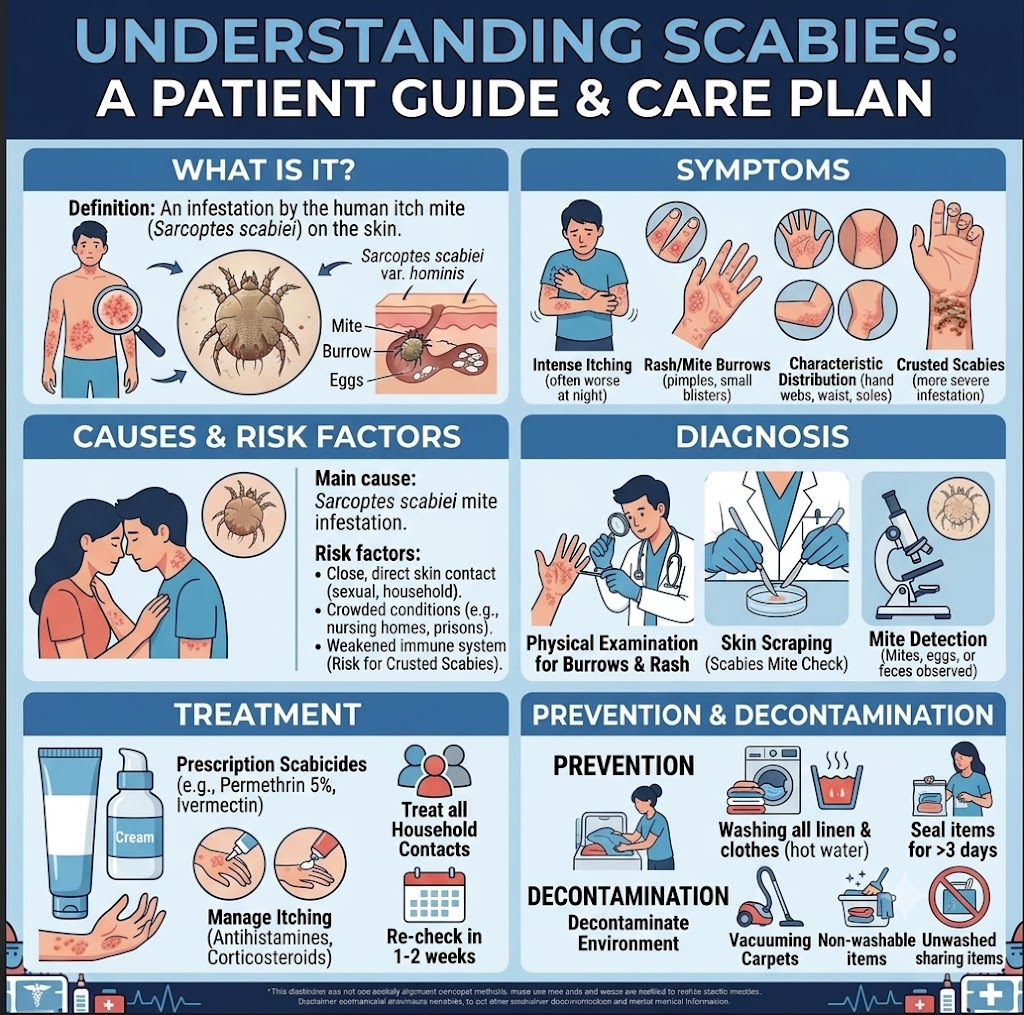
Scabies is an intensely itchy skin condition caused by a tiny mite that burrows into the outer layer of human skin to live and lay eggs. Highly contagious, it spreads through close physical contact. Symptoms include severe itching, especially at night, and a rash resembling small pimples or blisters. Effective treatment is available, but all close contacts must also be treated to prevent re-infestation.
Understanding the Condition
Scabies: Understanding and Managing a Common Skin Mite Infestation
Understanding the Condition
Scabies is an intensely itchy skin condition caused by a tiny mite that burrows into the outer layer of human skin to live and lay eggs. Highly contagious, it spreads through close physical contact. Symptoms include severe itching, especially at night, and a rash resembling small pimples or blisters. Effective treatment is available, but all close contacts must also be treated to prevent re-infestation.
Common Symptoms
Intense Itching: The main symptom, often severe and worse at night, disrupting sleep.
Rash: Small red bumps, blisters, or sometimes hive-like lesions, often appearing in lines.
Sores: Result from scratching, which can lead to bacterial skin infections.
Tiny Burrows: Fine, irregular, grayish-white or skin-colored lines, a few millimeters long, indicating mite tunnels.
Common Locations: Webbing between fingers, wrists, elbows, armpits, nipples, waist, buttocks, and male genitals. In infants, it can affect the head, face, neck, palms, and soles.
Consultation Guide
Which Specialist to Meet
Before your visit, list all symptoms, when they began, and if any close contacts have similar issues. Note recent travel or new skin products.
Book a doctor visit near me
Inform Contacts: Alert all close contacts (household members, sexual partners) so they can be examined and treated, even if asymptomatic.
Monitor Symptoms: Itching can persist for weeks. However, if new burrows or rash appear, or if itching significantly worsens after a month, consult your doctor for potential re-infestation.
Avoid Harsh Irritants: Do not use harsh soaps or scrub vigorously on sensitive skin, as this can worsen irritation.
Address Emotional Impact: Seek support if distress or anxiety arises due to persistent itching or the contagious nature of the condition.
Diagnostic Procedures
Start with your primary care doctor. A dermatologist (skin specialist) may be consulted if diagnosis is unclear or treatment is ineffective.
Preparations Before Your Visit
The doctor visually inspects your skin for characteristic rashes, burrows, and scratch marks, often using a magnifying glass.
What to Expect
The doctor will carefully look at your skin, especially common affected areas. This is a quick, non-invasive visual check.
Ink is applied to a suspected burrow, then wiped off. Ink remaining in the tunnel makes the burrow more visible as a dark line.
What to Expect
A small amount of ink will be applied to a suspicious skin lesion, then wiped away. If a burrow is present, a thin, dark line will appear. It's a quick and painless test.
A definitive test where a small skin sample from a suspicious area is gently scraped and examined under a microscope for mites, eggs, or fecal matter.
What to Expect
After applying mineral oil, the doctor will gently scrape the surface layer of a suspected area with a sterile scalpel blade. You might feel a slight scratching sensation. The sample is then viewed under a microscope.
Rarely, a small piece of skin is surgically removed and sent to a lab for microscopic examination, typically when other tests are inconclusive.
What to Expect
The skin area will be numbed with a local anesthetic. A small instrument will remove a tiny skin disc. You might feel a brief sting from the injection and some pressure. The site is then bandaged.
Treatment Options
Medications
Topical Mite-Killing Creams/Lotions: Applied to the entire body from the neck down, often for 8-14 hours before washing off. For infants/elderly, may include scalp/face. (Duration: Typically one application, often repeated after 7-14 days. Itching can persist for weeks.)
Oral Mite-Killing Medication: Prescribed for widespread scabies, treatment failures, or those unable to use topical treatments. (Duration: Usually a single dose, repeated after 7-14 days.)
Anti-Itch Creams / Oral Antihistamines / Steroid Creams: Used to manage severe itching and inflammation. (Duration: As needed for several weeks post-mite treatment.)
Treatment for Secondary Infections
Antibiotics: Prescribed if scratching leads to bacterial skin infections. (Duration: Typically 7-10 days, as prescribed.)
Home Remedies/Supportive Care
Cool Compresses, Oatmeal Baths, Trimmed Nails: Soothe irritated skin and reduce itching. Short nails prevent damage from scratching. (Duration: As needed for comfort.)
Moisturize: Use a gentle, unscented moisturizer to soothe dry or irritated skin post-treatment.
Prevention & Long-Term Wellbeing
Prevention of Spread
Hot Wash All Linens: Wash all clothing, bedding, towels, and pillowcases used by infected individuals (and household contacts) in hot water (at least 120°F or 50°C) and dry on high heat.
Bag Un-washable Items: Seal items that can't be washed (e.g., stuffed animals) in a plastic bag for at least 72 hours (3 days), as mites cannot survive long off a host.
Vacuum: Thoroughly vacuum carpets, rugs, and upholstered furniture; dispose of the vacuum bag immediately afterward.
Tags & Topics
Notice an error or need an update?
Help us keep medical information accurate. Report incorrect info or suggest an edit.


