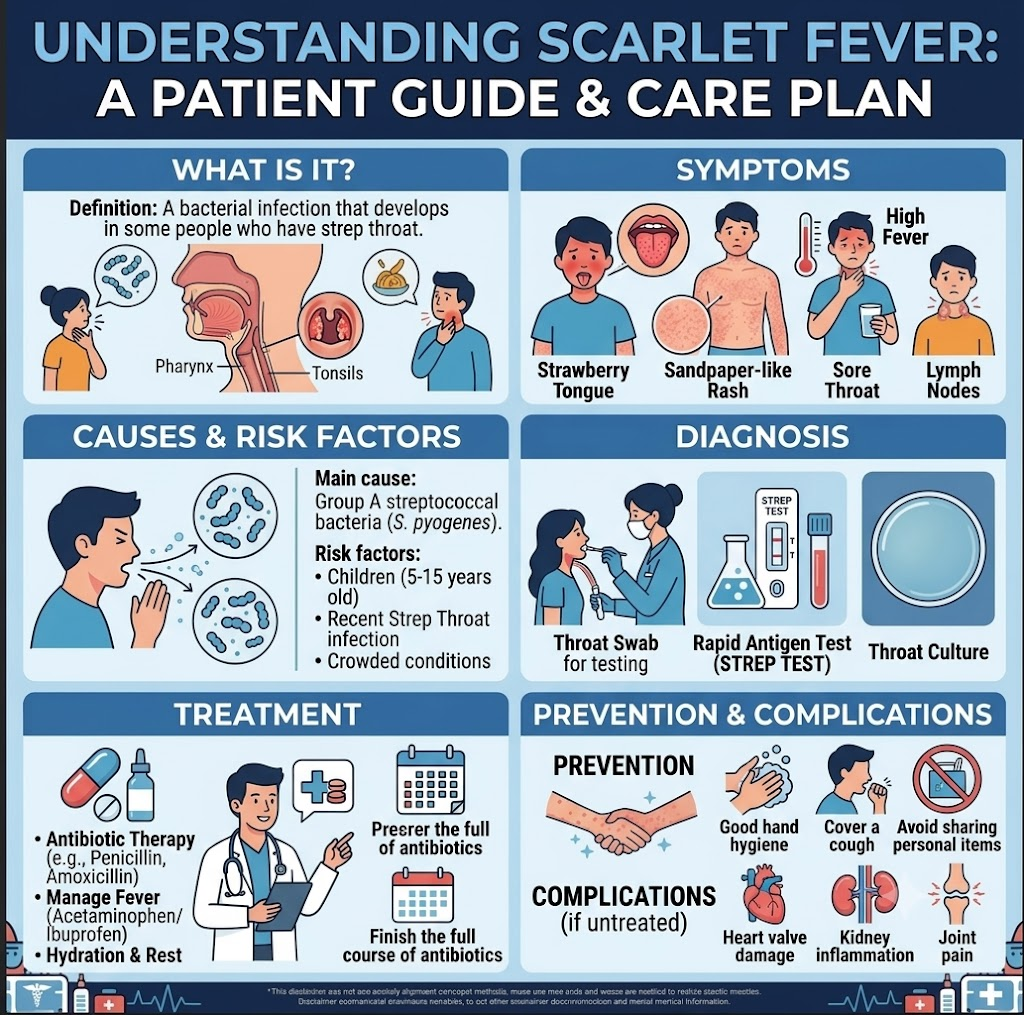
Scarlet fever, also known as scarlatina, is a bacterial infection that can develop in some individuals who have strep throat. It is characterized by a distinctive bright red rash that covers much of the body, along with a sore throat and often a high fever. While it was once considered a serious illness, especially among children aged 5 to 15, modern antibiotic treatments have made it much less threatening. However, if left untreated, scarlet fever can lead to more severe health problems affecting vital organs like the heart and kidneys.
Understanding the Condition
Common Symptoms
Characteristic Rash: A bright red rash that feels like sandpaper, often starting on the face or neck and spreading across the chest, trunk, arms, and legs. This rash may appear flushed, with a paler area around the mouth.
Red Skin Folds: Noticeable red lines appearing in the skin folds, particularly around the neck, armpits, and groin.
Strawberry Tongue: The tongue may appear red and bumpy, often initially covered with a white coating that later peels, leaving a very red, 'strawberry-like' appearance.
Sore Throat and Difficulty Swallowing: A severe sore throat accompanied by pain or discomfort when swallowing.
High Fever: A body temperature of 101 F (38.3 C) or higher.
Swollen Glands: Lymph nodes in the neck may become swollen and tender to the touch.
Other Symptoms: Can include nausea, vomiting, headache, and body aches. The rash and redness typically last about a week, after which the affected skin often begins to peel.
Consultation Guide
Which Specialist to Meet
A primary care physician or pediatrician. For severe or emergency symptoms, immediate evaluation at an urgent care center or emergency room is necessary.
Preparations Before Your Visit
Before your visit, list all current symptoms, including when they started and their severity. Note any recent exposure to individuals with strep throat. Be prepared to discuss your medical history, any allergies, and current medications. This information helps the doctor make an accurate diagnosis and treatment plan.
Book a doctor visit near me
A throat culture is a more definitive test to confirm the presence of the bacteria, especially if the rapid strep test is negative but symptoms are highly suggestive.
Antibiotics: Prescribed to kill the bacteria causing scarlet fever, alleviate symptoms, prevent the spread of infection to others, and, most importantly, prevent serious complications. It is crucial to take the full course of medication even if symptoms improve. (Duration: Typically 10 days)
Symptom Relief and Home Care
Pain and Fever Reducers: Over-the-counter medications can help reduce fever and relieve the discomfort of a sore throat and body aches. (Duration: As needed, while symptoms persist)
Soothing Throat Remedies: Gargling with warm salt water (for older children and adults), drinking warm liquids (such as tea with honey), eating cool foods (like popsicles), and using a cool-mist humidifier can help ease throat pain. (Duration: As needed, while symptoms persist)
Complete Full Course of Antibiotics: Always ensure the full course of prescribed antibiotics is completed, even if symptoms disappear. Stopping treatment early can lead to the infection returning, or more serious complications such as rheumatic fever or kidney disease.
Monitor for Complications: Be vigilant for any new or worsening symptoms after treatment, such as joint pain, swelling, unexplained rashes, changes in urine output, or persistent fever. These could be signs of rare but serious complications and warrant immediate medical evaluation.
Consultation Guide
A healthcare provider will use a sterile swab to gently rub the back of the throat and tonsils to collect a sample. This process may cause a brief gag reflex or minor discomfort. The swab is then tested on-site, with results typically available within minutes.
Diagnostic Procedures
Rapid Strep Test (RST)
This test quickly checks for the presence of the bacteria responsible for strep throat and scarlet fever.
What to Expect
What to Expect
Similar to the rapid strep test, a throat swab is taken. This sample is then sent to a laboratory where it is placed in a special dish to allow any bacteria to grow. Results usually take 24 to 48 hours to confirm, providing a more sensitive detection of the bacteria.
Treatment Options
Scarlet fever, also known as scarlatina, is a bacterial infection that can develop in some individuals who have strep throat. It is characterized by a distinctive bright red rash that covers much of the body, along with a sore throat and often a high fever. While it was once considered a serious illness, especially among children aged 5 to 15, modern antibiotic treatments have made it much less threatening. However, if left untreated, scarlet fever can lead to more severe health problems affecting vital organs like the heart and kidneys.
Medications
Prevention & Long-Term Wellbeing
Scarlet Fever: Understanding the Rash, Sore Throat, and Recovery
- Understanding the Condition
Hydration and Rest: Drinking plenty of fluids helps prevent dehydration and keeps the throat moist. Adequate rest is essential for recovery. (Duration: Throughout the illness)
Prevention
Practice Good Hand Hygiene: Wash hands frequently and thoroughly with soap and water, especially after coughing, sneezing, before eating, and after using the restroom. Alcohol-based hand sanitizers can be used when soap and water are unavailable.
Avoid Sharing Personal Items: Do not share eating utensils, drinking glasses, food, towels, or other personal items with others, especially when you or they are sick.
Cover Coughs and Sneezes: Teach children and practice covering the mouth and nose with a tissue or the elbow when coughing or sneezing to prevent the spread of respiratory droplets.
Long-Term Wellbeing and Monitoring
Tags & Topics
Notice an error or need an update?
Help us keep medical information accurate. Report incorrect info or suggest an edit.


