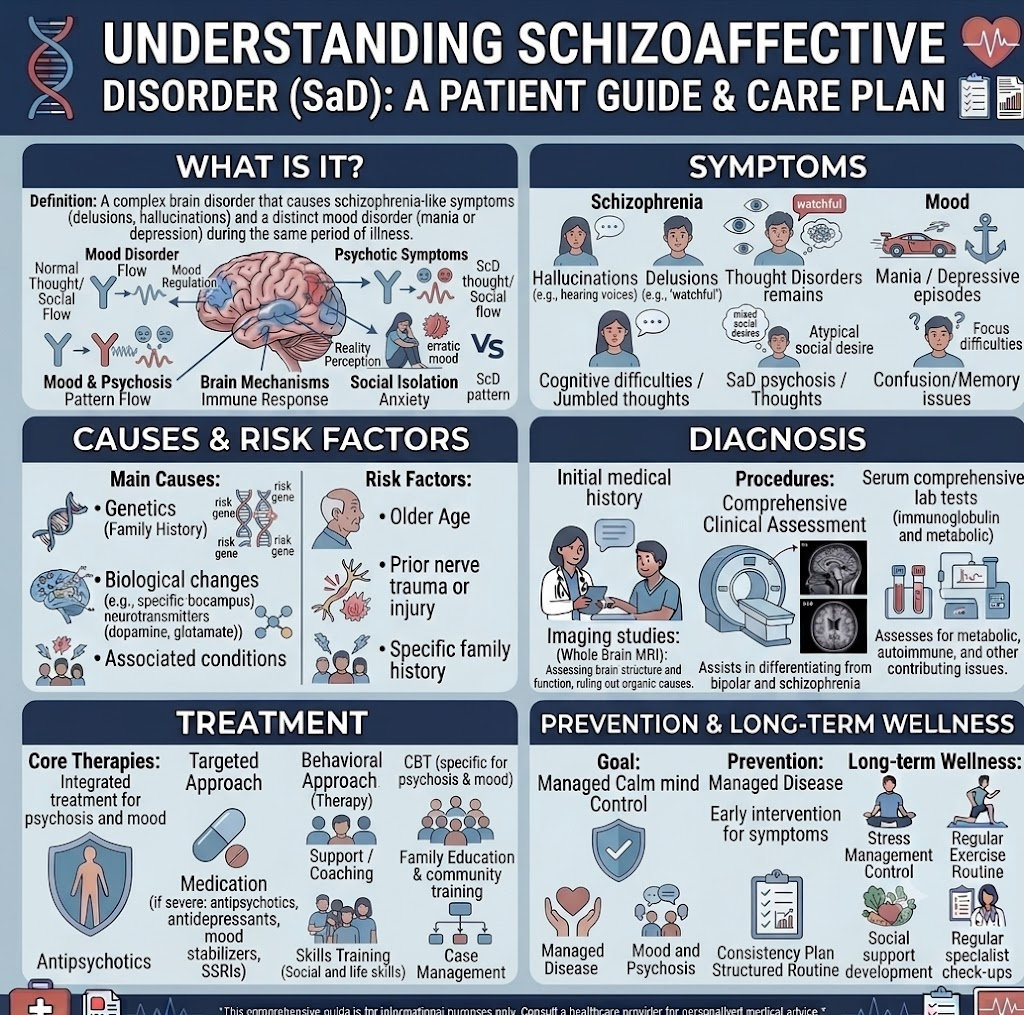
Schizoaffective disorder is a mental health condition characterized by a combination of symptoms typically seen in schizophrenia and mood disorders. Individuals experience psychotic symptoms, such as hallucinations (seeing or hearing things others don't) and delusions (holding false beliefs despite evidence), alongside significant mood episodes like depression, mania (periods of extreme high energy), or hypomania (a milder form of mania). This condition can profoundly affect a person's thoughts, feelings, and actions, making daily functioning challenging without proper treatment. Effective management can significantly improve symptoms and quality of life.
Understanding the Condition
Schizoaffective Disorder: Understanding a Complex Mental Health Condition
Understanding the Condition
Schizoaffective disorder is a mental health condition characterized by a combination of symptoms typically seen in schizophrenia and mood disorders. Individuals experience psychotic symptoms, such as hallucinations (seeing or hearing things others don't) and delusions (holding false beliefs despite evidence), alongside significant mood episodes like depression, mania (periods of extreme high energy), or hypomania (a milder form of mania). This condition can profoundly affect a person's thoughts, feelings, and actions, making daily functioning challenging without proper treatment. Effective management can significantly improve symptoms and quality of life.
Common Symptoms
Delusions: Holding false, fixed beliefs that are not based in reality, despite clear evidence to the contrary.
Hallucinations: Experiencing sensory perceptions, such as hearing voices or seeing things, that others do not observe.
Disorganized Thinking and Speech: Difficulty organizing thoughts, leading to rambling or incoherent speech that is hard for others to follow.
Bizarre or Unusual Behavior: Engaging in actions that are out of character, odd, or inappropriate for the situation.
Depressive Symptoms: Periods of intense sadness, emptiness, worthlessness, loss of interest in activities, fatigue, and changes in sleep or appetite.
Manic Symptoms: Periods of abnormally elevated mood, increased energy, racing thoughts, reduced need for sleep, impulsivity, and behaviors that are uncharacteristic or potentially risky.
Functional Impairment: Significant difficulty functioning in daily life, including challenges at work, school, or in social situations.
Neglect of Personal Care: Struggles with maintaining personal hygiene, cleanliness, or appropriate appearance.
Consultation Guide
Which Specialist to Meet
Before your appointment, gather information to help your doctor: list all symptoms you've experienced, including when they started and how they impact your daily life; be prepared to discuss major stressors, recent life changes, and your family's mental health history. Bring a list of all current medications, supplements, and any other health conditions. Consider writing down questions you have for the doctor. Bringing a trusted family member or friend can also be helpful, as they might offer additional observations.
Book a doctor visit near me
A doctor will perform a general physical examination and may order blood or urine tests. This is to rule out other medical conditions or substance use that could be causing or contributing to your symptoms, as some physical illnesses can mimic mental health disorders.
A mental health professional will conduct a thorough interview to understand your symptoms, thoughts, feelings, behaviors, and personal history. They will assess your mental status, cognitive functions, and emotional state.
You will have a detailed conversation with a psychiatrist, psychologist, or therapist. They will ask a series of questions about your experiences, symptoms, family history, and how the symptoms affect your life. This is a confidential discussion designed to gather comprehensive information to aid in diagnosis. It can take a significant amount of time, sometimes an hour or more.
Based on the information gathered from the psychiatric evaluation, the mental health professional will compare your symptoms and their patterns against established diagnostic criteria, such as those outlined in the Diagnostic and Statistical Manual of Mental Disorders (DSM-5). A diagnosis of schizoaffective disorder requires specific patterns of psychotic symptoms (like hallucinations and delusions) occurring with major mood episodes, with psychotic symptoms also present for at least two weeks without prominent mood symptoms.
This is not a 'procedure' you undergo but rather the process by which your clinician uses your reported symptoms and their observations to determine if your condition meets the official diagnostic standards for schizoaffective disorder. It involves careful consideration of the timing and types of your symptoms relative to each other over a period of time, rather than a single event or test.
Antipsychotic Medications: These medicines are crucial for managing psychotic symptoms such as hallucinations and delusions. They help balance brain chemicals to reduce the severity and frequency of these experiences. (Duration: Typically long-term, often lifelong, to maintain symptom control and prevent relapse.)
Mood Stabilizers: Used to control the extreme mood swings associated with manic or depressive episodes. They help stabilize mood to prevent highs and lows. (Duration: Often long-term, possibly lifelong, for ongoing mood regulation.)
Antidepressant Medications: These drugs are prescribed to alleviate symptoms of depression, such as persistent sadness, low energy, and loss of interest. They are often used in conjunction with mood stabilizers or antipsychotics. (Duration: Used for several weeks to months, or longer, as needed to manage depressive episodes.)
Therapies and Procedures
Psychotherapy (Talk Therapy): This involves regular sessions with a mental health professional to learn about your condition, develop coping strategies, improve problem-solving skills, manage stress, and enhance social functioning. It helps you process thoughts and feelings in a healthy way. (Duration: Ongoing, often for several months to years, or intermittently during periods of increased stress or symptom flare-ups.)
Skills Training: Programs focused on improving daily living skills, social interaction, and vocational abilities. This can include social skills training, vocational rehabilitation, and psychoeducation to help individuals function more effectively in their communities. (Duration: Varies from several weeks to months, with potential for ongoing support as needed.)
Electroconvulsive Therapy (ECT): For individuals with severe symptoms of depression or mania that haven't responded to other treatments, ECT is a procedure where small electrical currents are passed through the brain to trigger a brief seizure. This can significantly alter brain chemistry. (Duration: Typically involves a course of 6-12 treatments over a few weeks, with maintenance treatments possibly recommended afterward to prevent relapse.)
Support Groups: Connecting with others who have schizoaffective disorder can provide mutual support, understanding, and shared coping strategies in a safe, non-judgmental environment. (Duration: Ongoing as desired, providing continuous peer support.)
Family Therapy and Education: Involving family members in therapy sessions to help them understand the condition, improve communication, and learn how to best support their loved one while also managing their own stress. (Duration: Varies, often involving several sessions, with potential for periodic follow-ups.)
Adhere to Treatment Plan: Consistently take prescribed medications as directed and attend all therapy appointments, even when feeling well. Skipping treatment can lead to symptom relapse.
Manage Stress Effectively: Identify personal stress triggers and develop healthy coping mechanisms, such as mindfulness, meditation, deep breathing exercises, or engaging in hobbies. Stress can worsen symptoms.
Avoid Substances: Refrain from using alcohol, recreational drugs, and nicotine, as these substances can interfere with medications, worsen symptoms, or trigger episodes.
Build a Strong Support System: Stay connected with family, friends, and support groups. Having a reliable network can provide emotional support and practical assistance during challenging times.
Regular Health Check-ups: Due to increased risks for certain physical health conditions, regularly consult with your primary care physician to monitor overall health, including heart disease, stroke, and obesity.
Educate Yourself and Others: Learn as much as you can about schizoaffective disorder to better understand and manage your condition. Educating close family and friends can foster empathy and more effective support.
Develop a Crisis Plan: Work with your healthcare team to create a plan for what to do if symptoms worsen or in case of a mental health emergency. This plan should include contact information for support and emergency services.
Consultation Guide
You will undergo a routine physical check-up, which may include measuring your vital signs (blood pressure, heart rate), listening to your heart and lungs, and a general assessment of your health. Blood will be drawn, typically from a vein in your arm, and you may be asked to provide a urine sample. This process is generally quick and causes minimal discomfort.
Psychiatric Evaluation
Diagnostic Procedures
You should consult a mental health professional, such as a psychiatrist (a medical doctor specializing in mental health who can prescribe medication), a psychologist, or a licensed therapist. Often, a primary care physician can provide an initial assessment and refer you to a suitable specialist. It's important to find a provider with experience in diagnosing and treating complex conditions like schizoaffective disorder.
Preparations Before Your Visit
Physical Examination and Lab Tests
What to Expect
What to Expect
Diagnostic Criteria Assessment
What to Expect
Treatment Options
Medications
Prevention & Long-Term Wellbeing
Long-Term Management and Prevention
Maintain a Healthy Lifestyle: Adopt a balanced diet, engage in regular physical activity, and prioritize consistent, adequate sleep. These habits can significantly improve mood and overall mental and physical health.
Tags & Topics
Notice an error or need an update?
Help us keep medical information accurate. Report incorrect info or suggest an edit.


