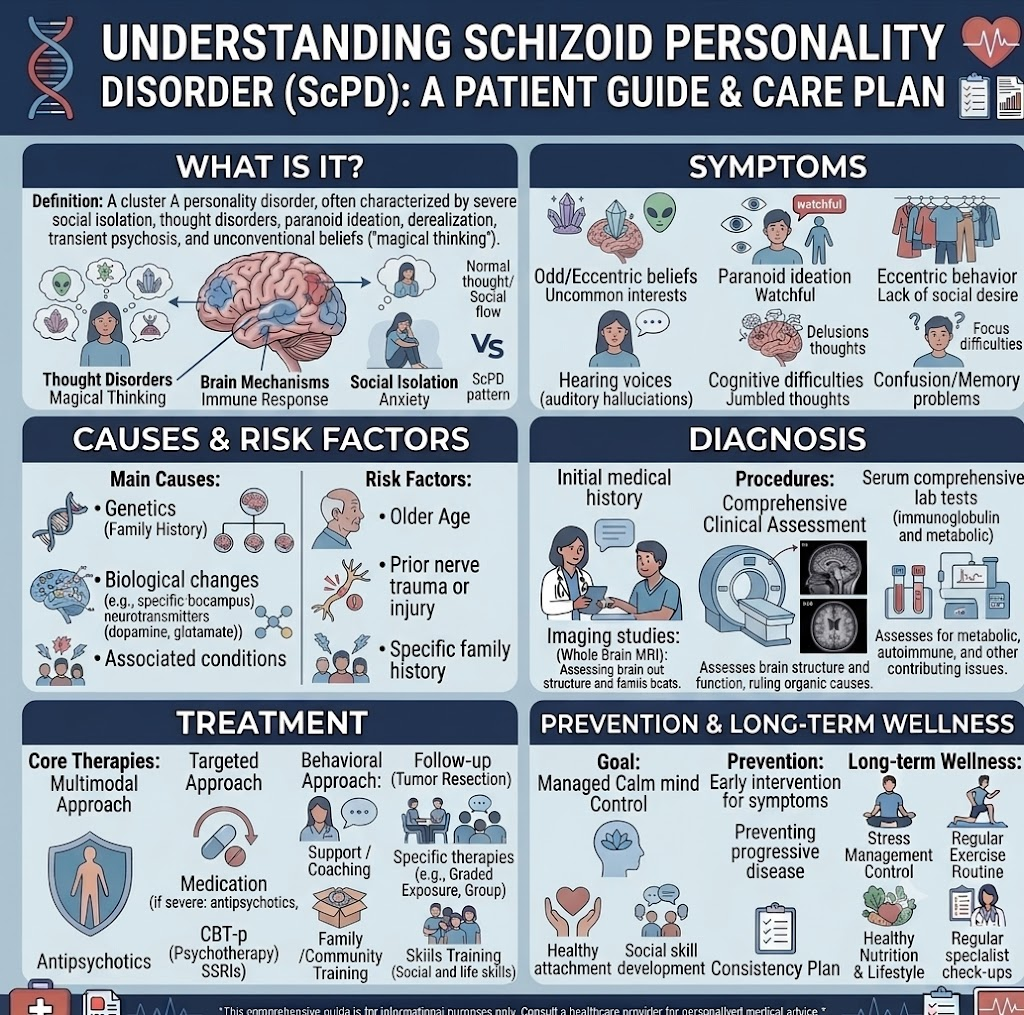
Schizoid personality disorder is a mental health condition characterized by a consistent pattern of detachment from social relationships and a limited range of emotional expression in social settings. Individuals with this condition often prefer to spend time alone and may have little interest in forming close friendships or romantic relationships. They might appear indifferent or cold to others and may struggle to express feelings like joy, sadness, or anger.While its exact cause is unknown, it is thought to be influenced by a combination of genetic factors and early life experiences. It is distinct from schizophrenia but shares some characteristics with other conditions, such as autism spectrum disorders or avoidant personality disorder.
Understanding the Condition
Understanding Schizoid Personality Disorder
Understanding the Condition
Common Symptoms
Preference for Solitude: A strong desire to be alone and engage in solitary activities, often leading to avoidance of social gatherings or group interactions.
Lack of Interest in Close Relationships: Showing little to no desire for close friendships, romantic relationships, or sexual experiences.
Limited Emotional Expression: Difficulty showing a full range of emotions, such as happiness, sadness, or anger, leading to an appearance of being detached or unemotional to others.
Few Enjoyable Activities: Finding pleasure in very few activities, if any, often resulting in a general sense of indifference.
Indifference to Praise or Criticism: Showing little reaction to positive feedback or negative remarks from others.
Lack of Motivation or Goal-Setting: May have little drive to achieve personal or professional goals.
Social Awkwardness: May be perceived by others as odd, unusual, or socially awkward due to their reserved and detached nature.
Consultation Guide
Which Specialist to Meet
Before your appointment, make a list of your symptoms, including when they started and how they affect your daily life. Gather any relevant personal information, such as significant stressors or major life changes. Also, list any questions you have for the doctor about your condition or treatment options.
Book a doctor visit near me
Symptom Questionnaires and Rating Scales
Standardized psychological questionnaires and scales may be used to gather additional information about your symptoms and to help differentiate schizoid personality disorder from other mental health conditions with similar features.
Cognitive Behavioral Therapy (CBT): CBT is a structured form of therapy that helps individuals identify and change unhelpful thinking patterns and behaviors. While not a primary treatment for the core features of schizoid personality disorder, it can be useful for addressing specific symptoms like anxiety or depression that may co-occur, or for developing practical social skills if the individual wishes to engage more in social situations. (Duration: Typically short-to-medium term, ranging from 12 to 20 sessions, but can be ongoing for specific skill development.)
Medication Management: There are no specific medications to treat schizoid personality disorder itself. However, medications may be prescribed to manage co-occurring mental health conditions such as depression or anxiety, which can sometimes accompany the disorder. These medications aim to alleviate symptoms of the associated conditions, improving overall well-being. (Duration: As needed, ongoing for the duration of the co-occurring condition, with regular review by a prescribing doctor.)
Consultation Guide
Schizoid personality disorder is a mental health condition characterized by a consistent pattern of detachment from social relationships and a limited range of emotional expression in social settings. Individuals with this condition often prefer to spend time alone and may have little interest in forming close friendships or romantic relationships. They might appear indifferent or cold to others and may struggle to express feelings like joy, sadness, or anger.While its exact cause is unknown, it is thought to be influenced by a combination of genetic factors and early life experiences. It is distinct from schizophrenia but shares some characteristics with other conditions, such as autism spectrum disorders or avoidant personality disorder.
Risk Factors
Family History: Having a close relative, such as a parent, with schizoid personality disorder, schizotypal personality disorder, or schizophrenia, may increase the risk.
Childhood Experiences: Early life experiences, particularly those involving a cold or emotionally unresponsive parent who did not provide adequate emotional support, are considered potential contributing factors.
Potential Complications
Development of Other Mental Health Conditions: Individuals with schizoid personality disorder may be at a higher risk of developing other personality disorders (such as schizotypal personality disorder) or more severe mental illnesses like schizophrenia.
Increased Risk of Mood and Anxiety Disorders: There is an elevated risk for developing major depression and various anxiety disorders, which can further impact daily functioning and well-being.
Diagnostic Procedures
Begin by consulting a primary care doctor, who can provide an initial assessment and refer you to a mental health professional. A psychiatrist, psychologist, or licensed therapist specializing in personality disorders can offer diagnosis and treatment. These specialists are trained to understand complex mental health conditions and provide appropriate care.
Preparations Before Your Visit
Clinical Interview and Mental Health Assessment
Diagnosis of schizoid personality disorder is made through a comprehensive evaluation by a mental health professional. This involves an in-depth discussion about your thoughts, feelings, behaviors, relationships, and life history. The professional will assess if your patterns of behavior and thinking meet the specific criteria outlined in diagnostic manuals for personality disorders.
What to Expect
During the assessment, you will be asked a series of detailed questions about your personal life, childhood experiences, relationships with family and friends, work or school life, and hobbies. You might discuss how you perceive yourself and others, and how you cope with different situations. This process often takes more than one session and helps the professional gain a complete picture of your personality and functioning. There are no laboratory tests or brain scans for diagnosing this condition.
What to Expect
You may be given forms to complete, either on paper or digitally, which ask you to rate the presence or severity of various thoughts, feelings, and behaviors. These tools provide objective data that assist the mental health professional in their diagnostic evaluation.
Treatment Options
Therapies
Psychotherapy (Talk Therapy): This involves talking with a trained mental health professional to explore thoughts, emotions, and behaviors. For schizoid personality disorder, therapy can help individuals develop better coping skills, understand their own patterns of relating to the world, and improve their ability to connect with others if they desire to do so. The focus is often on addressing specific challenges rather than fundamentally changing the core personality. (Duration: Often long-term, lasting several months to years, with regular sessions (e.g., weekly or bi-weekly).)
Medications
Managing Co-Occurring Conditions: Regular monitoring and treatment for any co-occurring mental health issues like depression or anxiety are crucial. Addressing these conditions can significantly improve the individual's overall quality of life and reduce distress.
Understanding and Accepting the Condition: Educating oneself and loved ones about schizoid personality disorder can foster understanding and reduce stigma. Accepting one's preference for solitude while also being open to developing coping strategies can lead to a more peaceful existence.
Maintaining a Supportive Environment: While individuals with schizoid personality disorder often prefer solitude, a stable and understanding living environment, even with minimal social demands, can be beneficial for overall well-being.
Developing Self-Care Routines: Focus on personal health through adequate sleep, nutrition, and engaging in solitary activities that bring a sense of calm or mild enjoyment, which can contribute to long-term mental stability.
Prevention & Long-Term Wellbeing
Self-Help and Lifestyle Adjustments
Structured Routine: Establishing a predictable daily routine can provide a sense of stability and purpose, which can be helpful for individuals who may struggle with motivation or a lack of interest in activities. (Duration: As advised)
Gradual Social Engagement (If Desired): For those who wish to cautiously increase social interaction, engaging in low-pressure, solitary hobbies alongside others (e.g., reading in a library, attending a class) can be a gentle way to feel connected without the demand for close emotional bonding. This should only be pursued if the individual feels comfortable and desires some level of connection. (Duration: As advised)
Prevention and Long-Term Monitoring
Early Identification and Support: While direct prevention of schizoid personality disorder is not established, early recognition of traits in children or adolescents, especially those with a family history of related conditions or challenging childhood environments, may allow for supportive interventions to foster healthy development and coping skills.
Tags & Topics
Notice an error or need an update?
Help us keep medical information accurate. Report incorrect info or suggest an edit.


