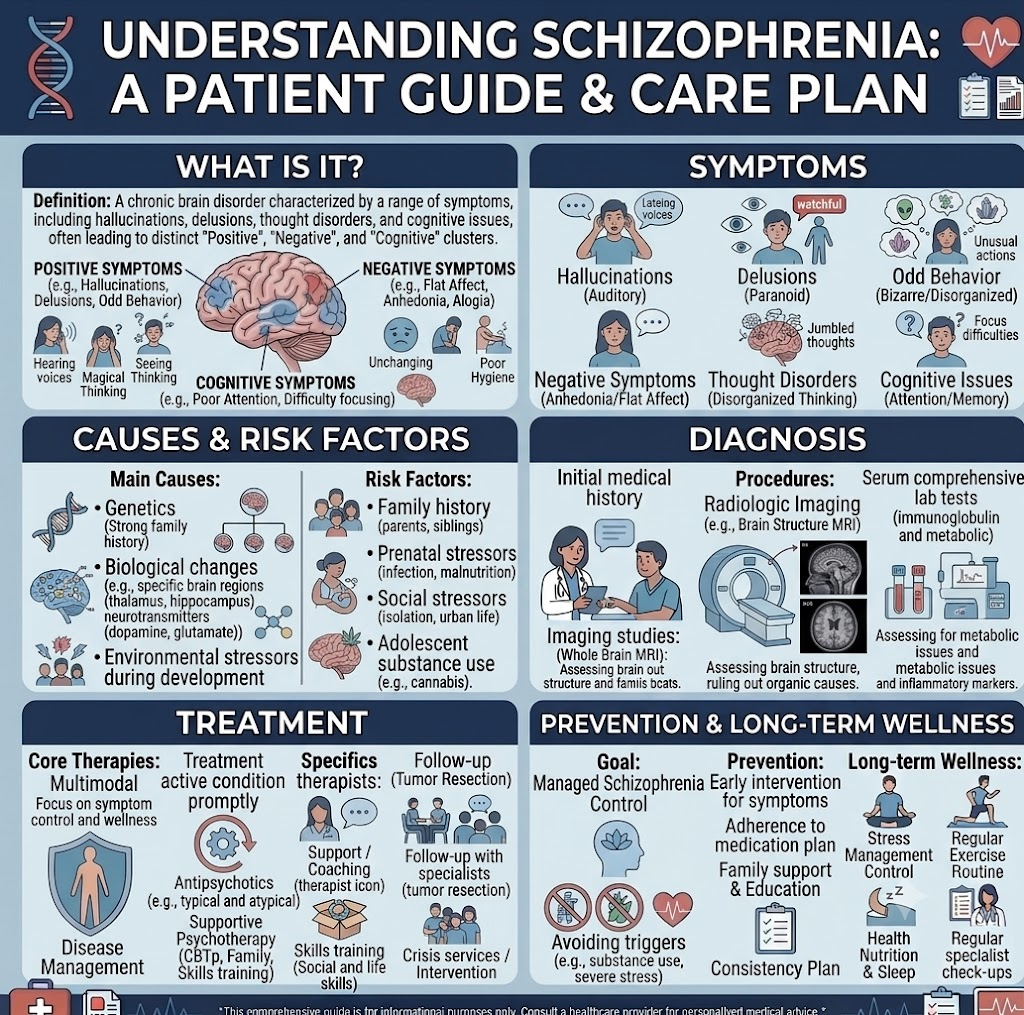
Schizophrenia is a serious, lifelong mental health condition that profoundly affects how a person thinks, feels, and behaves. It can lead to a combination of hallucinations (seeing or hearing things that aren't there), delusions (strong, false beliefs), and disorganized thinking, making it difficult to discern what is real. This can severely impact daily life. While there is no cure, lifelong treatment, including medication and therapy, is essential to manage symptoms and improve the long-term outlook. Early and consistent treatment helps control symptoms and prevent serious complications.
Understanding the Condition
Understanding Schizophrenia: A Guide for Non-Medical Individuals
Understanding the Condition
Schizophrenia is a serious, lifelong mental health condition that profoundly affects how a person thinks, feels, and behaves. It can lead to a combination of hallucinations (seeing or hearing things that aren't there), delusions (strong, false beliefs), and disorganized thinking, making it difficult to discern what is real. This can severely impact daily life. While there is no cure, lifelong treatment, including medication and therapy, is essential to manage symptoms and improve the long-term outlook. Early and consistent treatment helps control symptoms and prevent serious complications.
Common Symptoms
Delusions: These are firm beliefs in things that are not true or based in reality. For example, a person might believe they are being harmed, harassed, targeted by secret messages, or possess extraordinary fame or abilities. Most individuals with schizophrenia experience delusions.
Hallucinations: Hallucinations involve sensing things that aren't real to others but feel very real to the individual. They can affect any of the five senses, but hearing voices or sounds is the most common type. These experiences can be distressing and feel very vivid.
Disorganized Speech and Thinking: Thinking patterns can become so muddled that speech is incoherent. A person may struggle to answer questions directly, jump between unrelated topics, or use 'word salad' – a jumble of words that makes no sense. This makes communication very challenging.
Extremely Disorganized or Unusual Behavior: This can manifest in various ways, from childlike silliness to unpredictable agitation. Behavior may lack purpose, making it hard to complete tasks. Individuals might not follow instructions, move unusually, or appear unresponsive and withdrawn (catatonia).
Negative Symptoms: These symptoms reflect a loss or decrease in normal functions. This might include neglecting personal hygiene, avoiding eye contact, showing little emotion or facial expression, speaking in a monotone, losing interest in daily activities, socially withdrawing, or having difficulty planning and carrying out tasks. The ability to feel pleasure can also be significantly reduced.
Symptoms in Teenagers: While schizophrenia is uncommon in children, symptoms typically emerge in late teens to early 30s (earlier for men, later for women). In teenagers, early signs can be subtle and similar to common adolescent issues, such as social withdrawal, a decline in school performance, sleep problems, irritability, depression, and a lack of motivation. These signs often precede the more severe symptoms like hallucinations or delusions, making early diagnosis challenging.
Consultation Guide
Which Specialist to Meet
If you or a loved one are experiencing symptoms of schizophrenia, you should consult with a primary care physician first. They can provide an initial assessment and refer you to a mental health specialist, such as a psychiatrist (a medical doctor specializing in mental health who can prescribe medication) or a psychologist (who provides therapy and diagnostic assessments). A team approach involving therapists, social workers, and case managers is often beneficial.
Preparations Before Your Visit
Before your appointment, prepare a detailed list of your symptoms, including when they started and how they affect daily life. Note any other medical conditions you have and medications you are currently taking. It's also helpful to list questions you have for the doctor and to bring a trusted family member or friend for support and to help recall information.
Book a doctor visit near me
Diagnosing schizophrenia involves a thorough assessment by a mental health professional. This typically includes a detailed interview about symptoms, medical history, family history of mental illness, and substance use. A physical exam and blood tests are often conducted to rule out other medical conditions, substance abuse, or medication side effects that might be causing similar symptoms.
You will have a detailed conversation with a doctor or mental health specialist. They will ask many questions about your thoughts, feelings, behaviors, and experiences. You might be asked to describe your symptoms in detail and how they impact your life. The doctor will also conduct a physical check-up and may order blood tests or urine tests. There are no specific lab tests to diagnose schizophrenia; these are primarily to exclude other causes for your symptoms.
Imaging Studies (e.g., CT scan)
While imaging techniques like CT (Computed Tomography) scans cannot diagnose schizophrenia directly, they may be used to rule out other neurological conditions that could cause similar symptoms, such as brain tumors, stroke, or head injuries. A CT scan uses X-rays and computer processing to create detailed cross-sectional images of the brain and other body parts.
Antipsychotic Medications: These are the cornerstone of treatment, primarily used to control symptoms like hallucinations and delusions. They help balance brain chemicals. Finding the right medication and dosage may require trying several options and careful monitoring by a doctor. (Duration: Typically lifelong, even when symptoms improve, to prevent relapse.)
Individual Therapy (Psychotherapy): Talk therapy helps individuals manage stress, cope with the illness, develop social skills, identify early warning signs of relapse, and address co-occurring mental health issues like anxiety or depression. (Duration: Often long-term, tailored to individual needs, potentially lifelong.)
Family Therapy: This therapy provides education and support to family members, helping them understand the illness, improve communication, resolve conflicts, and create a supportive home environment for the individual with schizophrenia. (Duration: Ongoing, as needed, especially during challenging periods or symptom changes.)
Cognitive Behavioral Therapy (CBT): CBT helps individuals identify and change problematic thinking patterns and behaviors that contribute to distress or difficulty in daily life, such as challenging delusional thoughts. (Duration: Varies, often several months to a year, with booster sessions as needed.)
Life Skills Training and Support
Social Skills Training: Focuses on improving communication, social interaction, and the ability to engage in everyday situations. This helps individuals feel more comfortable and competent in social settings. (Duration: Ongoing, as needed, with initial intensive periods followed by maintenance.)
Vocational Rehabilitation and Supported Employment: Programs that help individuals find and maintain employment. This can involve job coaching, skill development, and finding suitable work environments, promoting independence and self-esteem. (Duration: Variable, depending on individual goals and progress.)
Adherence to Treatment Plan: Consistently taking prescribed medications and attending therapy sessions is crucial for preventing symptom relapse and worsening of the condition. Stopping treatment can lead to severe complications.
Early Detection and Treatment: Seeking professional help at the first signs of symptoms can lead to earlier diagnosis and treatment, which is associated with better long-term outcomes and reduced severity of complications.
Long-Term Wellbeing Strategies
Avoid Substance Use: Refrain from alcohol and recreational drugs, including nicotine, as they can worsen symptoms, interfere with medications, and increase the risk of relapse.
Build a Strong Support System: Stay connected with family and friends. Participate in support groups for individuals with schizophrenia or their caregivers to share experiences and receive encouragement.
Stress Management: Develop healthy coping mechanisms for stress, such as mindfulness, hobbies, or relaxation techniques, as stress can sometimes trigger or worsen symptoms.
Regular Monitoring and Follow-ups: Maintain regular appointments with your healthcare team to monitor symptoms, adjust medications, and address any new concerns or side effects.
Consultation Guide
During a CT scan, you will lie on a movable table that slides into a large, doughnut-shaped machine. You'll need to stay still during the scan, which usually takes only a few minutes. You might hear buzzing or clicking noises. Sometimes, a special dye (contrast material) is injected into a vein, which can cause a brief warm flush or metallic taste, to help certain areas show up more clearly. The scan itself is painless.
Diagnostic Procedures
What to Expect
What to Expect
Treatment Options
Medications
Coordinated Specialty Care (CSC): An integrated approach that combines medication, psychotherapy, family involvement, education, and employment/education support, especially for first-episode psychosis, leading to better outcomes. (Duration: Continuous, ongoing care as part of a comprehensive management plan.)
Prevention & Long-Term Wellbeing
Prevention and Early Intervention
Maintain a Healthy Lifestyle: Engage in regular physical activity, eat a balanced diet, and prioritize consistent sleep. These habits can improve overall mental and physical health and help manage stress.
Tags & Topics
Notice an error or need an update?
Help us keep medical information accurate. Report incorrect info or suggest an edit.


