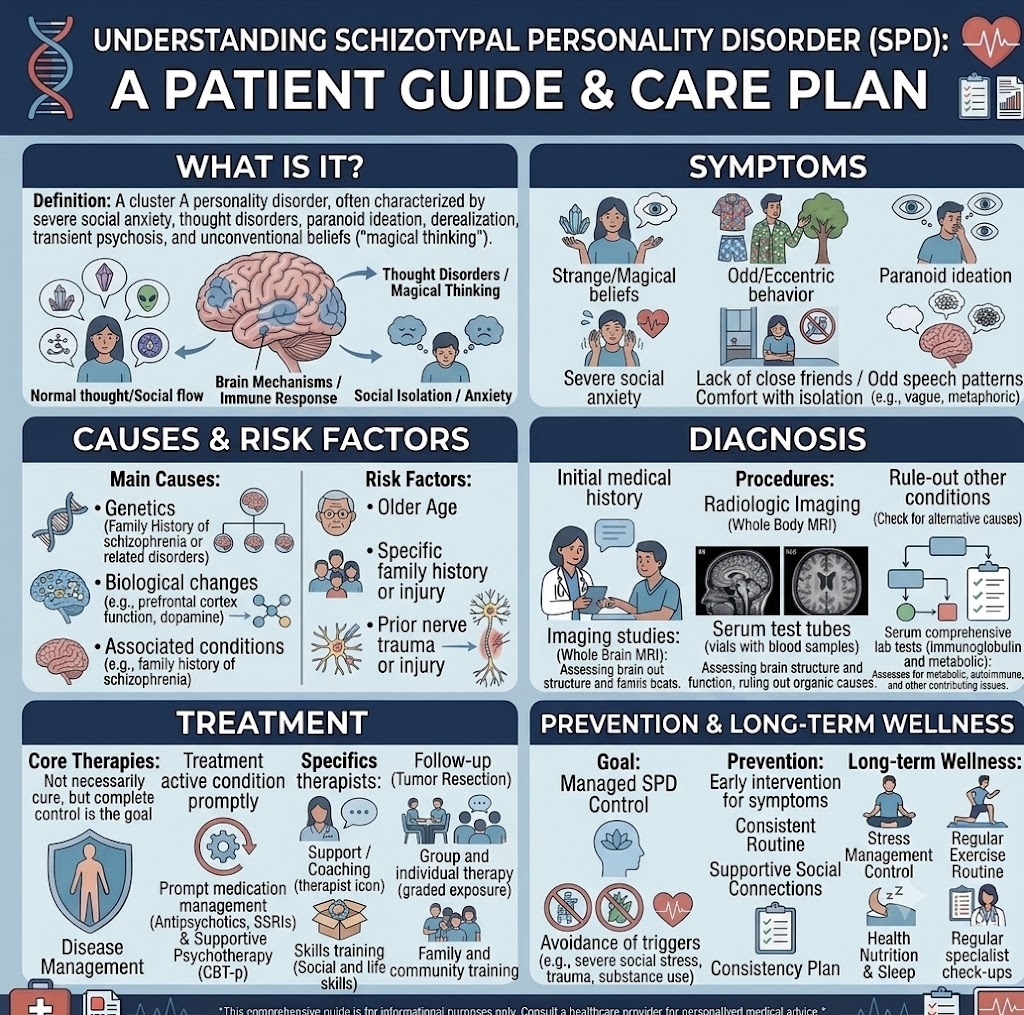
Schizotypal personality disorder (SPD) is a mental health condition characterized by persistent patterns of thought, behavior, and social interactions that are unusual or eccentric. Individuals with SPD often experience significant discomfort in close relationships, distorted ways of thinking, peculiar beliefs, and may misinterpret social cues. While it shares some features with schizophrenia, it is generally less severe and doesn't involve the persistent severe psychotic episodes seen in schizophrenia. SPD typically begins in early adulthood and can significantly impact daily functioning, work, and personal relationships.
Understanding the Condition
Understanding Schizotypal Personality Disorder
Understanding the Condition
Schizotypal personality disorder (SPD) is a mental health condition characterized by persistent patterns of thought, behavior, and social interactions that are unusual or eccentric. Individuals with SPD often experience significant discomfort in close relationships, distorted ways of thinking, peculiar beliefs, and may misinterpret social cues. While it shares some features with schizophrenia, it is generally less severe and doesn't involve the persistent severe psychotic episodes seen in schizophrenia. SPD typically begins in early adulthood and can significantly impact daily functioning, work, and personal relationships.
Common Symptoms
Peculiar Thinking or Beliefs: Individuals may hold strange beliefs or have unusual thought patterns, such as believing in special powers like telepathy, clairvoyance, or that they can influence events with their thoughts.
Social Anxiety and Discomfort: A persistent and severe discomfort in social situations, particularly with unfamiliar people, leading to a lack of close friends or relationships outside of immediate family.
Odd Speech or Mannerisms: Speech might be vague, overly metaphorical, or elaborate, and overall behavior or appearance may seem strange or unconventional to others. They might refer to themselves in the third person.
Suspiciousness or Paranoia: A tendency to be suspicious of others and believe that people are trying to harm or manipulate them, even when there's no evidence to support these fears.
Flat or Inappropriate Emotions: Showing limited emotional expression, appearing emotionally distant, or reacting with emotions that don't match the situation (e.g., laughing at a serious event).
Unusual Perceptual Experiences: Experiencing odd sensations, such as feeling a presence in the room that isn't there, or misinterpreting everyday sounds and sights in an unusual way.
Lack of Close Relationships: Difficulty forming and maintaining close bonds with others due to social anxiety, discomfort, and a preference for solitary activities.
Distorted Interpretations of Events: Misinterpreting events as having special meaning or relating directly to them, when in reality they are coincidental or unrelated.
Lack of Motivation: May show a general lack of drive or interest in activities, sometimes appearing aimless or detached.
Consultation Guide
Which Specialist to Meet
Before your appointment, write down a list of all your symptoms, including when they started and how they affect your daily life. Note any significant personal information, such as major stresses or recent life changes. List all medications, vitamins, or supplements you are taking, along with their dosages. Prepare a list of questions you want to ask your doctor.
Book a doctor visit near me
A physical exam is conducted to rule out any underlying medical conditions or substance use that could be causing or contributing to your symptoms. Certain physical illnesses or medications can mimic mental health symptoms.
Blood tests or other lab work may be ordered to exclude physical conditions that could explain your symptoms. For example, thyroid problems or vitamin deficiencies can sometimes manifest with mood or behavioral changes.
You will have an in-depth conversation with a psychiatrist or psychologist. They will ask detailed questions about your symptoms, personal and family history, social interactions, work or school life, and any past traumas or significant life events. You may also complete questionnaires or inventories. This process helps the professional determine if your symptoms align with the criteria for schizotypal personality disorder or another mental health condition.
Antipsychotic Medications: These medications can help manage symptoms like unusual thinking, paranoia, and perceptual distortions. They are often prescribed in lower doses than those used for schizophrenia. (Duration: Often long-term, requiring consistent use to manage symptoms effectively. Dosage and type may be adjusted over time by a medical professional.)
Antidepressant Medications: If depression or anxiety co-occurs with schizotypal personality disorder, antidepressant medications may be prescribed to alleviate these specific symptoms. (Duration: Typically used for several months to a year or more, depending on symptom severity and response to treatment.)
Anti-Anxiety Medications: These medications can help reduce severe social anxiety or agitation, though they are usually prescribed for short periods due to potential for dependency. (Duration: Short-term use, generally for acute symptom management, or as needed, under strict medical supervision.)
Early Intervention: Seeking professional help at the first sign of symptoms in adolescents or young adults can help manage the condition before it becomes more severe and impactful on daily life.
Supportive Environment: Providing a stable and understanding home environment, especially for those at risk, can reduce stress and offer a sense of security, potentially mitigating the development or severity of the disorder.
Adhere to Treatment Plan: Consistently following the prescribed medication regimen and attending therapy sessions as recommended by your mental health professional is crucial for managing symptoms and preventing relapses.
Stress Management Techniques: Learning and practicing stress-reduction methods like mindfulness, meditation, deep breathing exercises, or engaging in hobbies can help manage anxiety and avoid overwhelming situations.
Educate Yourself: Understanding schizotypal personality disorder helps in recognizing symptoms, anticipating challenges, and effectively communicating your needs to family, friends, and healthcare providers.
Consultation Guide
Addressing Risk Factors: For individuals with a family history of psychotic disorders, or those who experienced childhood trauma, early psychological support and monitoring can be beneficial in addressing vulnerabilities.
Long-Term Wellbeing and Management
Diagnostic Procedures
What to Expect
Your doctor will check your overall health, measure your vital signs (blood pressure, heart rate), and may perform basic neurological tests. You might be asked about your medical history and any existing health conditions.
What to Expect
A nurse or technician will typically draw blood from a vein in your arm. This is a quick procedure, and you may feel a brief pinch or sting. The samples will then be sent to a lab for analysis.
Psychological Evaluation
This is the primary diagnostic tool for schizotypal personality disorder. A mental health professional will conduct a thorough assessment of your thoughts, feelings, behaviors, and personal history based on established diagnostic criteria.
What to Expect
Treatment Options
Initially, you might discuss your concerns with a primary care provider. They may then refer you to a mental health specialist, such as a psychiatrist (a medical doctor specializing in mental health who can prescribe medication) or a psychologist (who specializes in psychotherapy and psychological assessments).
Preparations Before Your Visit
Therapies
Psychotherapy: Talking therapy, such as cognitive behavioral therapy (CBT), can help individuals identify and change distorted thinking patterns, improve social skills, manage anxiety, and learn coping mechanisms for unusual perceptions. Supportive therapy focuses on developing trust and providing encouragement. (Duration: Typically long-term and ongoing, with regular sessions over several months or years, depending on individual needs and progress.)
Family Therapy: This therapy involves family members to help them understand the disorder, improve communication, and create a supportive home environment. It can reduce conflict and help family members cope with the challenges of living with someone with SPD. (Duration: Varies, often in conjunction with individual therapy, typically for several months.)
Social Skills Training: Specific training to help individuals learn and practice appropriate social cues, conversation skills, and ways to build and maintain relationships, reducing social anxiety and isolation. (Duration: Short-term, focused programs lasting several weeks to months, often integrated into ongoing individual therapy.)
Medications
Prevention & Long-Term Wellbeing
Prevention
Healthy Lifestyle: Maintaining a balanced diet, getting regular physical exercise, ensuring adequate sleep, and avoiding alcohol and recreational drugs can significantly support mental health and overall wellbeing.
Build Social Connections: Despite social discomfort, gradually engaging in supportive social activities or groups can help improve social skills and reduce feelings of isolation. Start with small, comfortable interactions.
Tags & Topics
Notice an error or need an update?
Help us keep medical information accurate. Report incorrect info or suggest an edit.


